40 guides
Container Guides
 Yuri Kan Updated
40 guides, 7 sizes, 10 container types and 9 free tools answer 455 questions about shipping containers, and each page opens with its answer and the figure before any explanation. Search them below, or start from the errand you came with.
The eight questions most readers arrive with
Each answer is the opening sentence of the guide it comes from, so it carries the figure you need. The guide behind it has the table, the drawing and the exceptions.
- Is there one chart with every container size?
ISO 668 makes a container 8 ft (2.438 m) wide, 8′6″ or 9′6″ (2.591 / 2.896 m) high and 10, 20, 40 or 45 ft (2.991 / 6.058 / 12.192 / 13.716 m) long; this chart gives all 17 containers: outside, inside, door, weights and pallets, in metres and feet.
Full guide: Container size chart (all 17)- Should I book a 20 ft or a 40 ft?
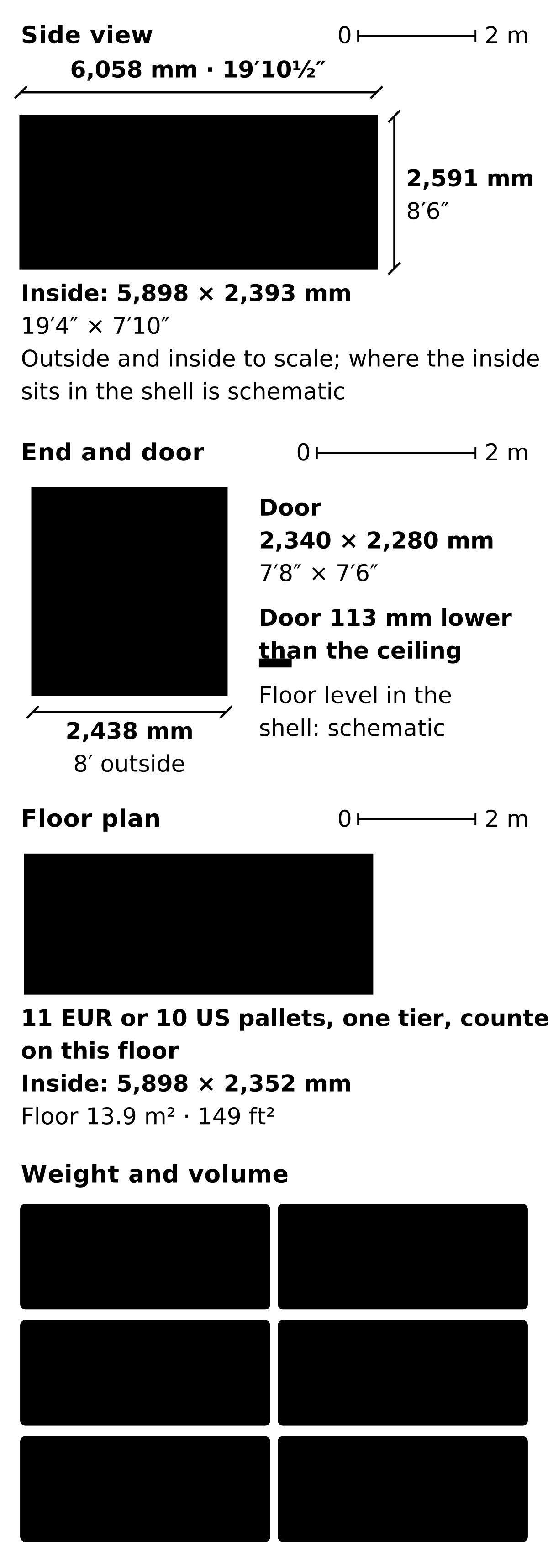
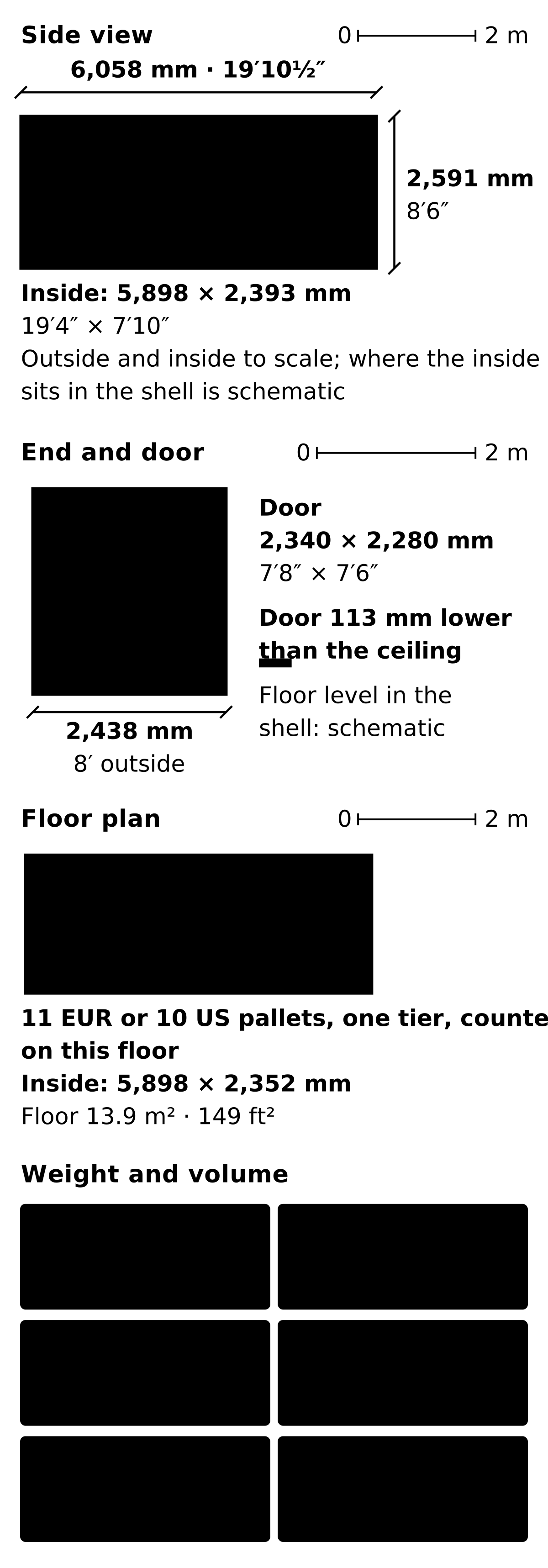
A 20 ft container is 6.058 m (19′10½″) long and a 40 ft 12.192 m (40′), on the same 2.438 × 2.591 m (8′ × 8′6″) cross-section.
Full guide: 20 ft vs 40 ft container- How many pallets fit in a 40 ft?
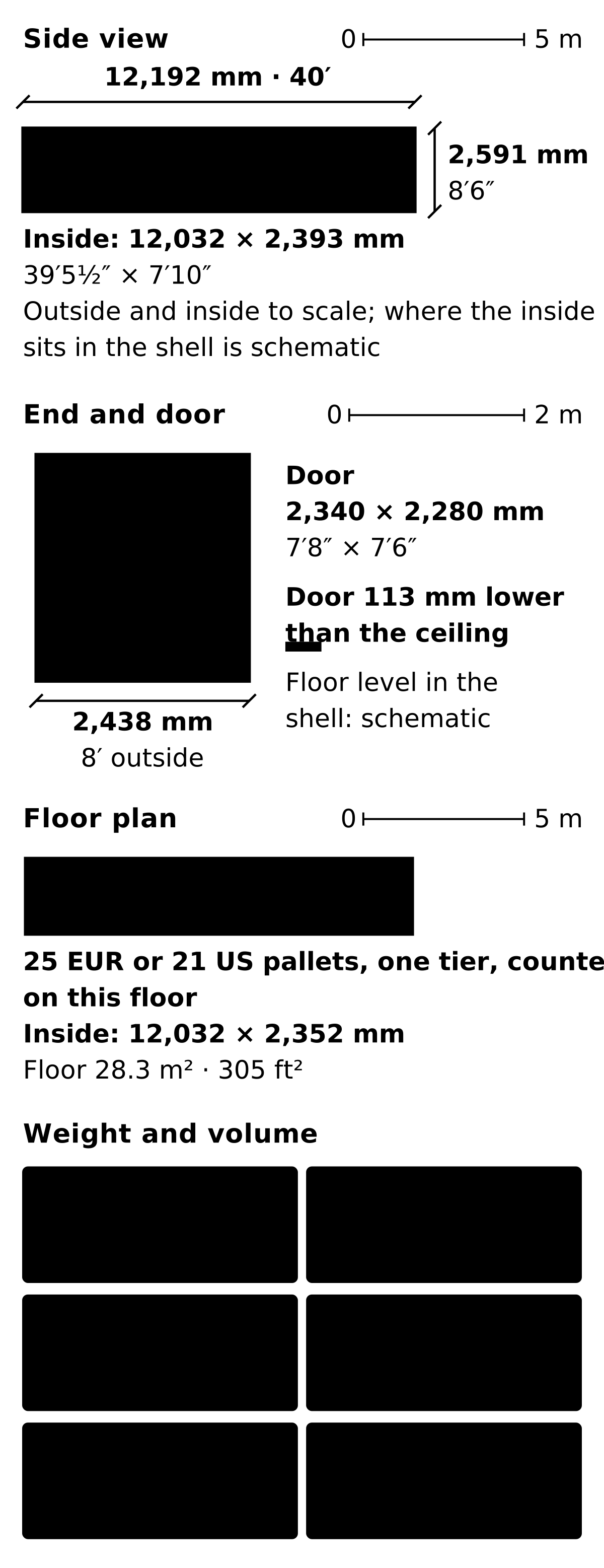
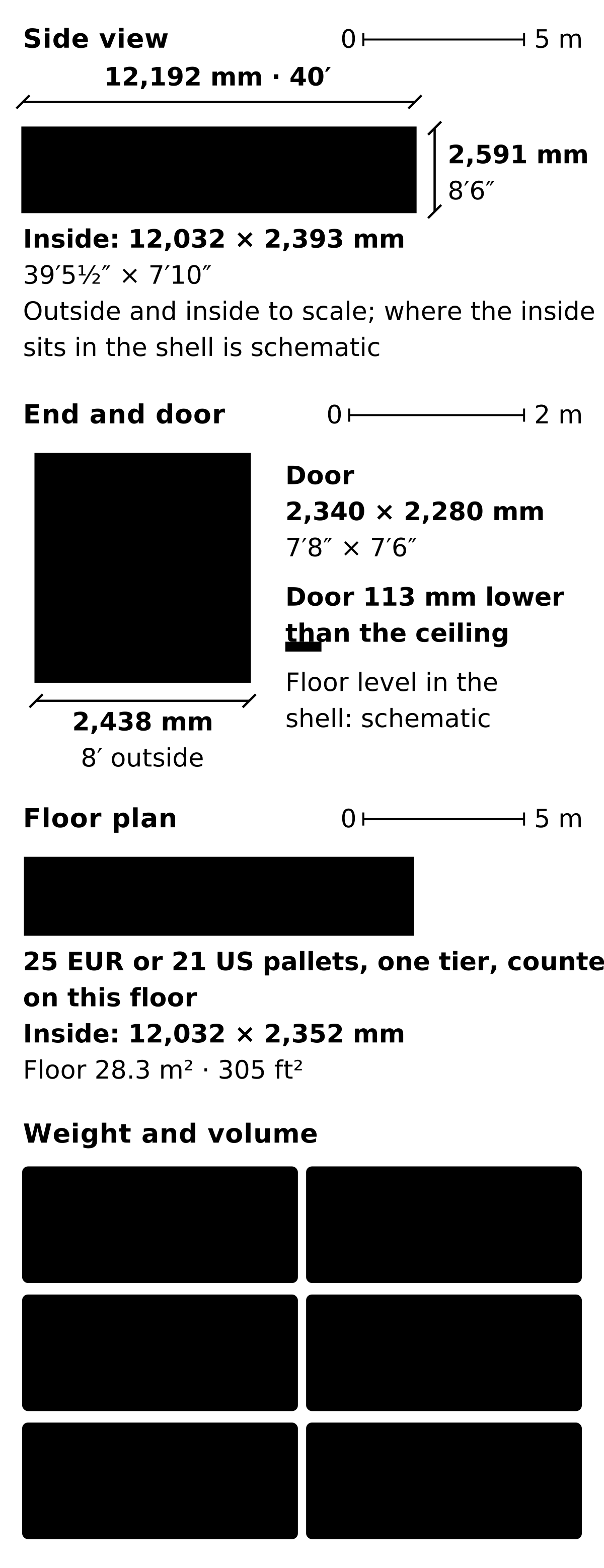
A 40 ft container takes 25 Euro pallets (EUR, 1200 × 800 mm, 47.2 × 31.5 in) or 21 US GMA pallets (48 × 40 in, 1219 × 1016 mm) floor-loaded in one tier with every pallet tight, as our pallet calculator lays them: the EUR pallets in two bands, one lengthwise…
Full guide: Pallets in a 40 ft container- How much does a container weigh?
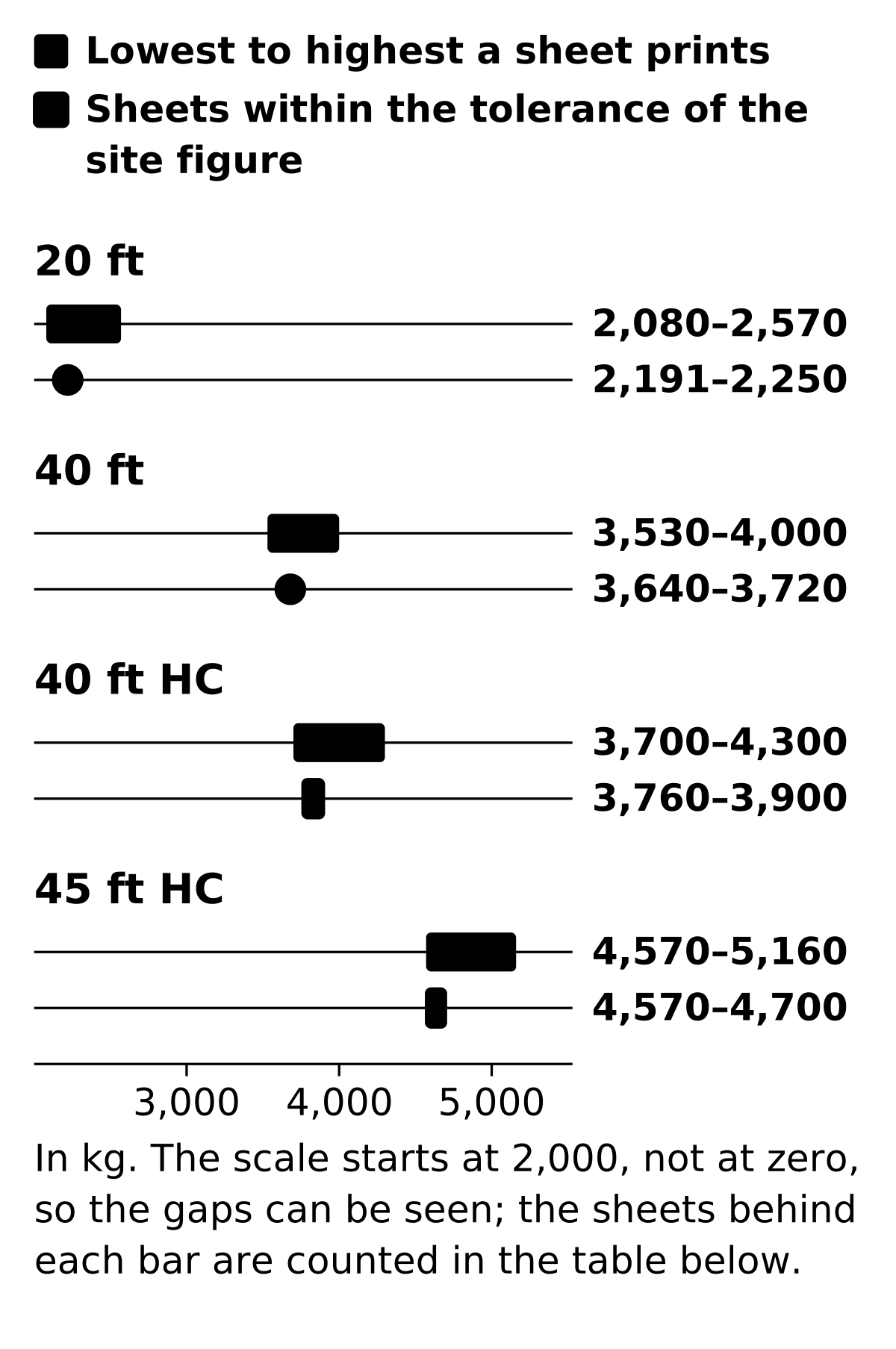
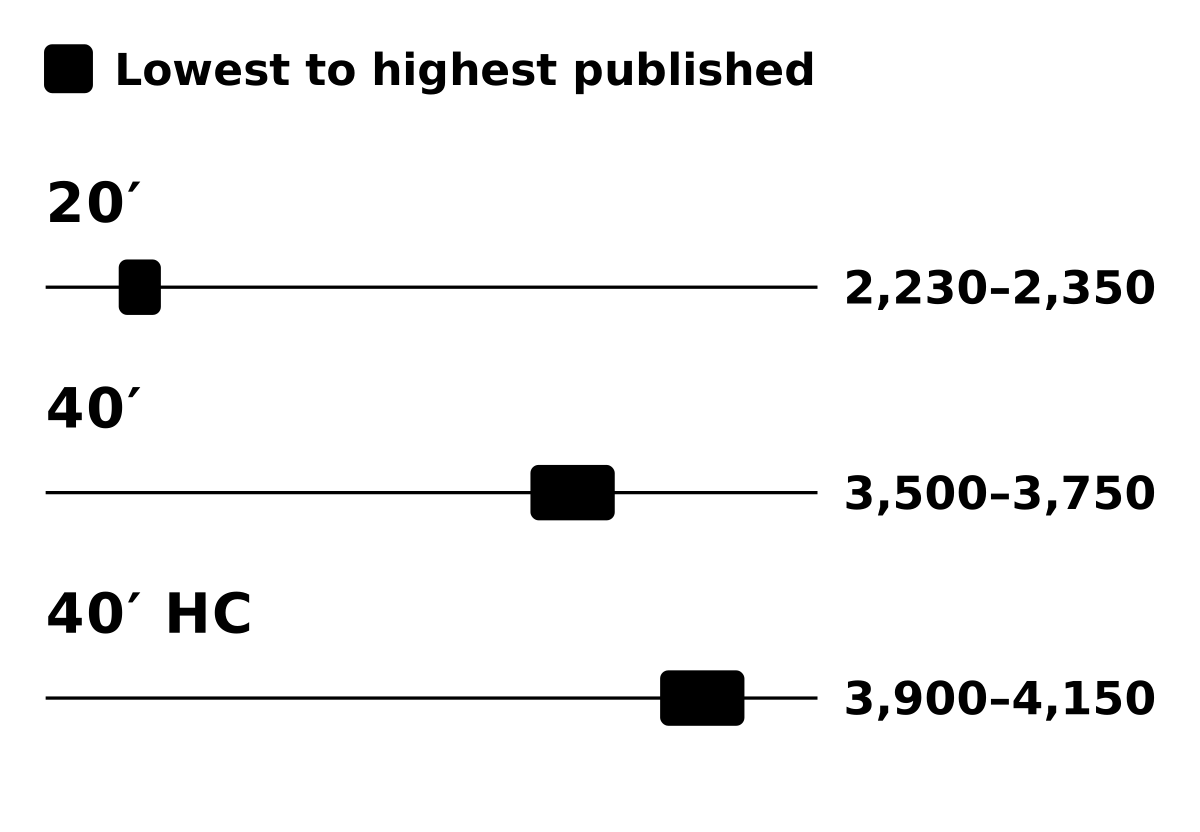
An empty 20 ft container weighs about 2,230 kg (4,916 lb), within 2 % of what 8 of 18 published sheets print (they range 2,080–2,570 kg), a 40 ft about 3,700 kg (8,157 lb) and a 40 ft high cube about 3,830 kg (8,444 lb), within 2 % of what 9 of 16 and 10 of…
Full guide: Shipping container weight- How do I work out my cargo volume?
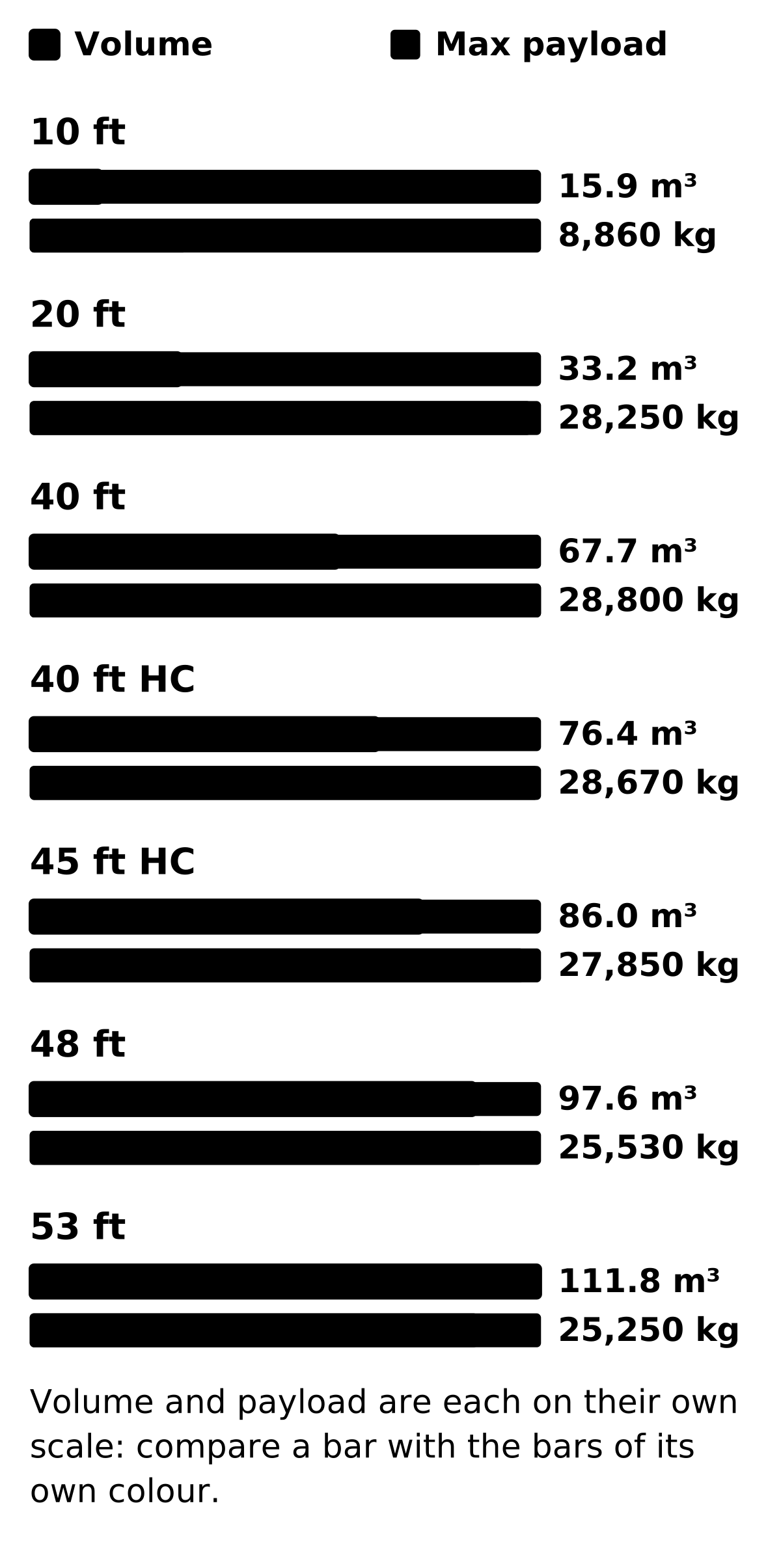
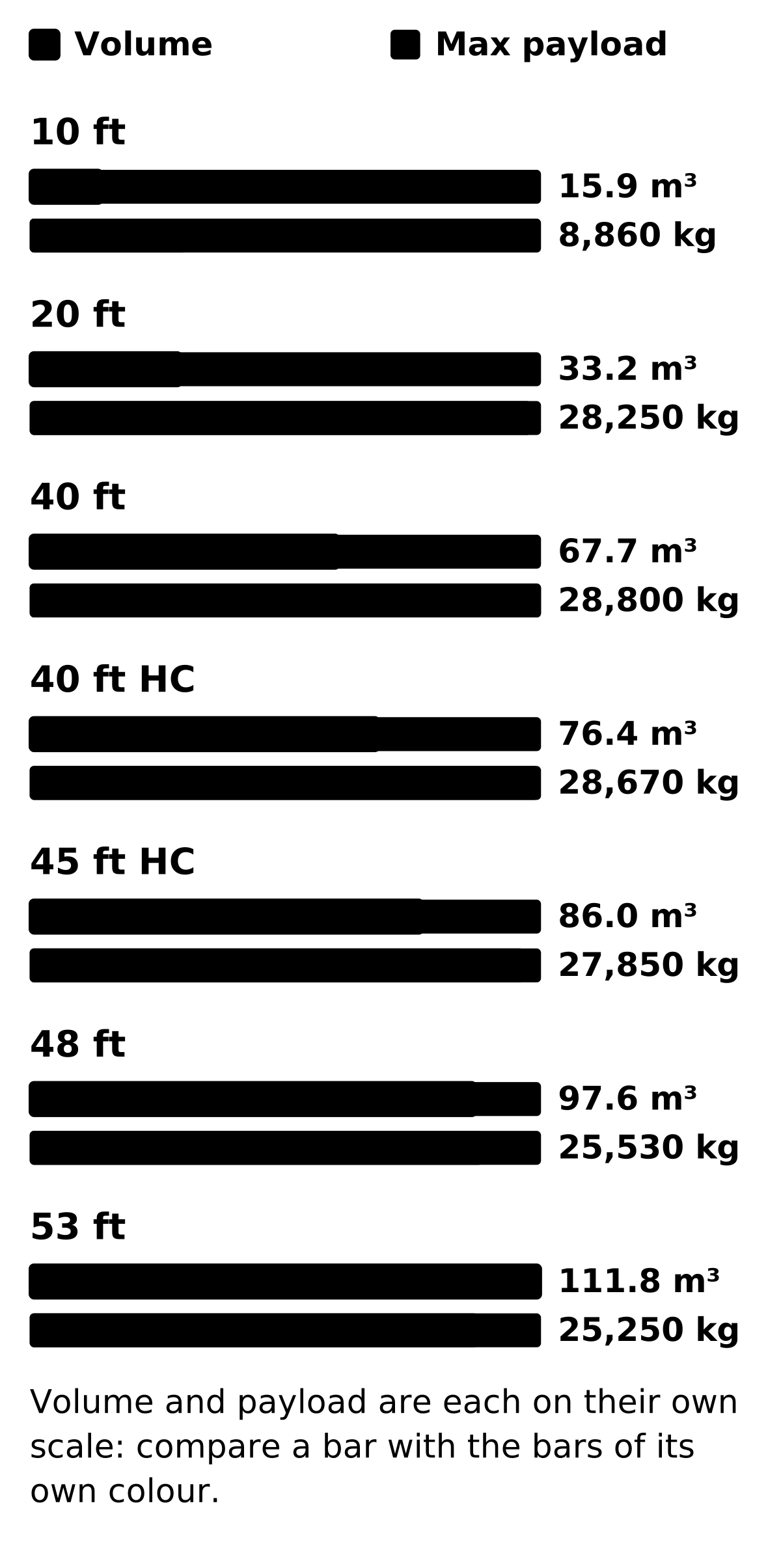
A 20 ft container holds 33.2 m³ (1,172 ft³) inside, a 40 ft 67.7 m³ (2,391 ft³) and a 40 ft high cube 76.4 m³ (2,698 ft³) — as 18 of 18, 15 of 16 and 19 of 19 published line and maker sheets print them; a 45 ft holds about 86.0 m³.
Full guide: Container CBM guide- What does a container cost to buy?
A used cargo-worthy 20 ft container costs $1,700–2,800 in the US in October 2026 and a used 40 ft high cube $2,100–3,500; new (one-trip) they run $2,800–4,400 and $4,000–5,600.
Full guide: Shipping container prices- Which condition grade should I buy?
Container grades from best to worst: one-trip (single loaded voyage, effectively new), IICL (passes the strictest leasing-industry inspection), cargo-worthy (CW — certified for ocean shipping, valid CSC), wind & water tight (WWT — weatherproof but not…
Full guide: Container grades & condition- Can I build a home from containers?
A shipping container home is built from 20 ft boxes (13.9 m² / 149 ft² of inside floor each) or, far more often, 40 ft high cubes (28.3 m² / 305 ft² each, 2.698 m / 8′10″ inside height — about 2.5 m after 200 mm of floor build-up and ceiling insulation), the…
Full guide: Container home dimensions
One question, one page
Seven questions answered in a page each: the figure first, in both unit systems, then one table and where the figure comes from.
Three reading paths
Most people come with an errand, not a topic. These are the guides for the three commonest ones, in the order the decisions actually come up.
Shipping cargo for the first time
You have goods and need to know which container to book and how to fill it.
- Container size chart (all 17)Know the inside of each box before anything else: internal size, door opening, volume.
- 20 ft vs 40 ft containerChoose the size. It is decided by cargo density, not by how much you have.
- Container CBM guideTurn your cartons into cubic metres, the unit every quote is written in.
- Shipping container weightCheck weight. Payload, the road limit and the VGM rule can each stop a full box.
- Pallets in a 40 ft containerLay out the floor: how many pallets, and in which pattern.
Buying a container
You want a box of your own for storage, a workshop or a project.
- Shipping container pricesStart with what the market charges, by size and condition.
- Container grades & conditionLearn the grades, because "cargo-worthy" and "wind and watertight" are not the same promise.
- Buying a container: checklistInspect before paying: a checklist of what fails and where to look.
- Moving a shipping containerPlan delivery. The truck and the access often cost more thought than the box.
- Container foundationsPrepare the ground it will stand on.
Building with a container
You are turning a box into a room: a home, an office, a cabin.
- Container home dimensionsSee what the dimensions allow and what they do not, starting with the 2.35 m internal width.
- Container foundationsGet the foundation right; everything else sits on the four corner castings.
- Container insulationInsulate. A steel box is the hardest envelope there is to keep dry and warm.
- Ventilation & condensationVentilate, or condensation undoes the insulation.
- Container flooringDeal with the floor, which was treated for cargo, not for living on.
Every guide, by what you are trying to do
Reading time is counted from the text; the date is when the guide last changed in substance.
Dimensions and units
What size a container is, in which unit, and how to read the codes painted on it.
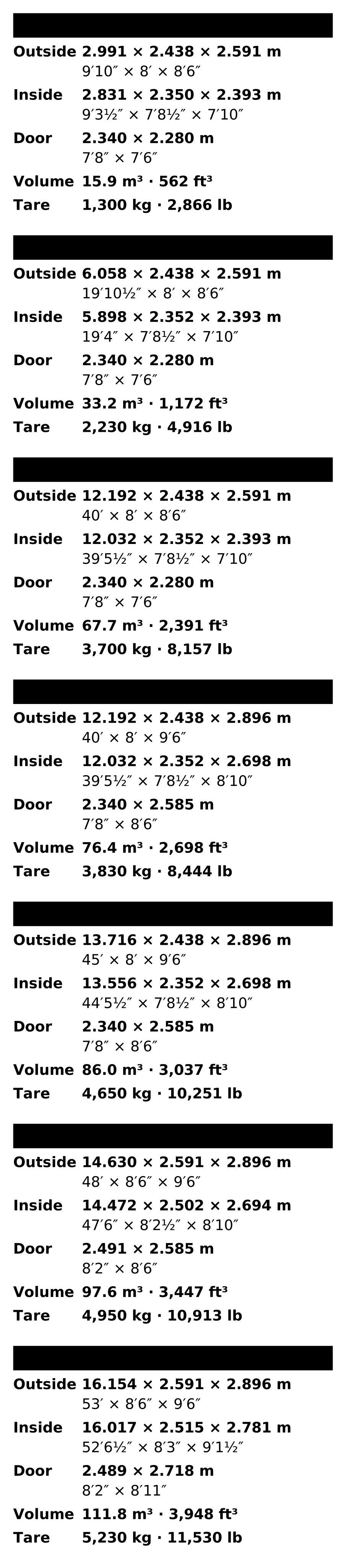
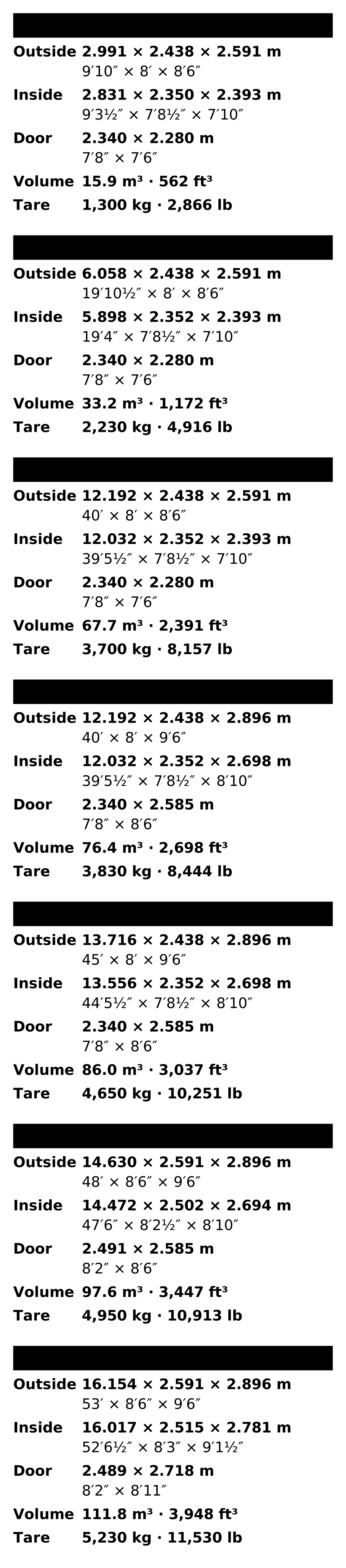 Container size chart (all 17)17 containers · Metric and imperial · Prints on one sheet
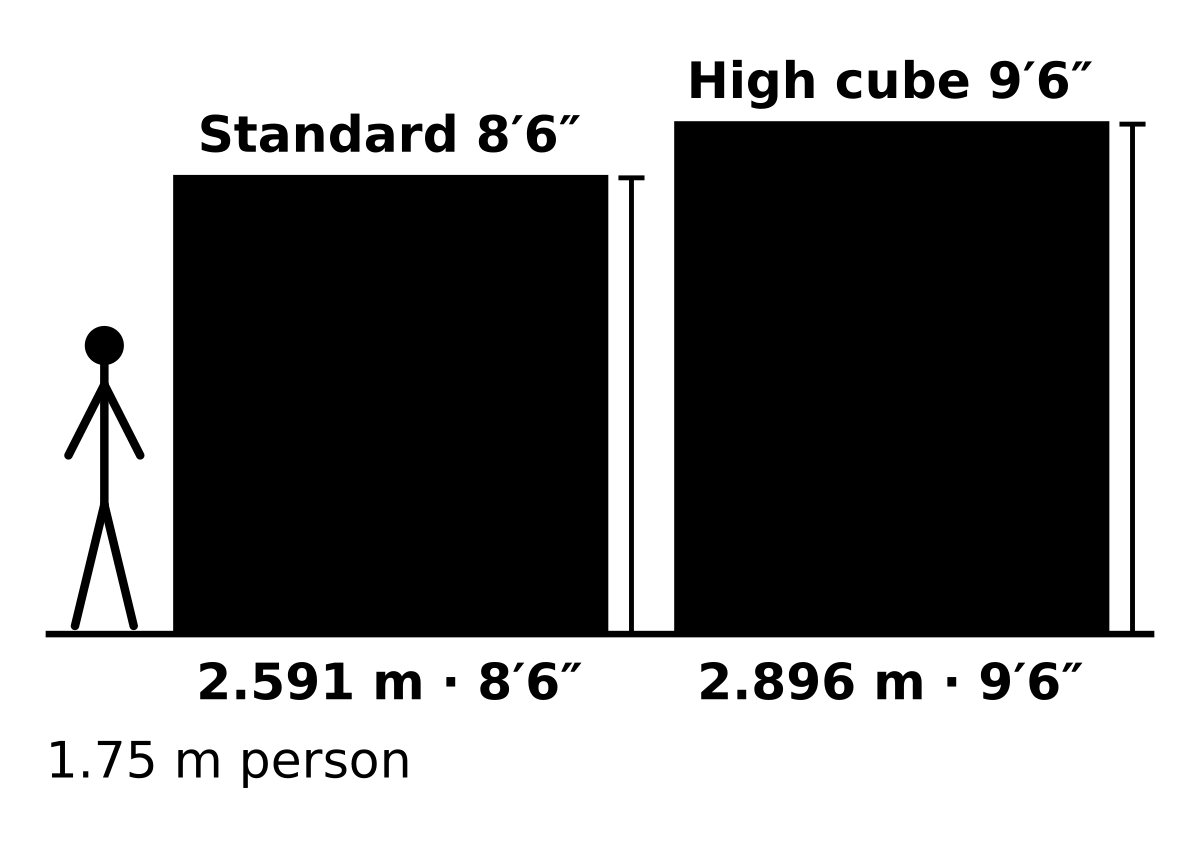
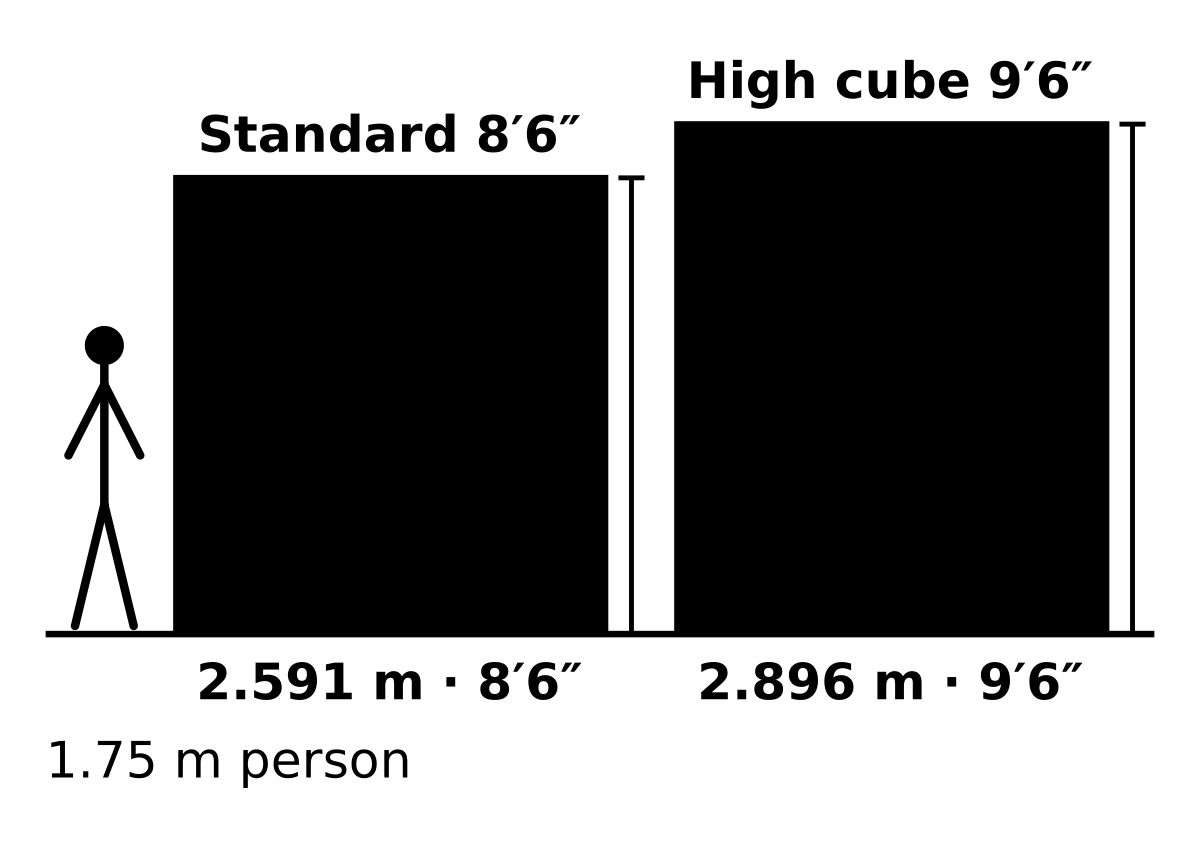 Container dimensions in metersFeet → metres, exact values
 Container dimensions in feet & inchesft-in · inches · cm

 What is a TEU?Twenty-foot Equivalent Unit
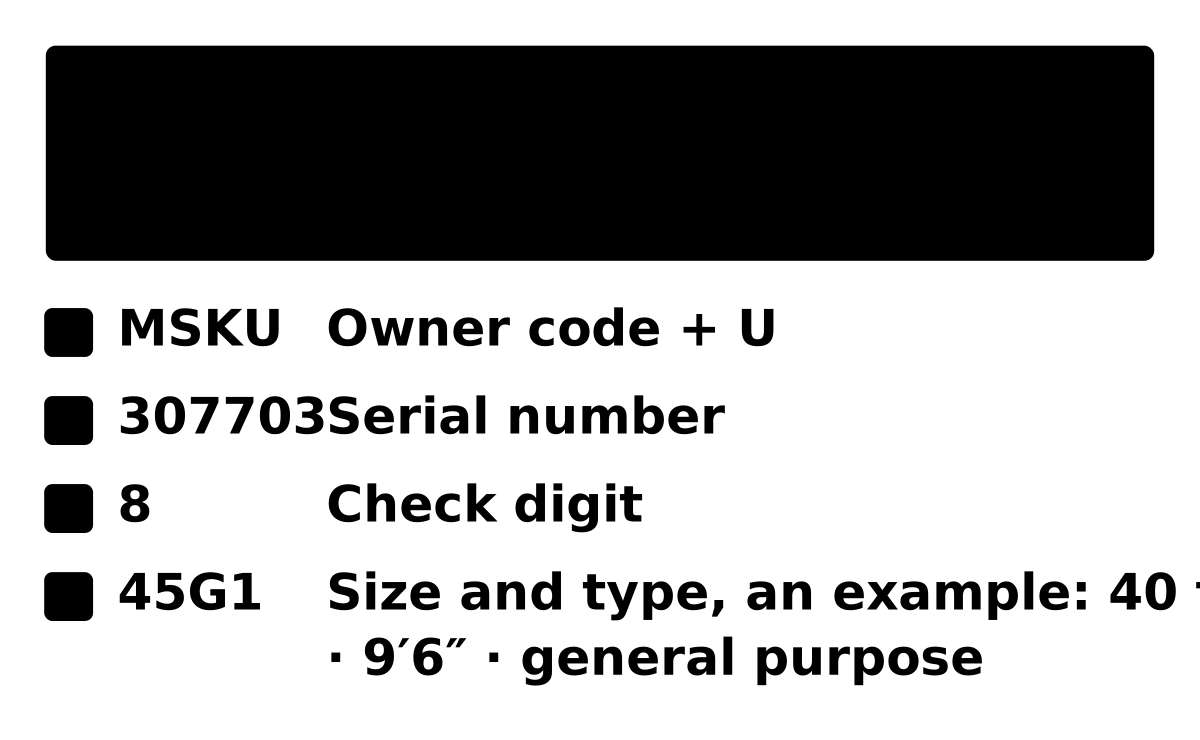
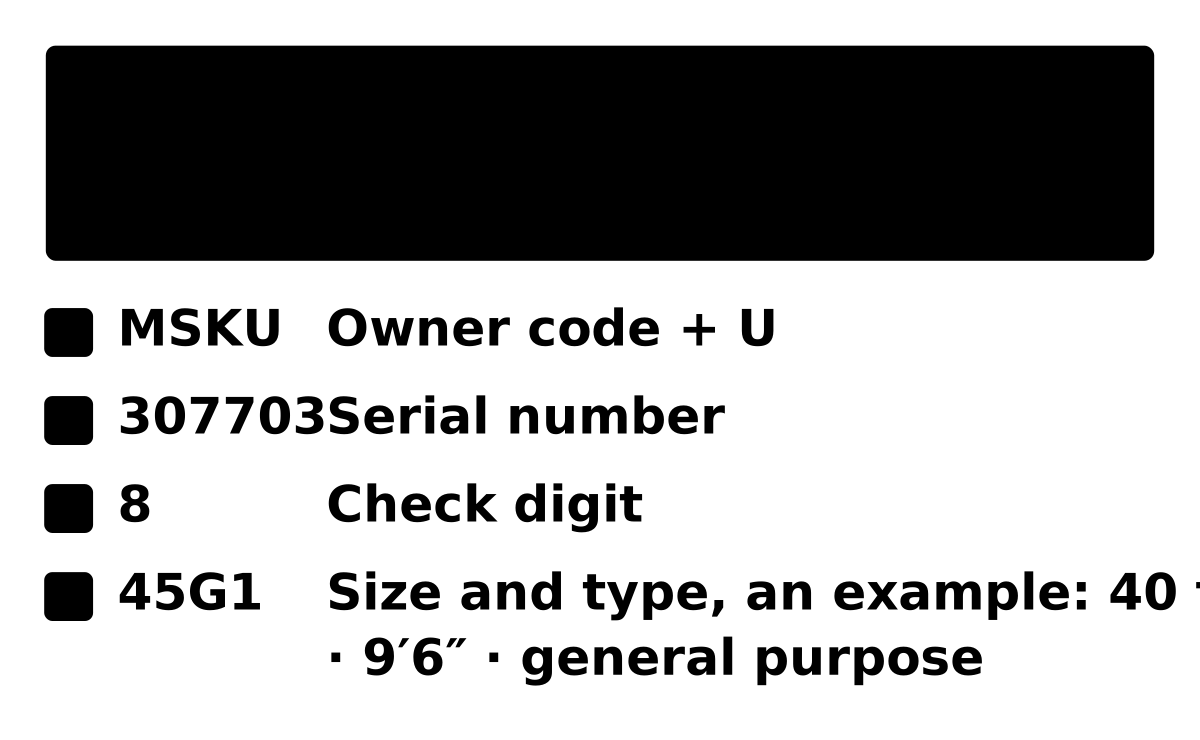 ISO container standardsISO 668 · ISO 6346 · CSC

 Conex box & container namesCONEX = Container Express · since 1952
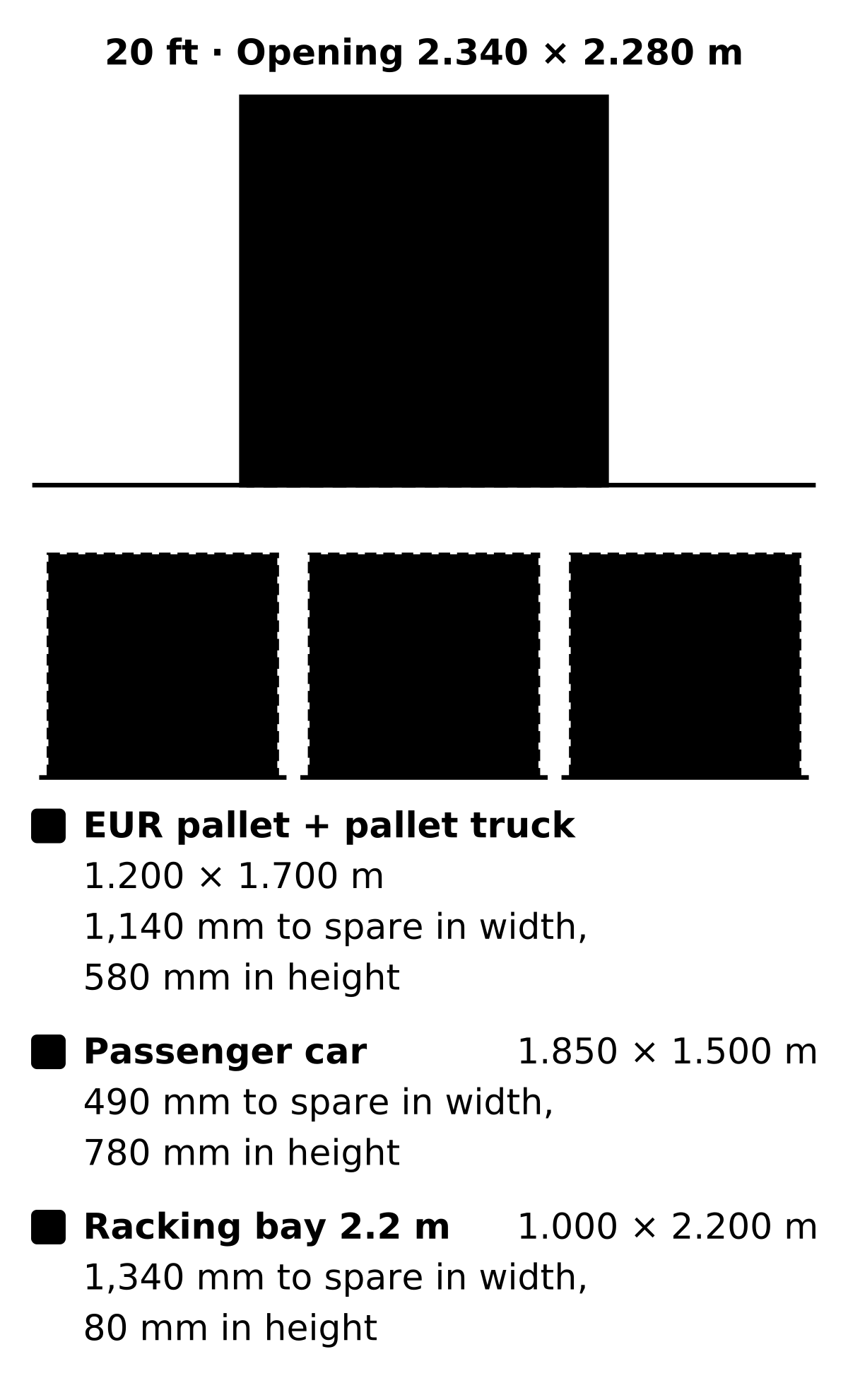
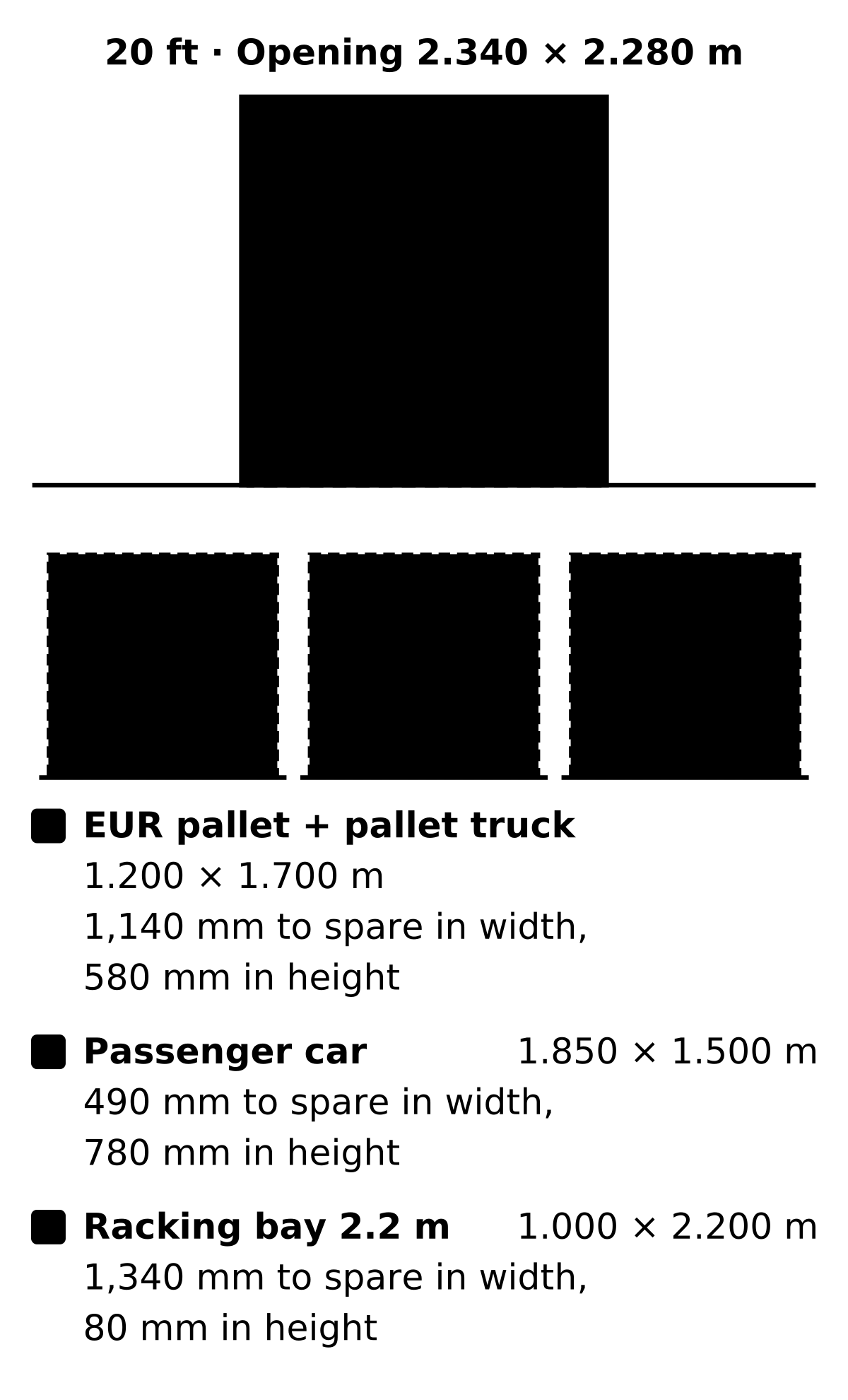 Container door dimensions2.340 m wide · 2.280 m high · smaller than inside
Loading and pallets
Choosing a size and filling it: volume, weight limits and floor patterns.
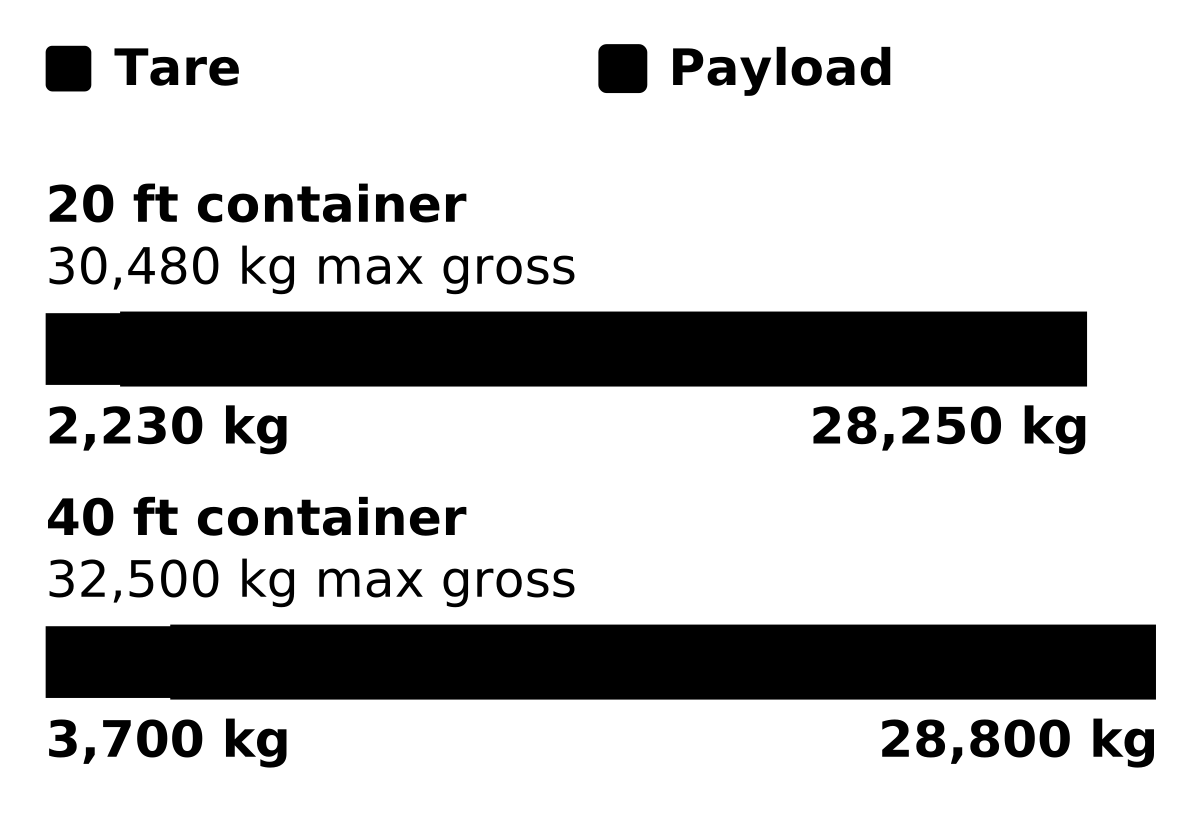
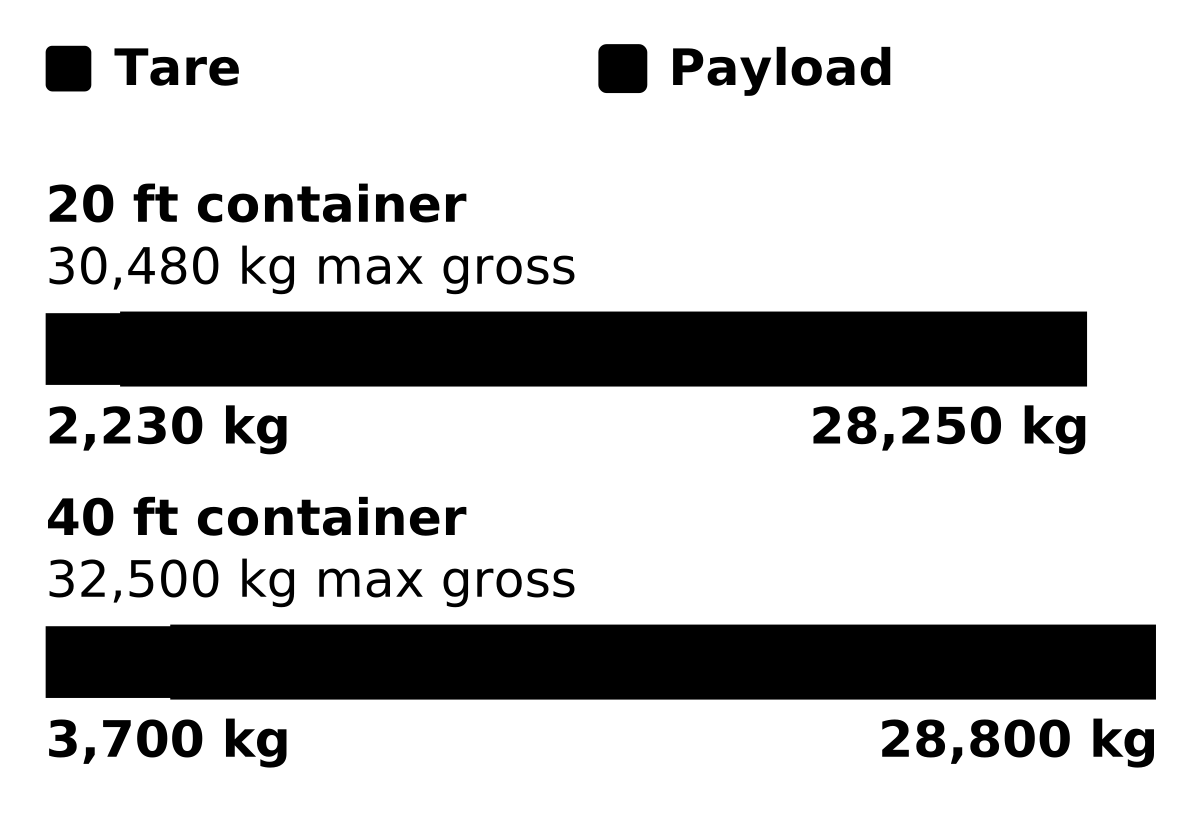 20 ft vs 40 ft containerThe decision, with numbers
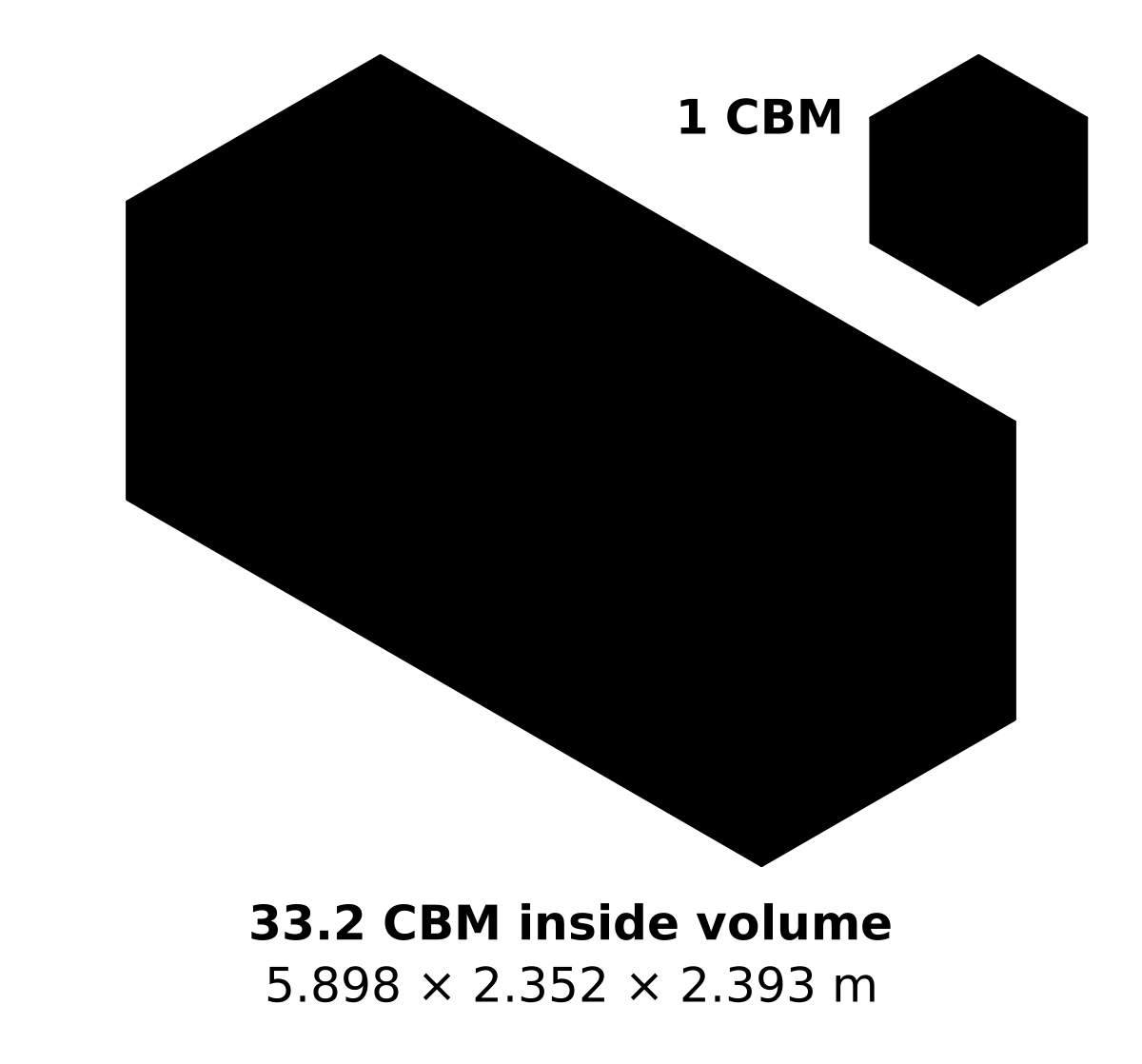
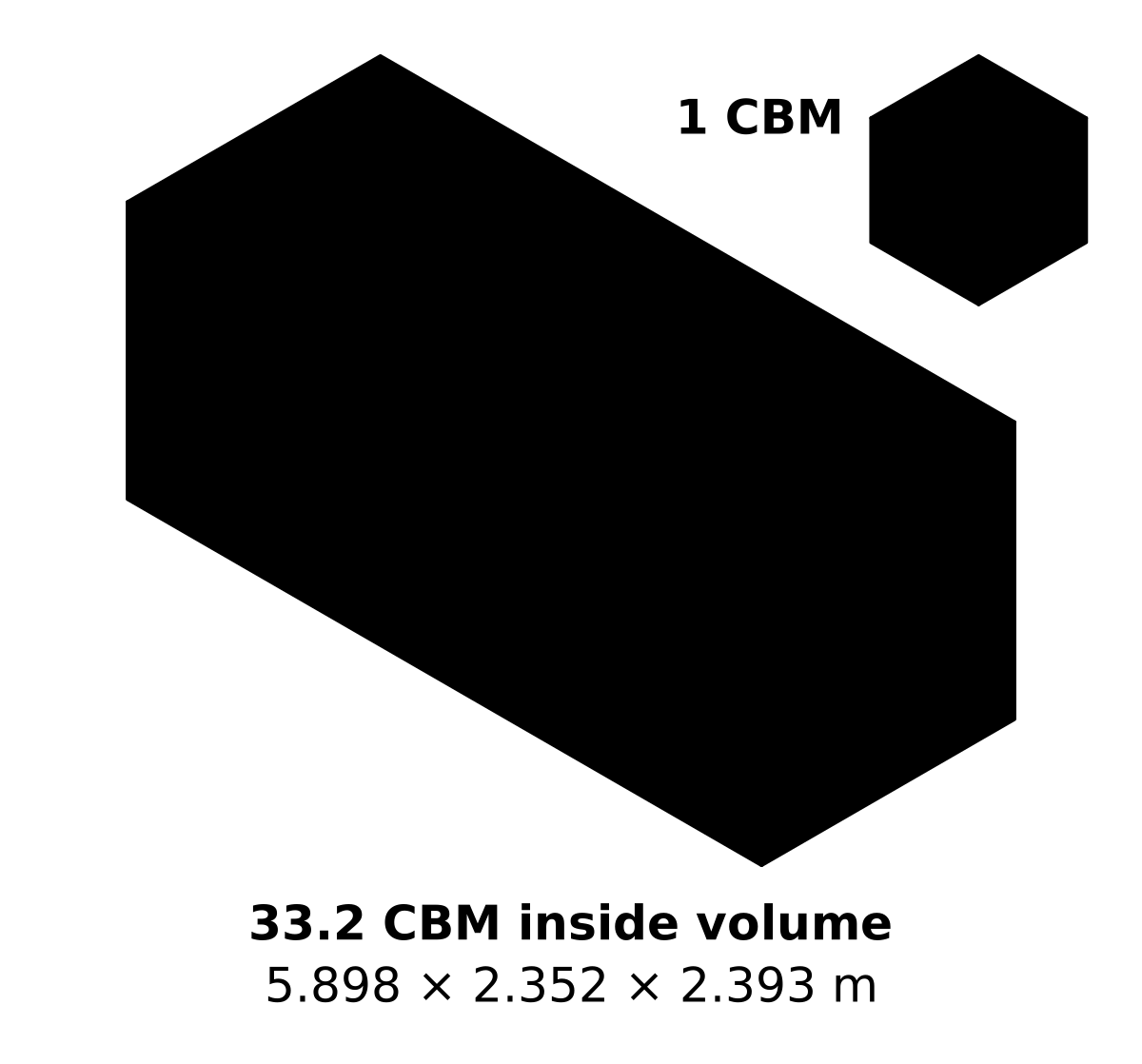 Container CBM guideCBM = cubic metre
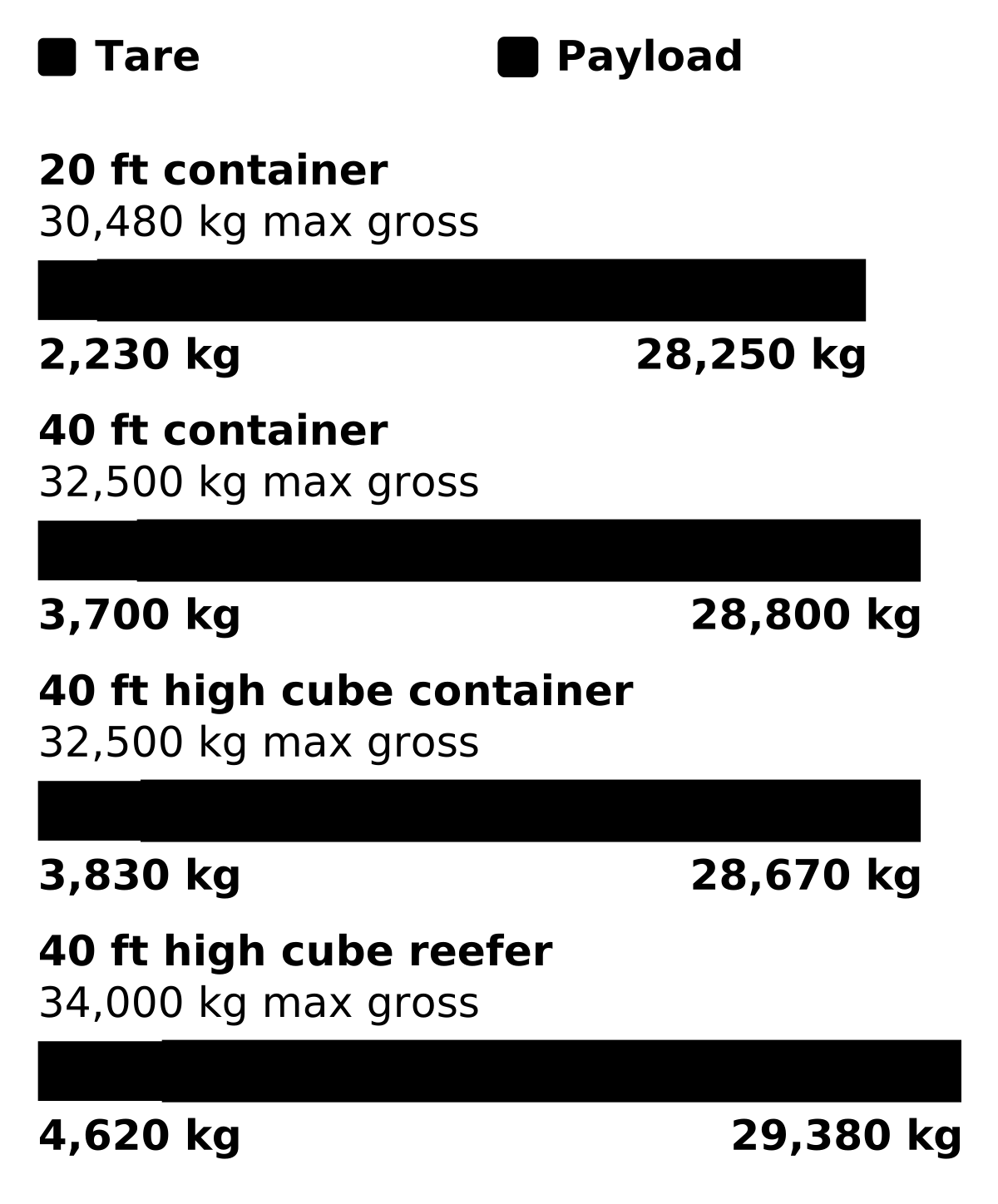
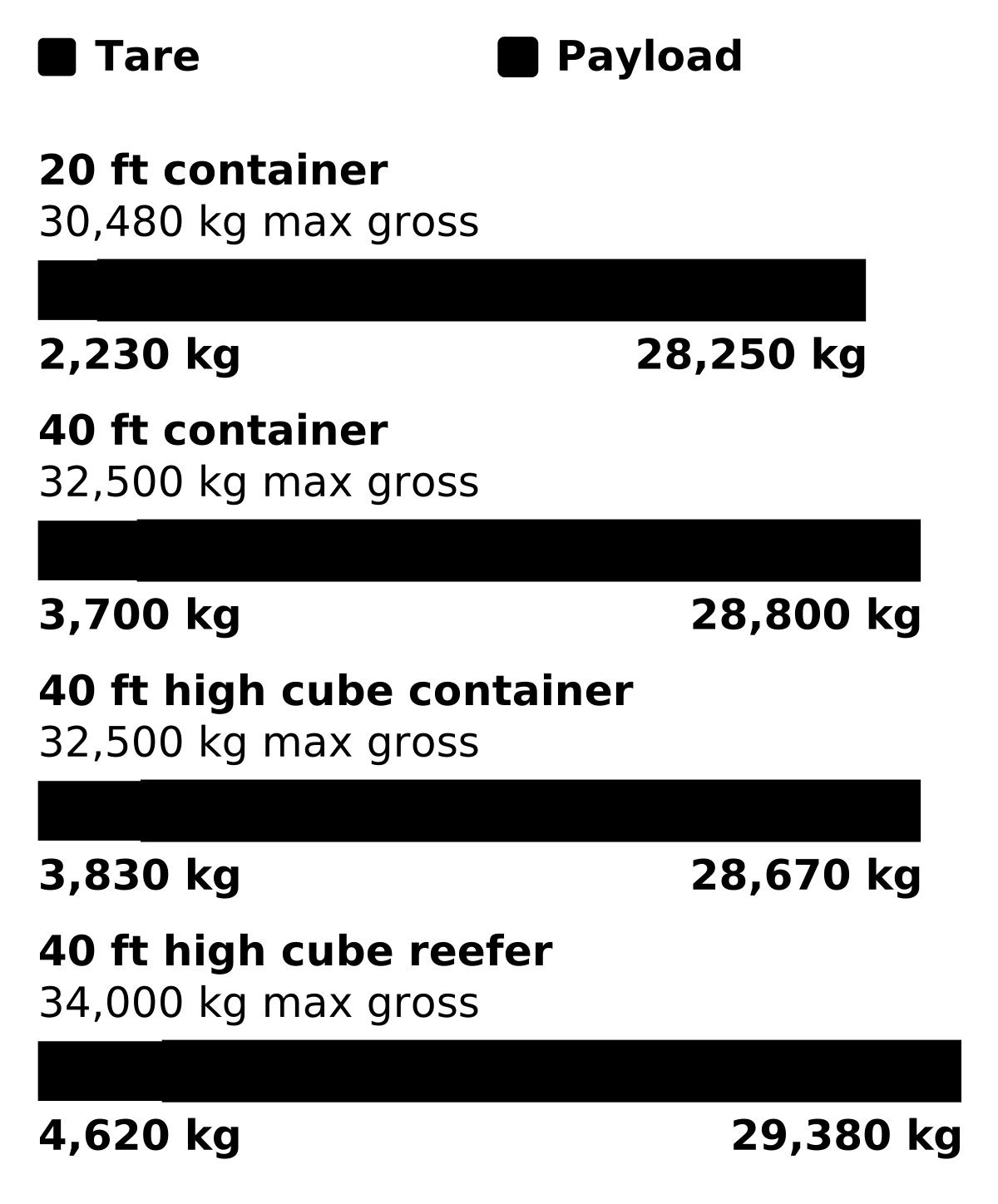 Shipping container weightTare · Payload · Max gross · VGM

 Pallets in a 20 ft container11 EUR · 10 US · one tier
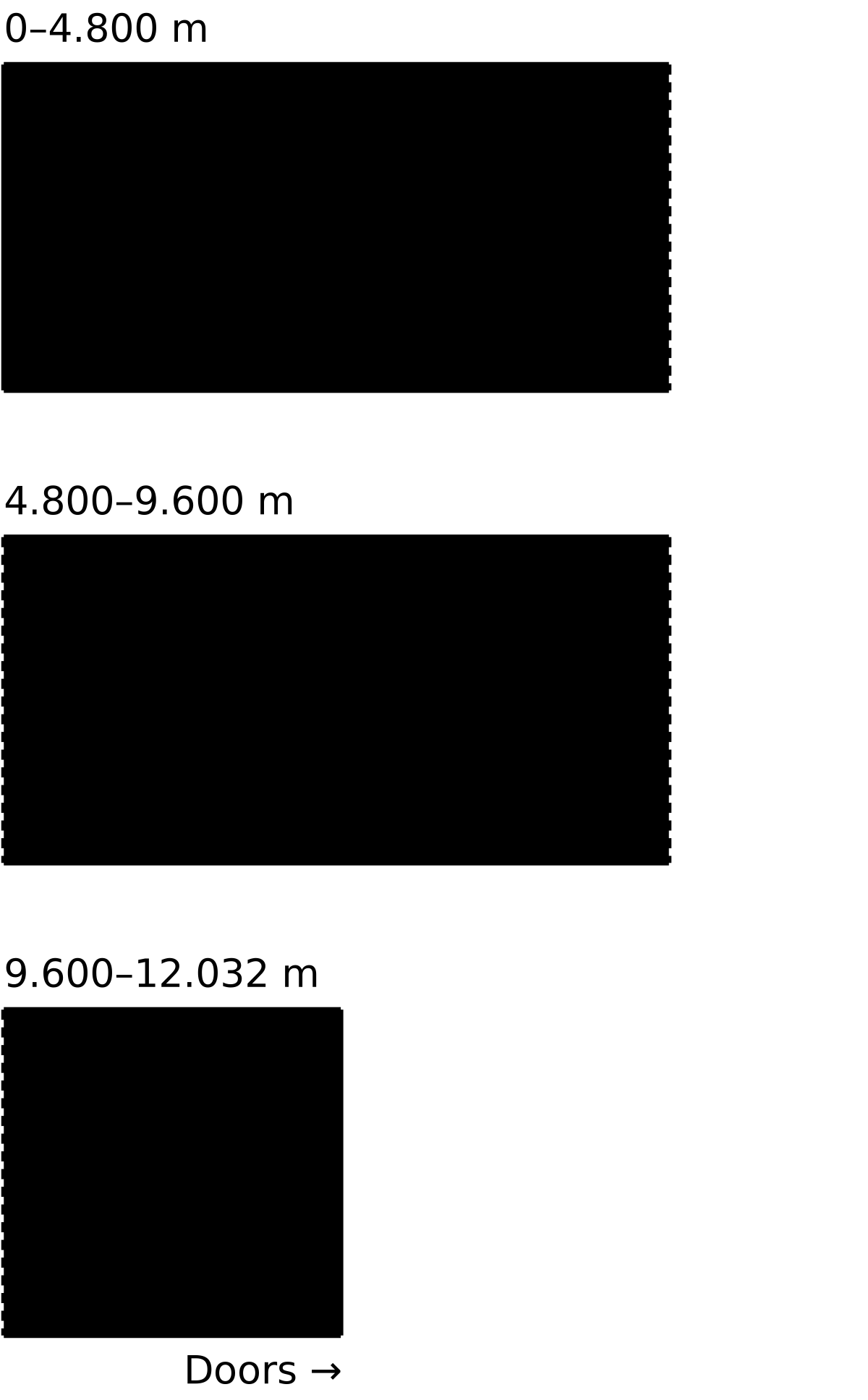
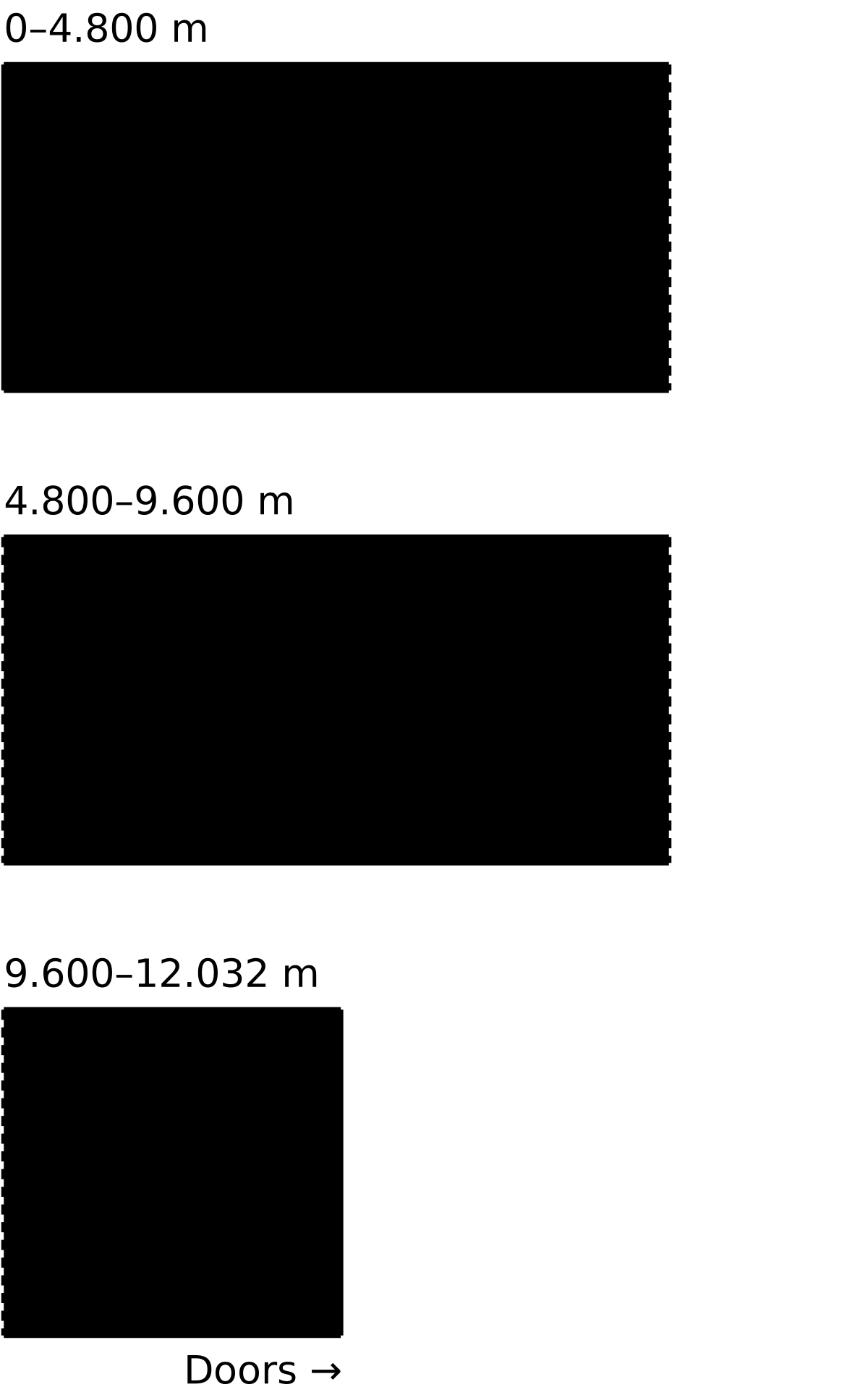 Pallets in a 40 ft container25 EUR · 21 GMA · one tier
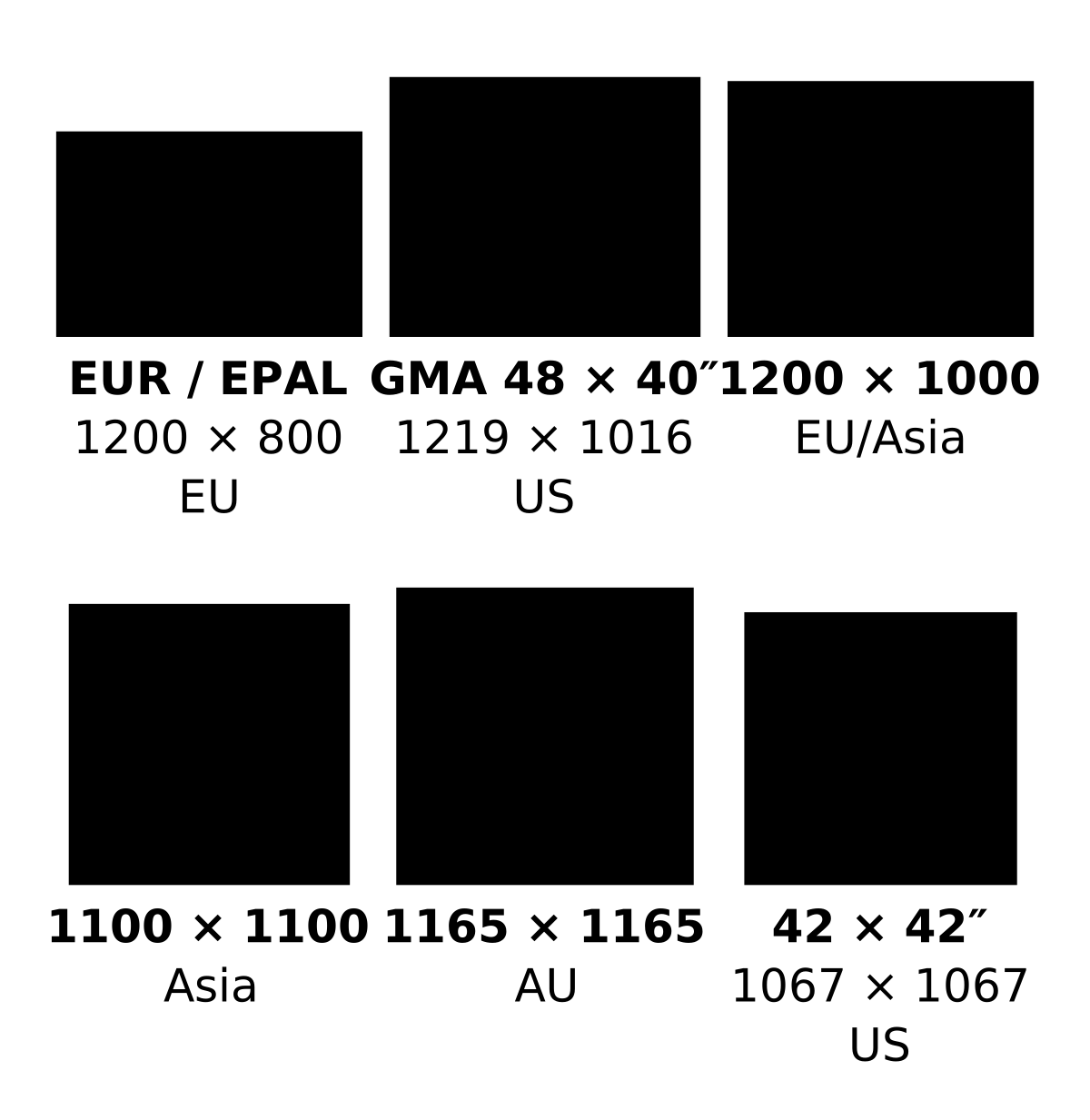
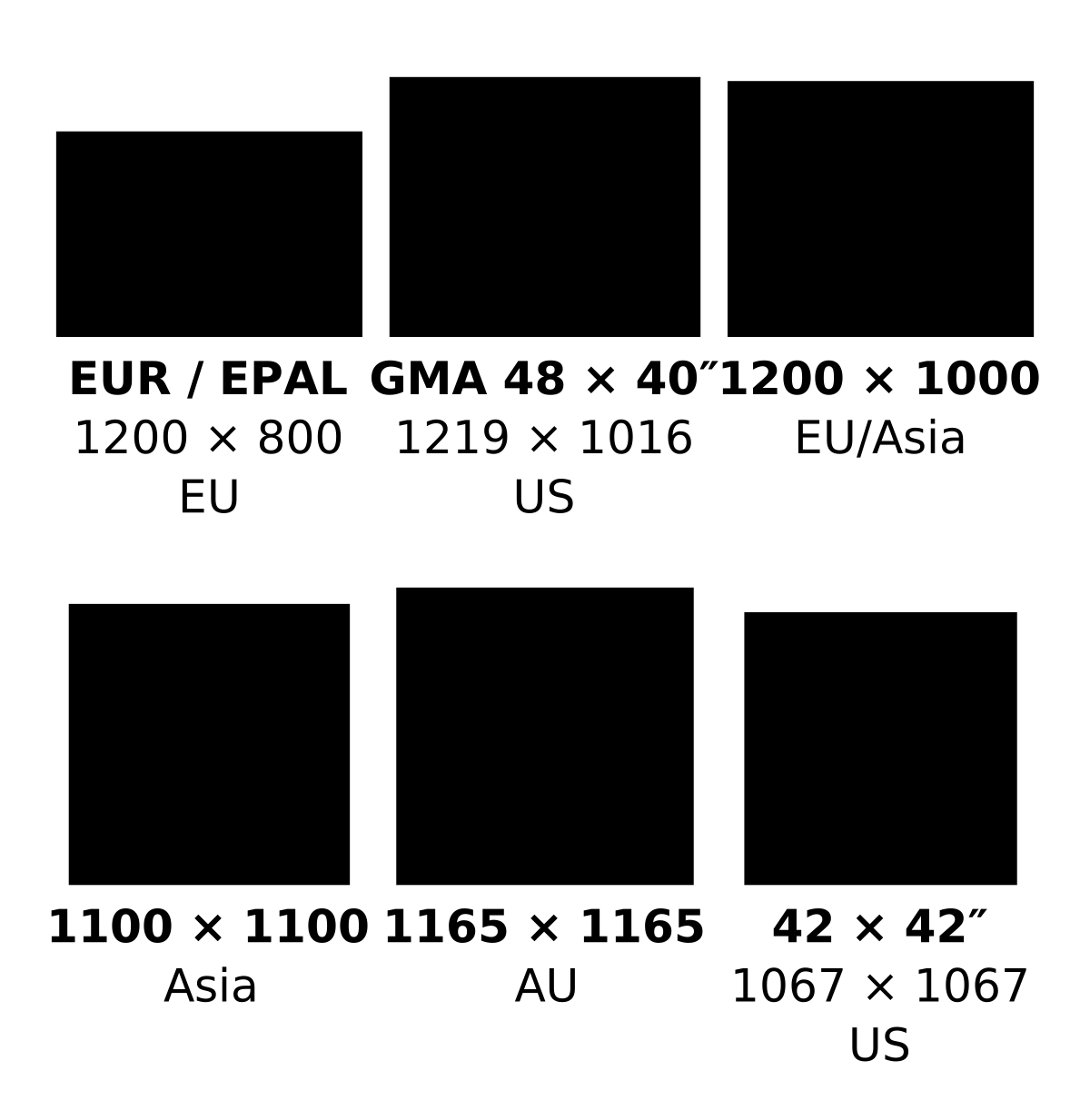 Pallet sizes & dimensionsEUR · US GMA · six footprints
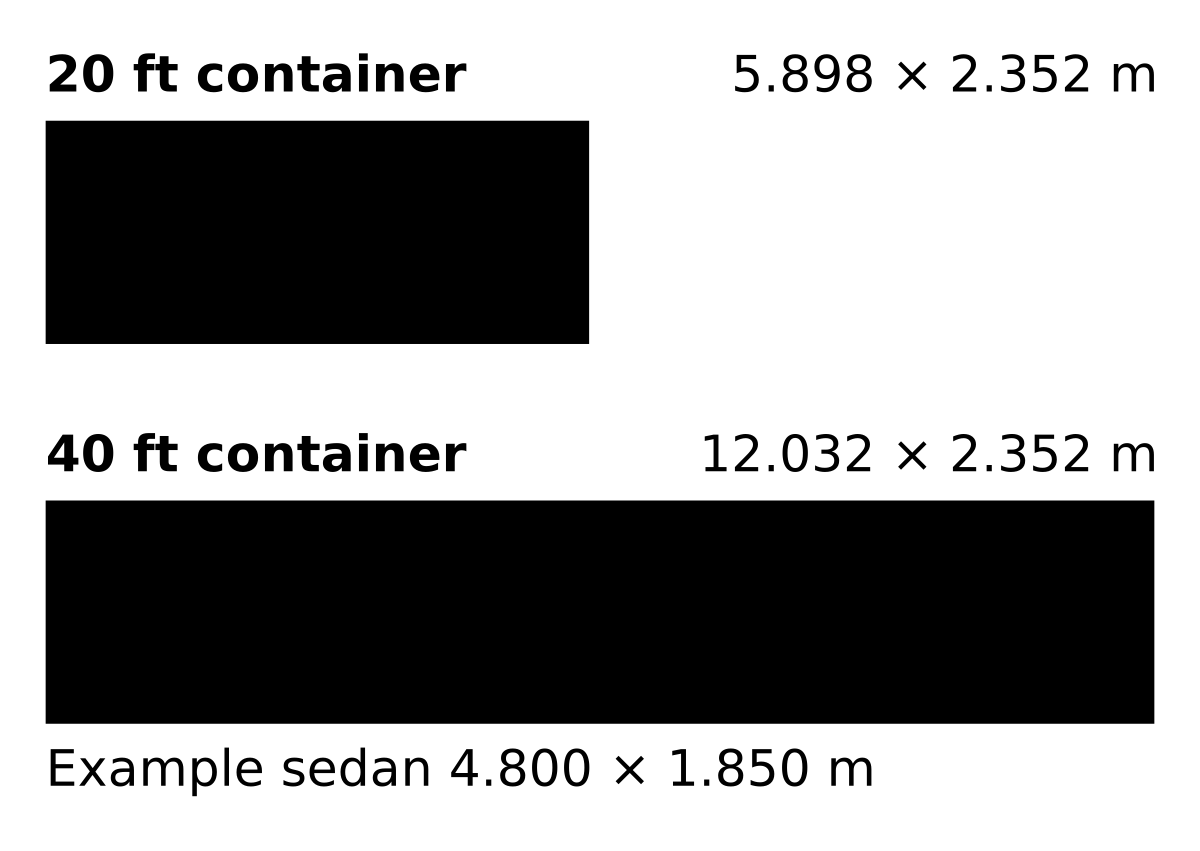
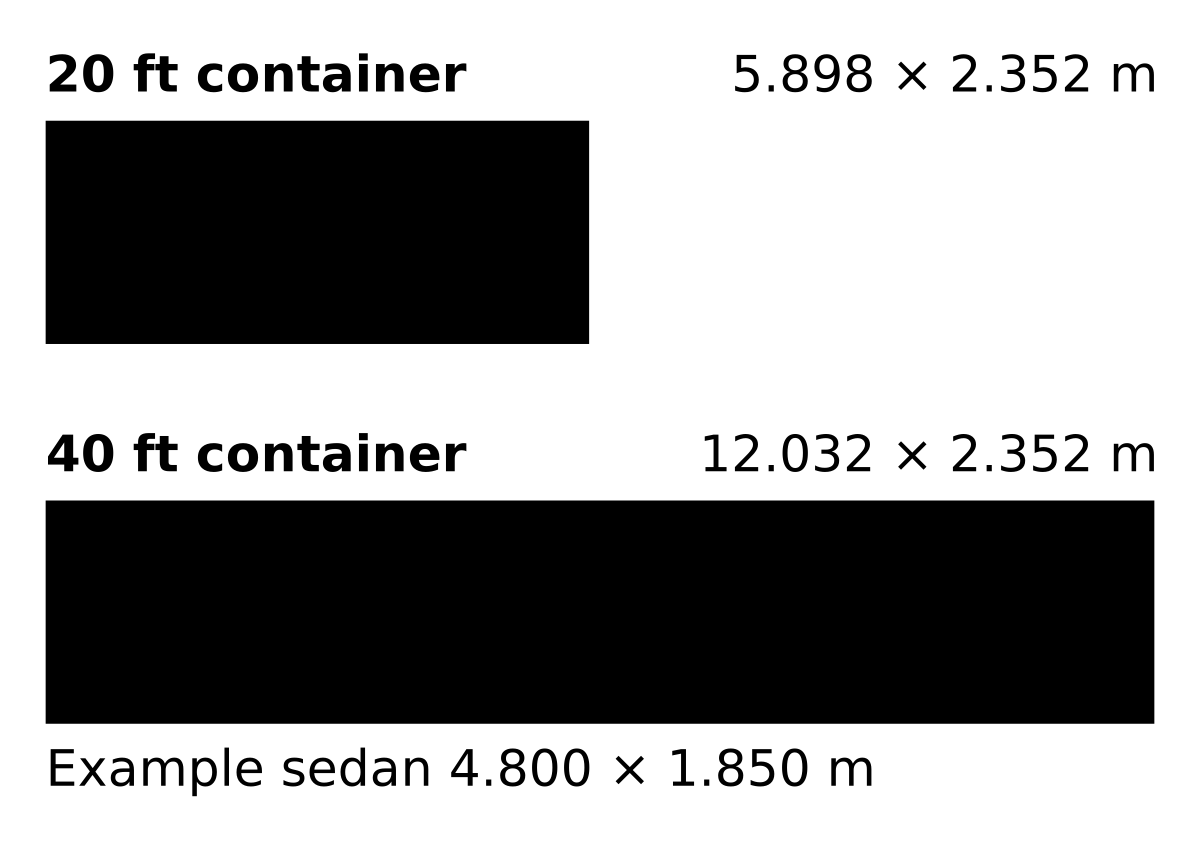 Car in a shipping containerFit math · Securing · Container vs RoRo
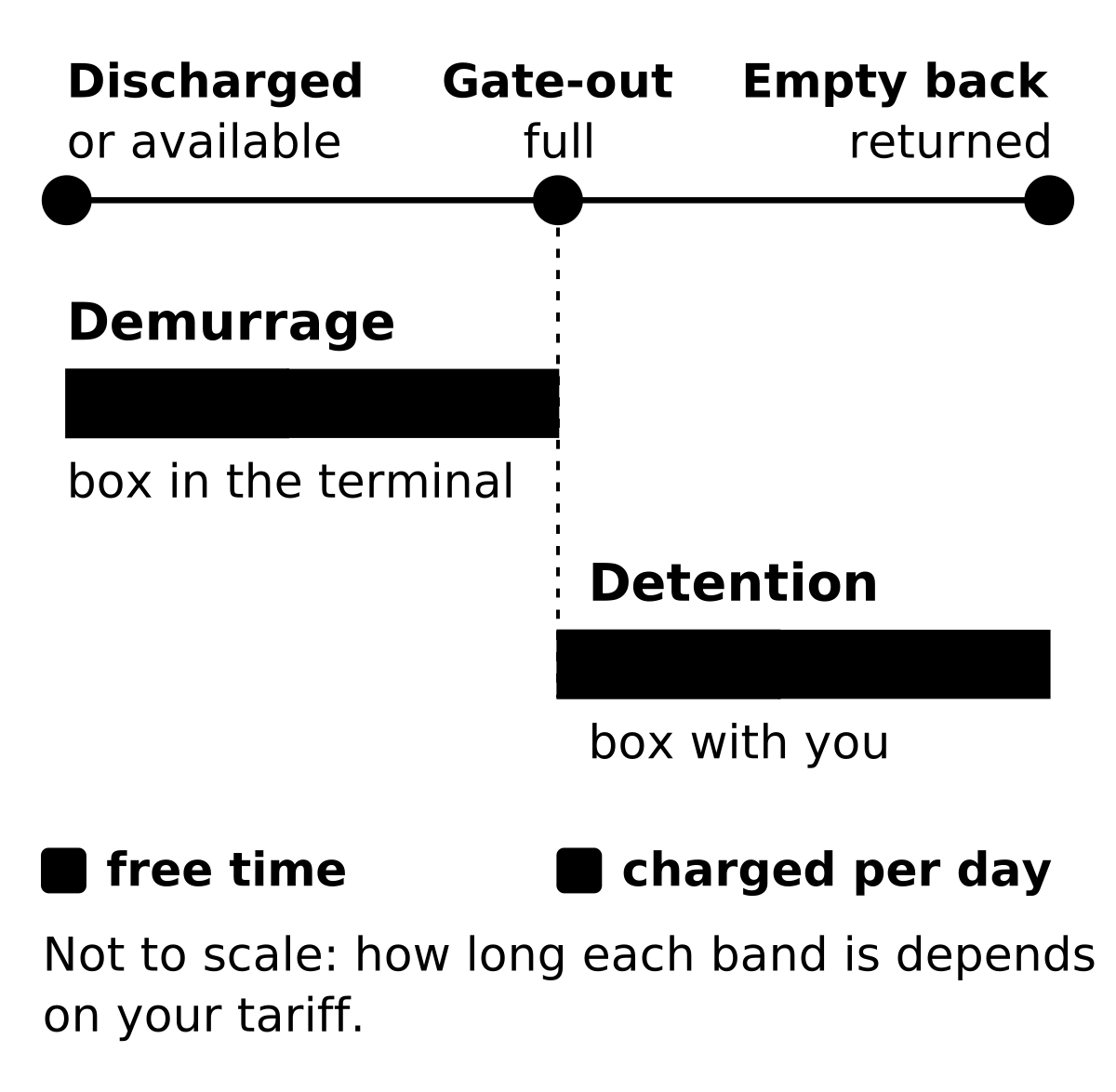
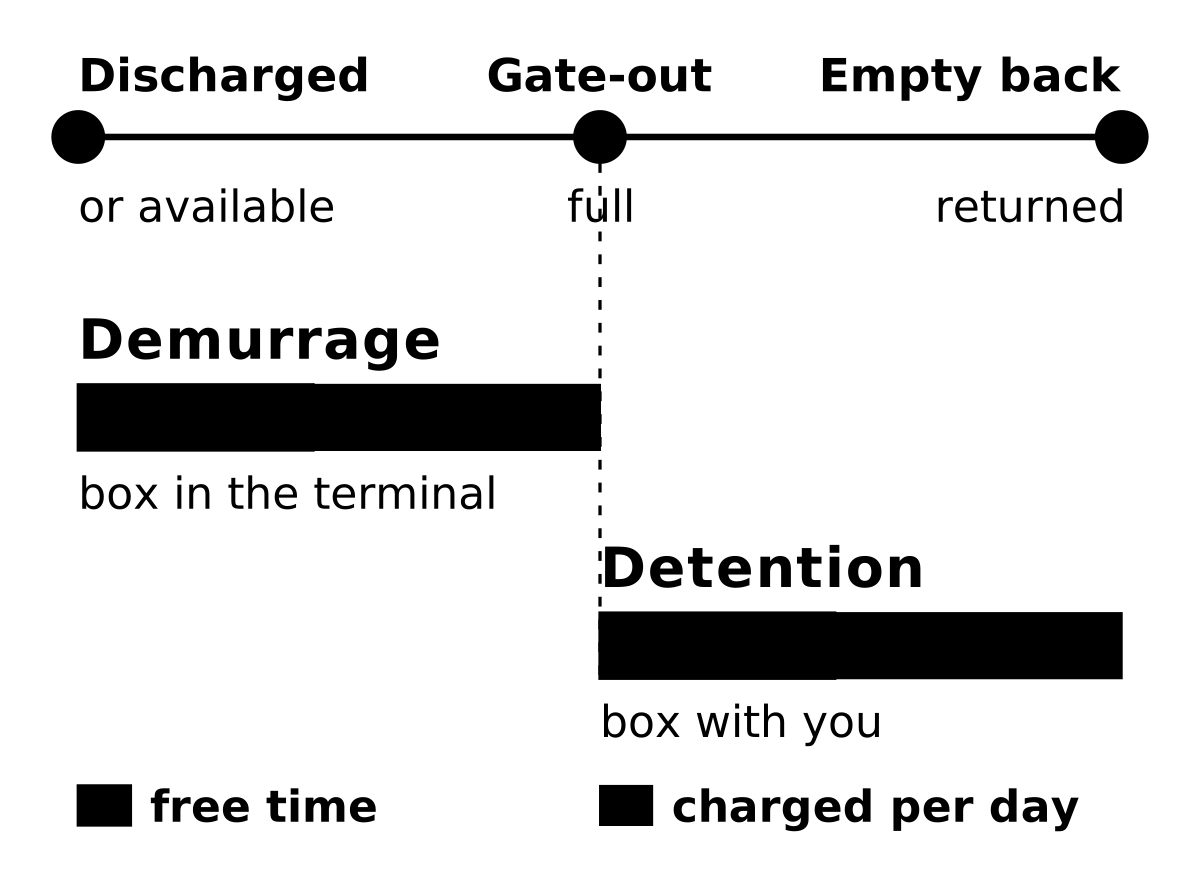 Demurrage vs detentionTwo clocks · free time · per diem
Buying and owning
Prices, condition grades, inspection, delivery and keeping a box secure.
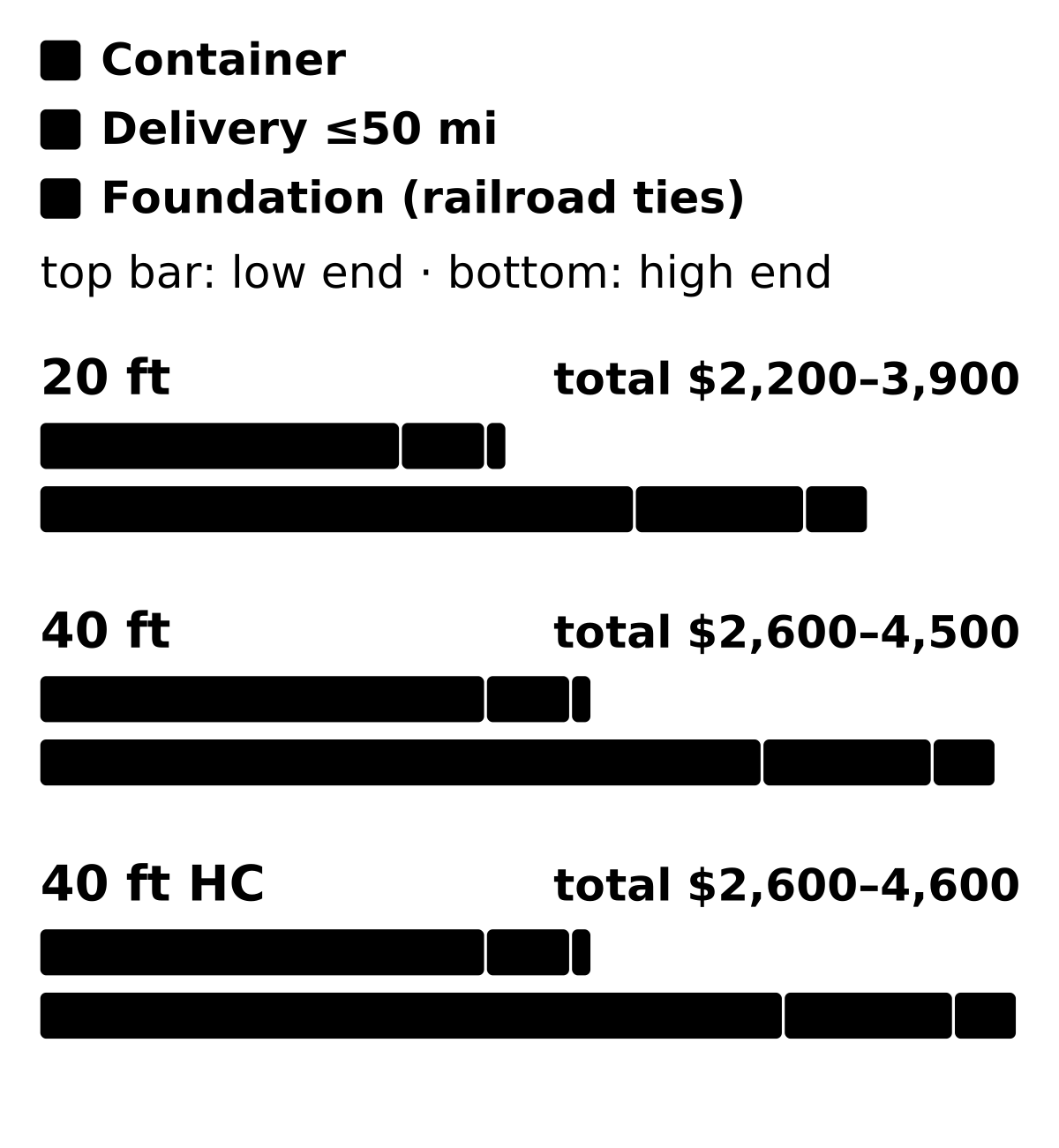
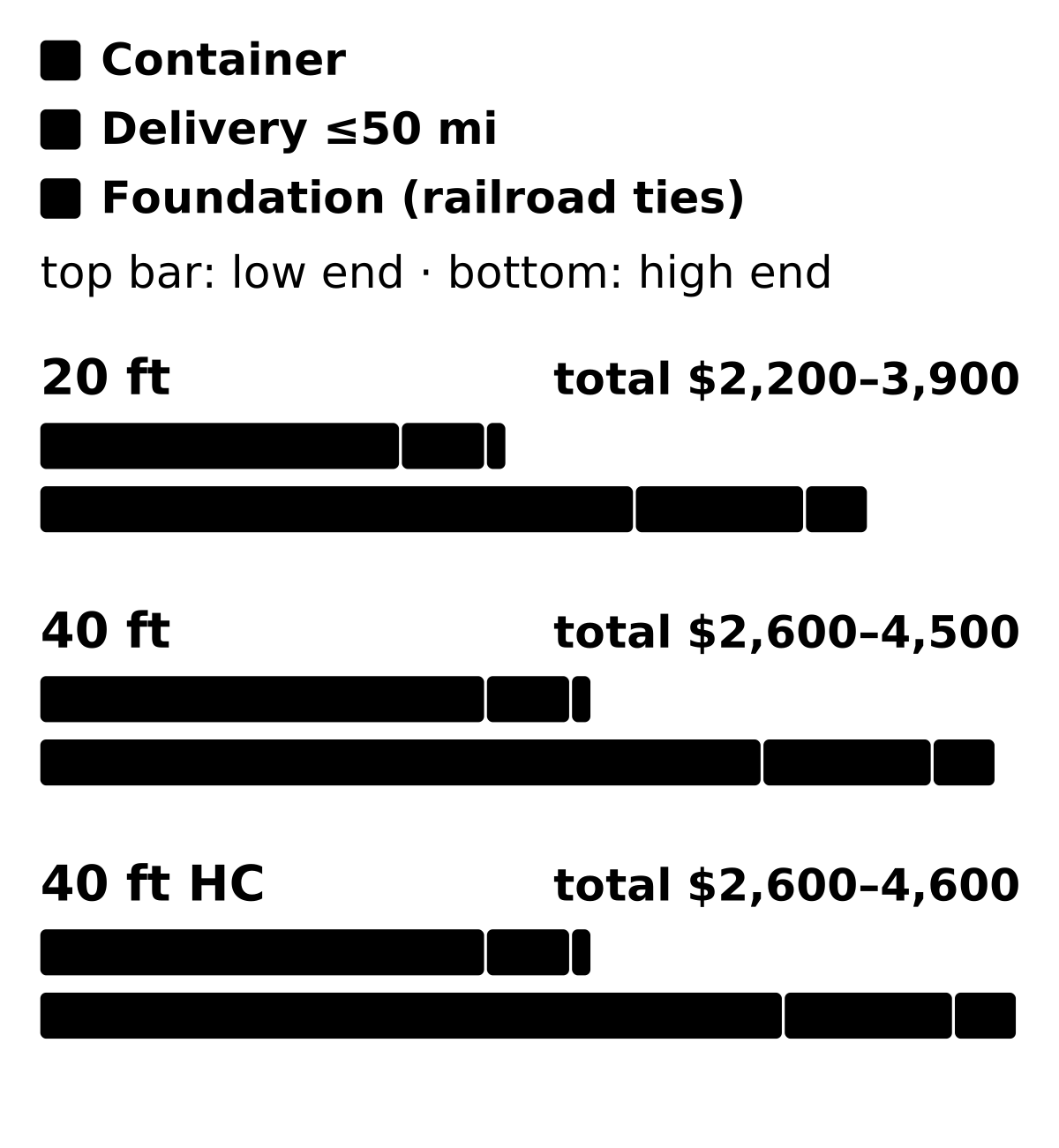 Shipping container pricesUSD · US market · 28 named sources · read 2026-10-05 and 2026-10-09
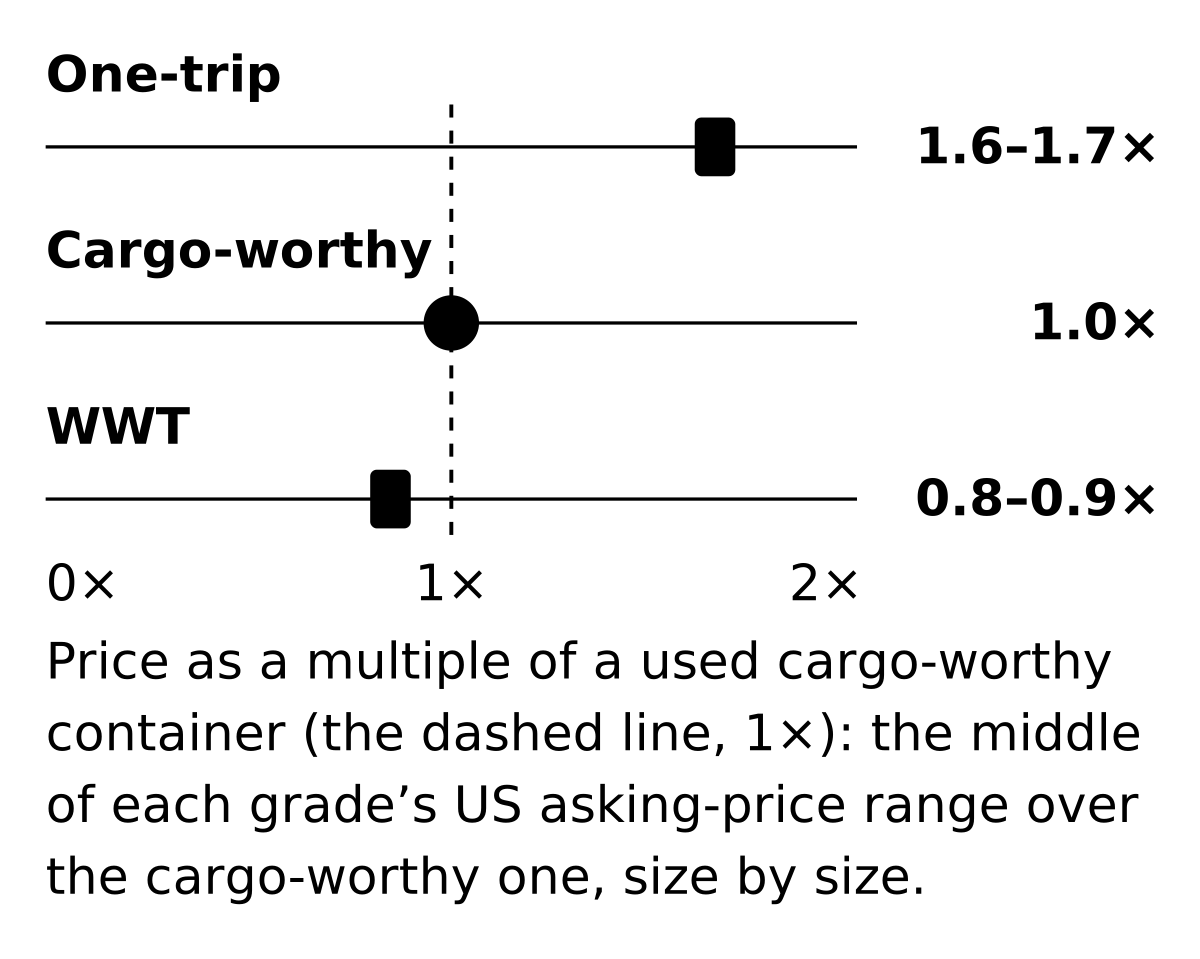
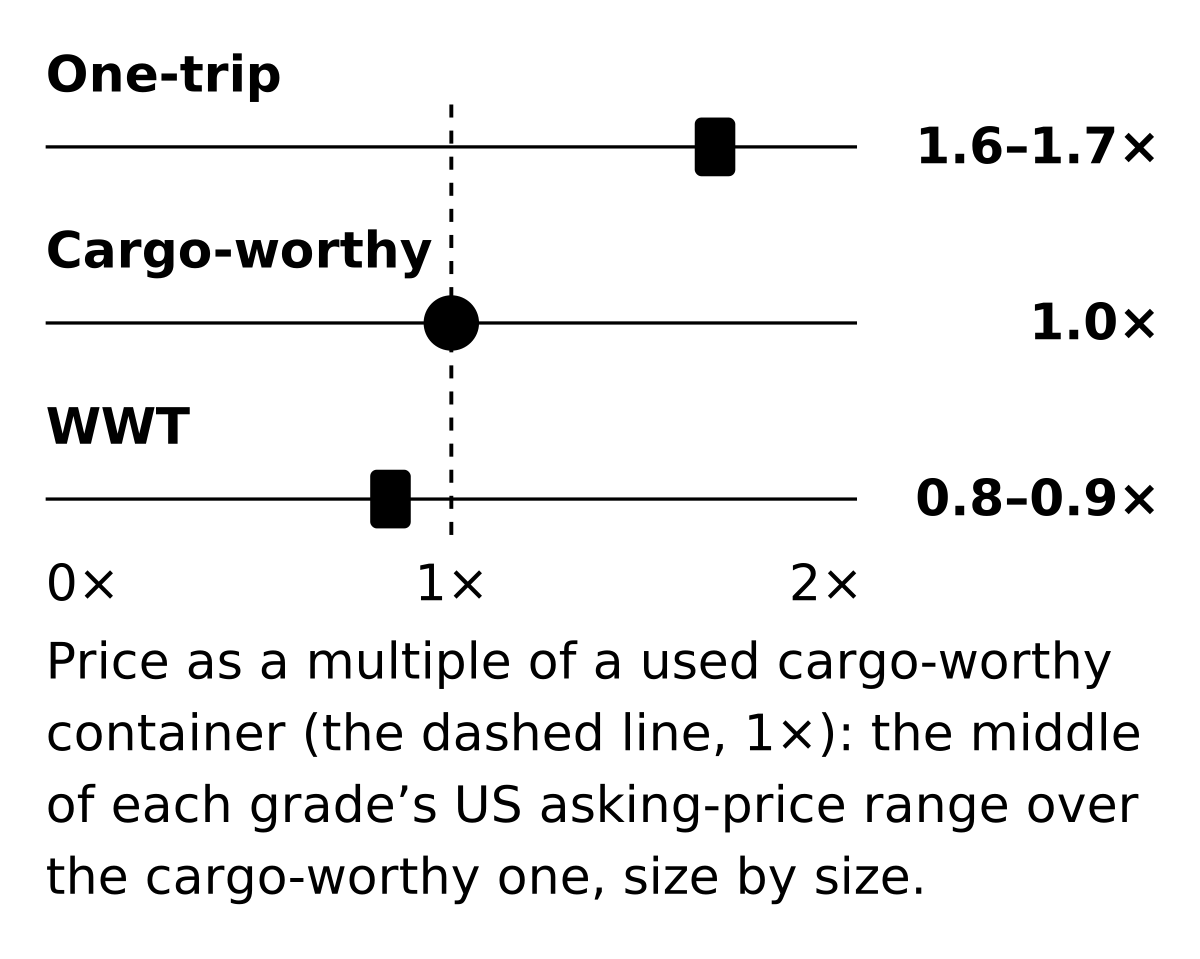 Container grades & conditionOne-trip → IICL → CW → WWT → as-is
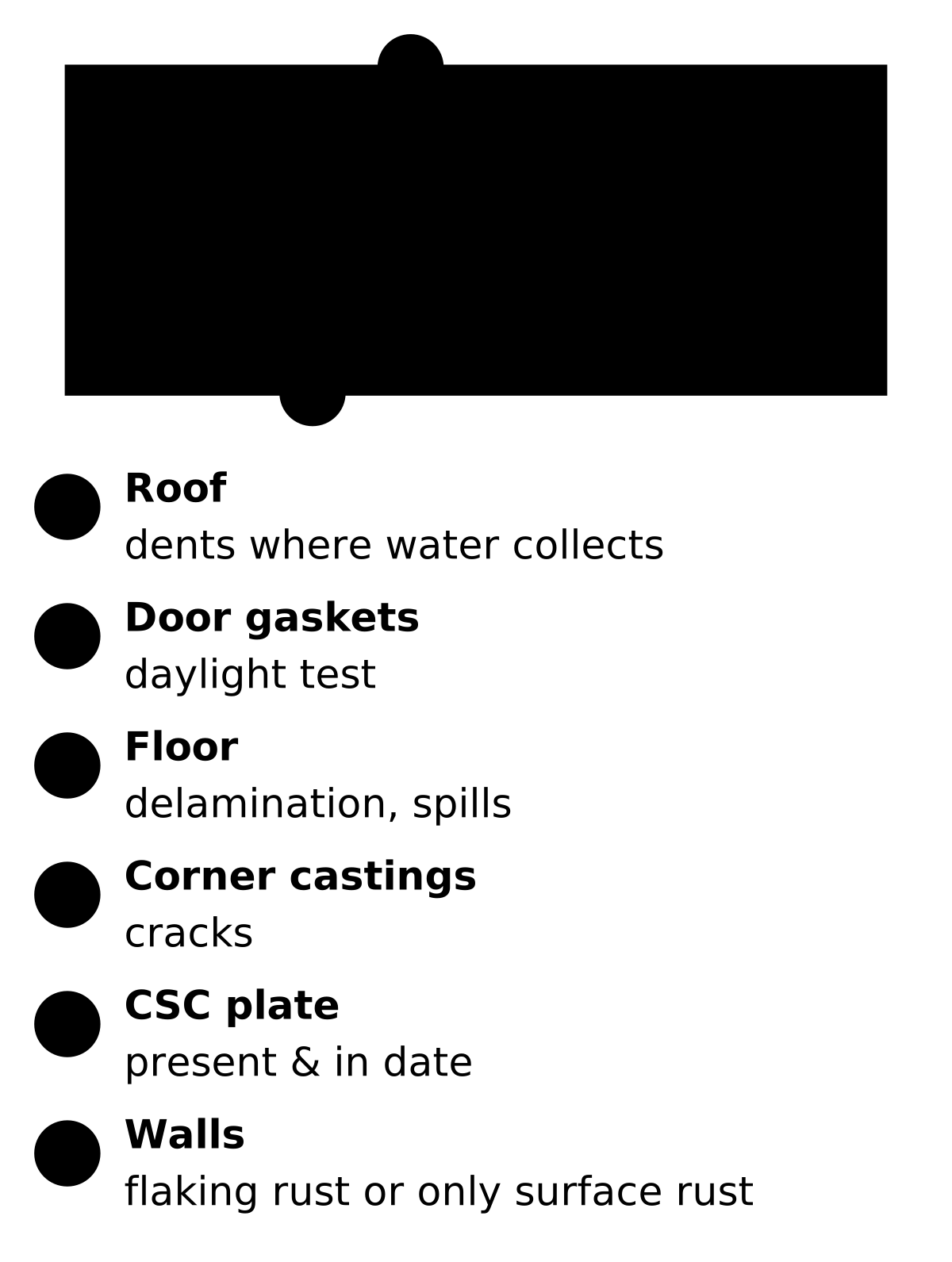
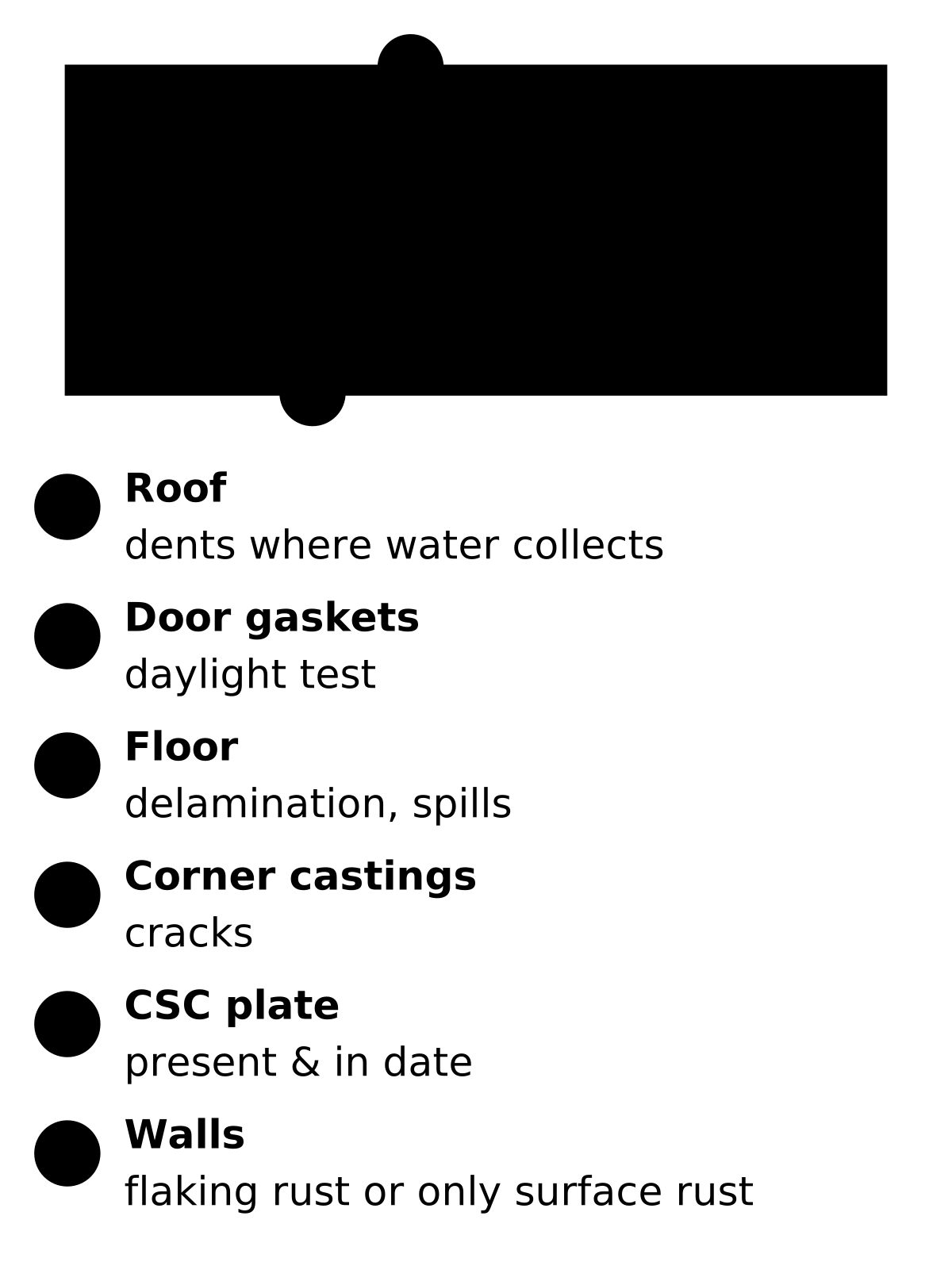 Buying a container: checklistInspect · Grade · Price · Deliver
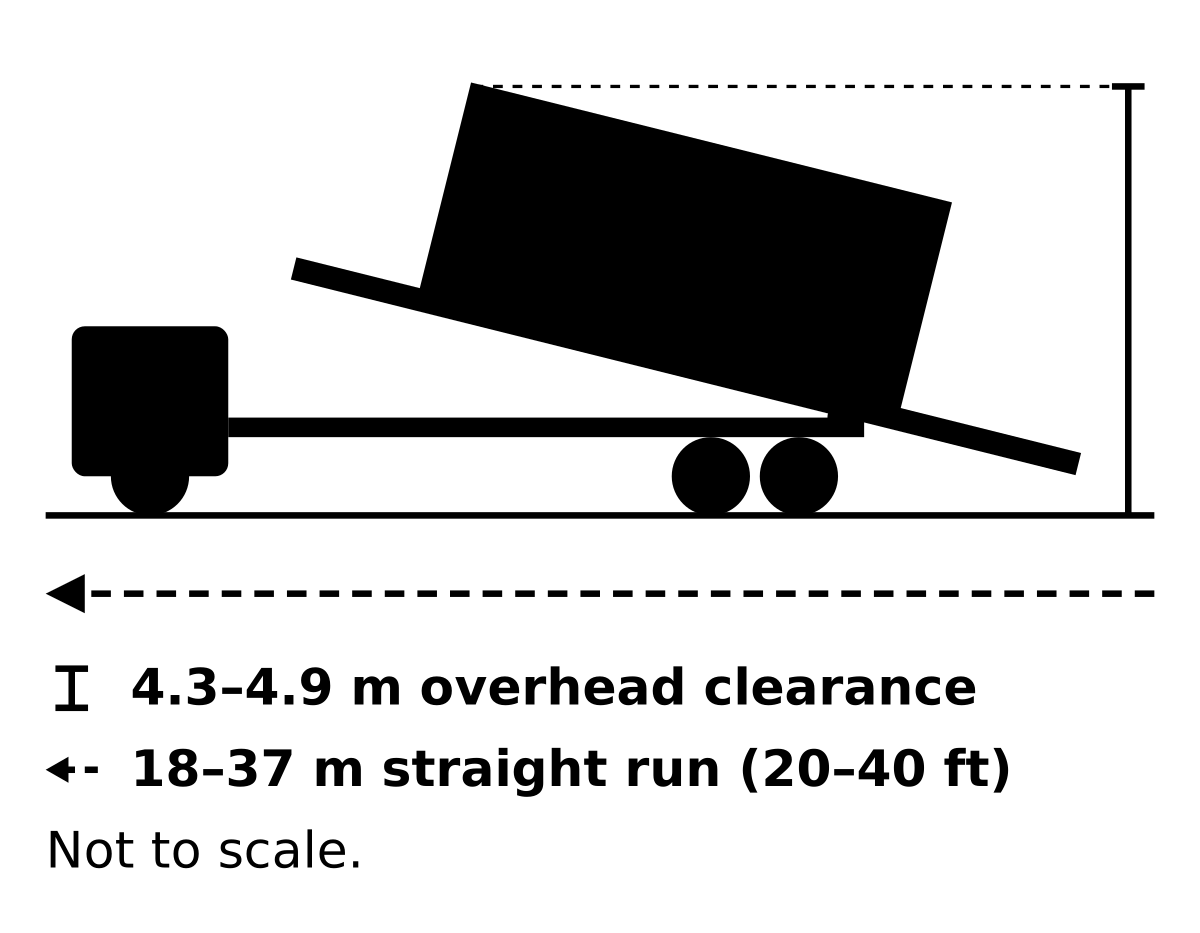
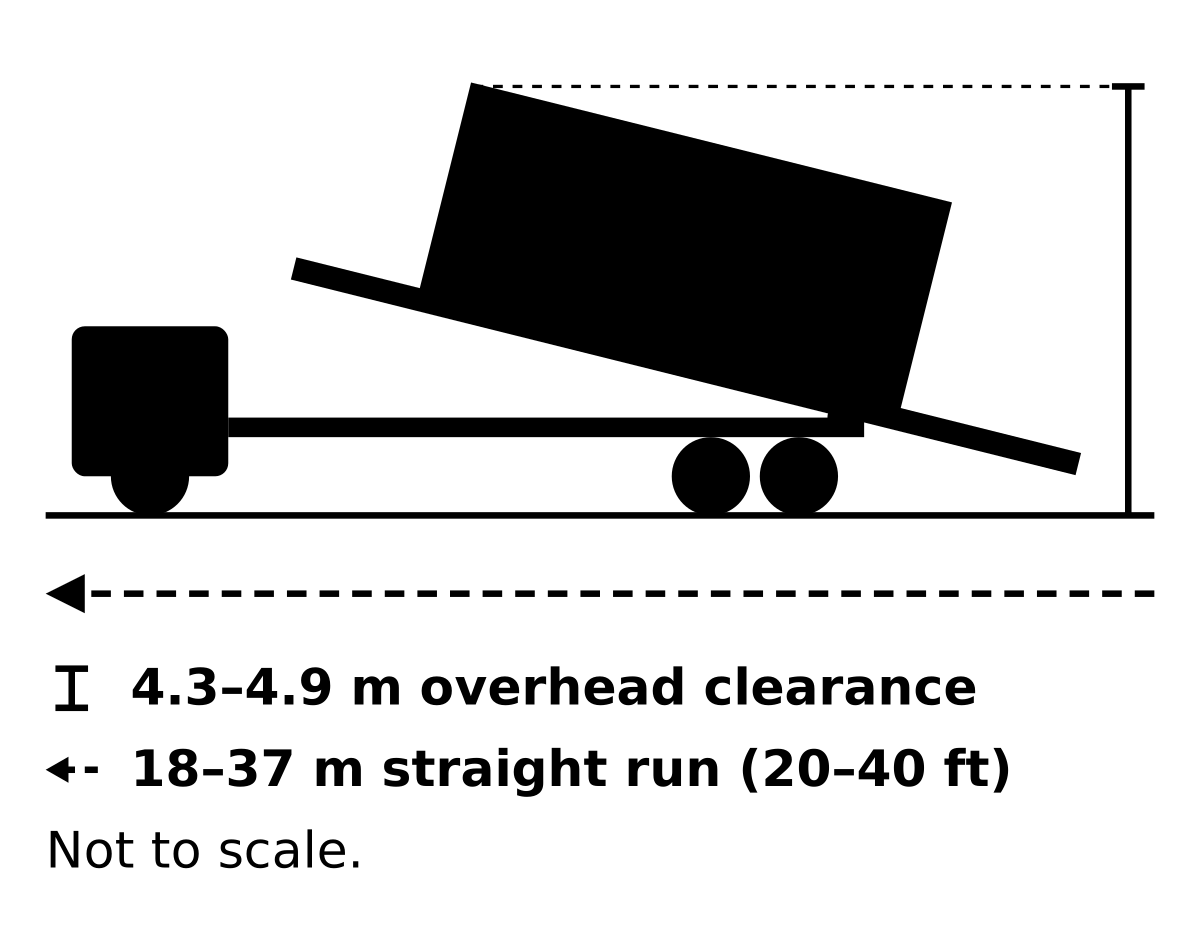 Moving a shipping containerTilt-bed · HIAB · Crane · Side-loader
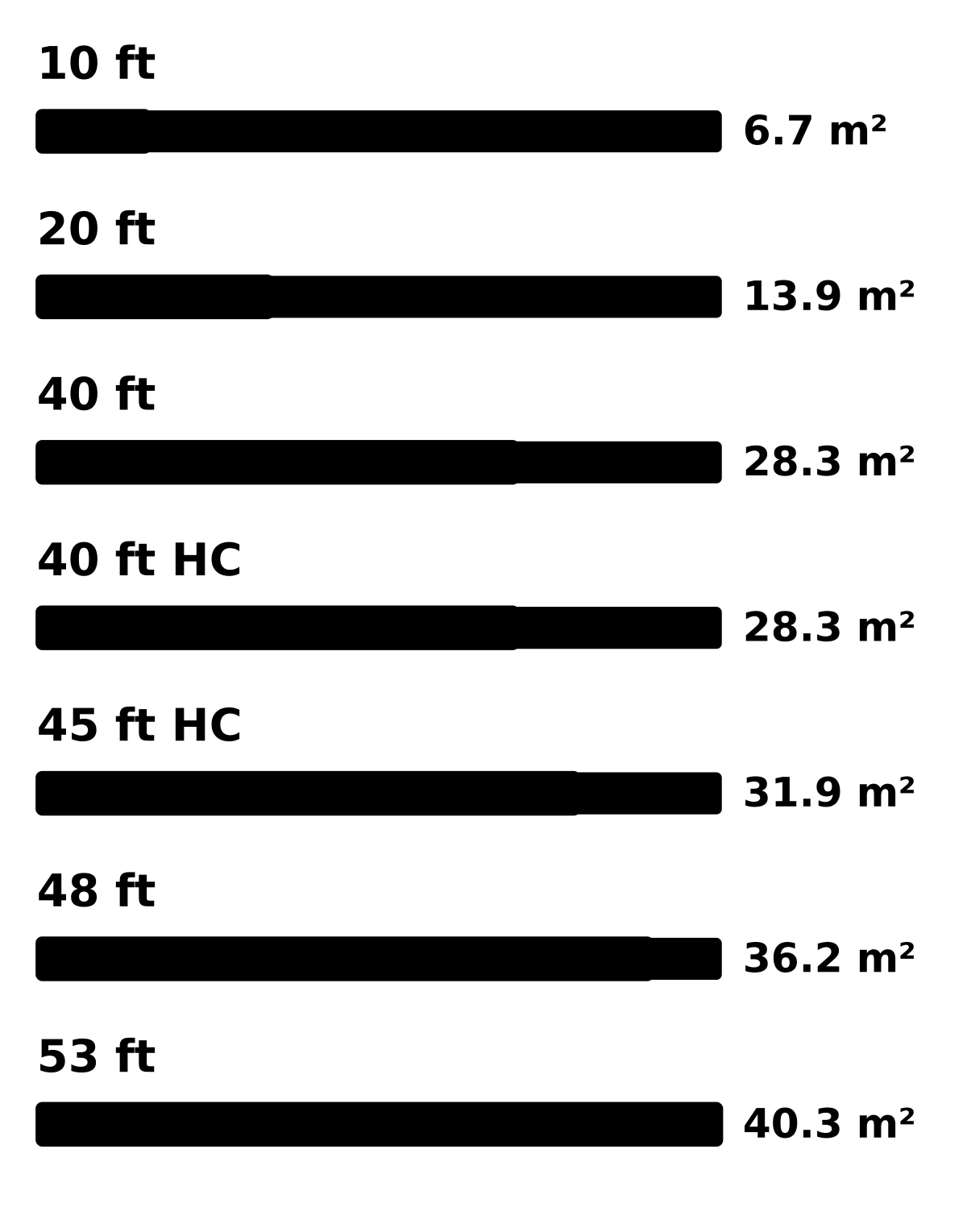
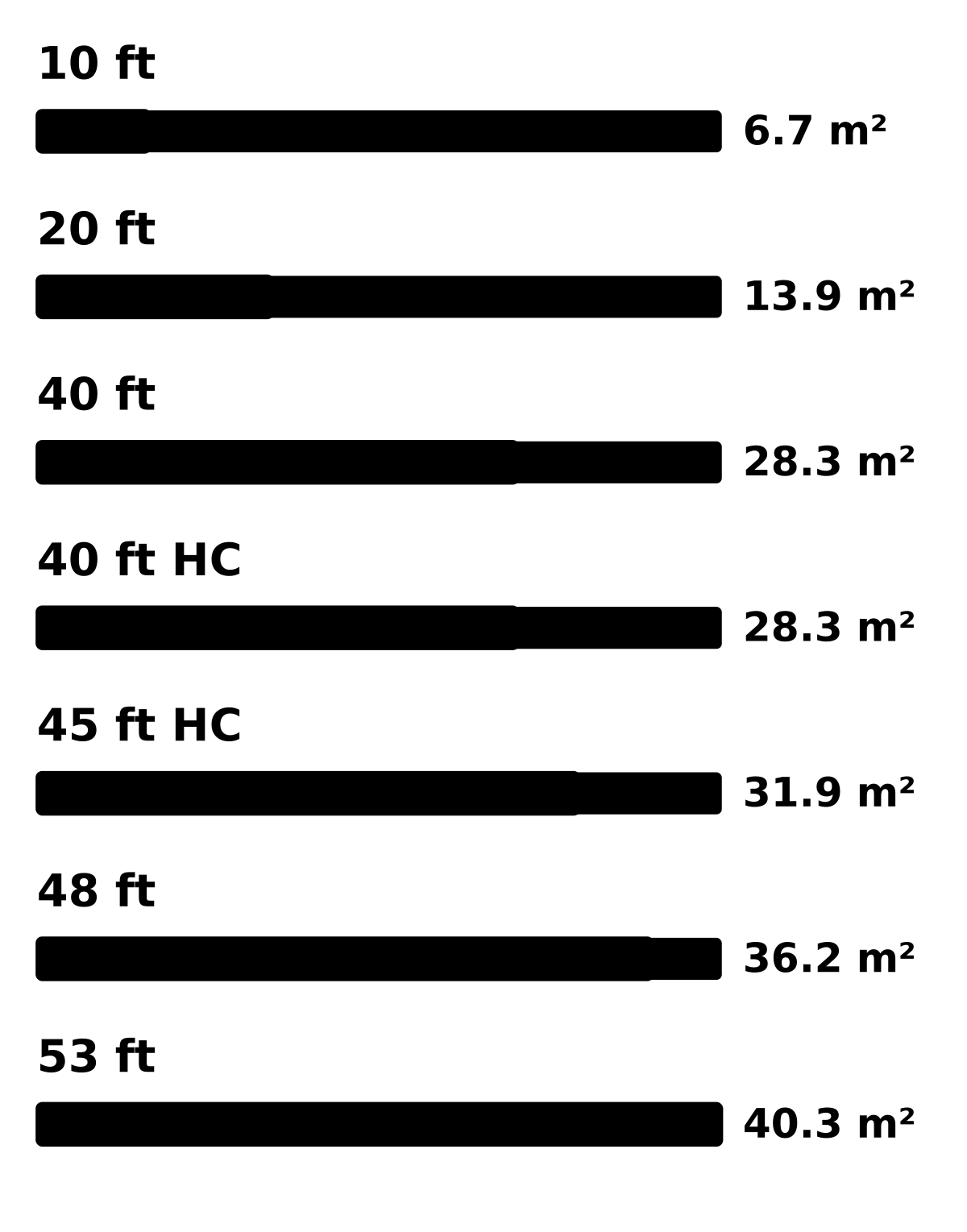 Storage container sizes8 · 10 · 16 · 20 · 40 · 45 · 48 · 53 ft
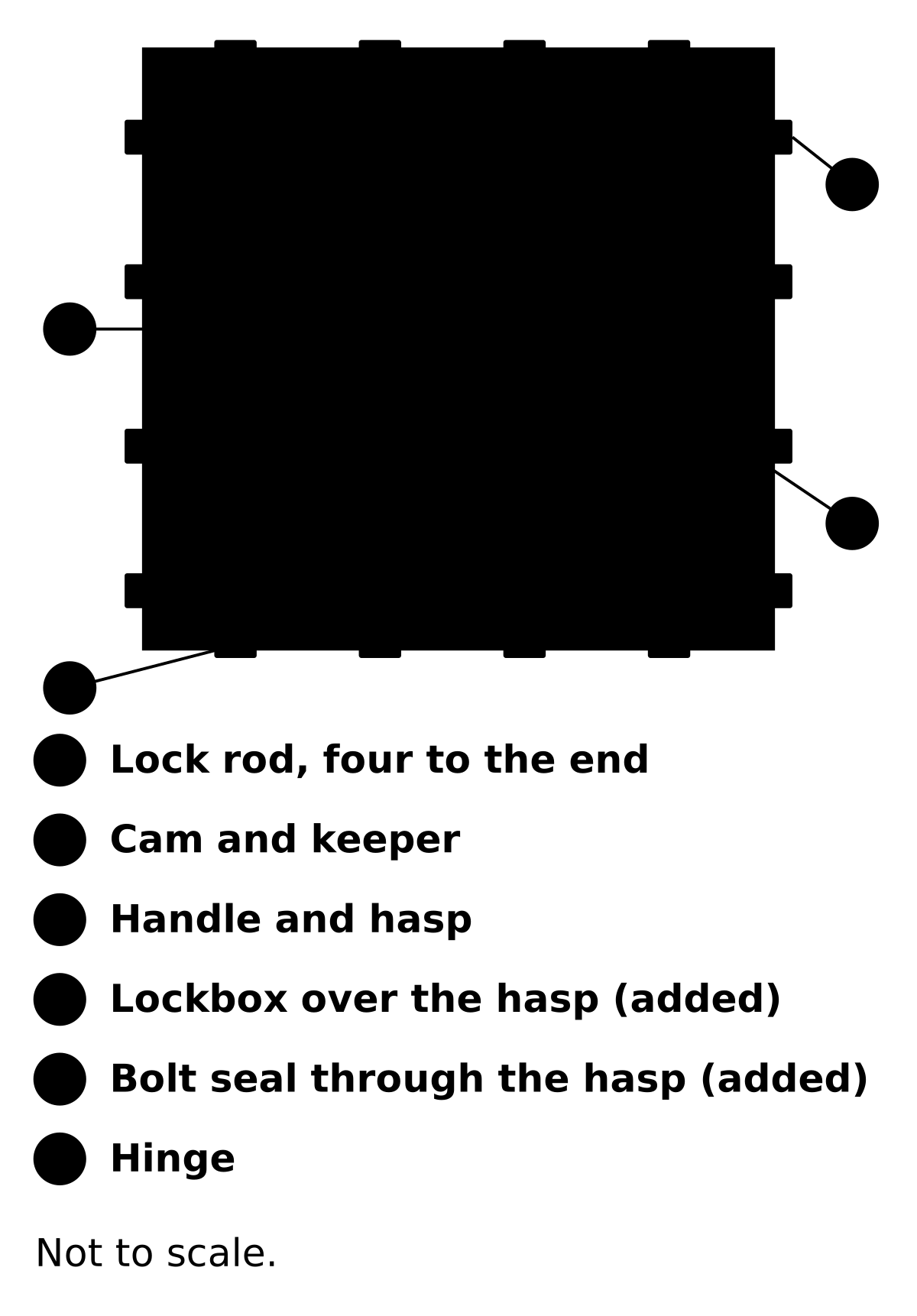
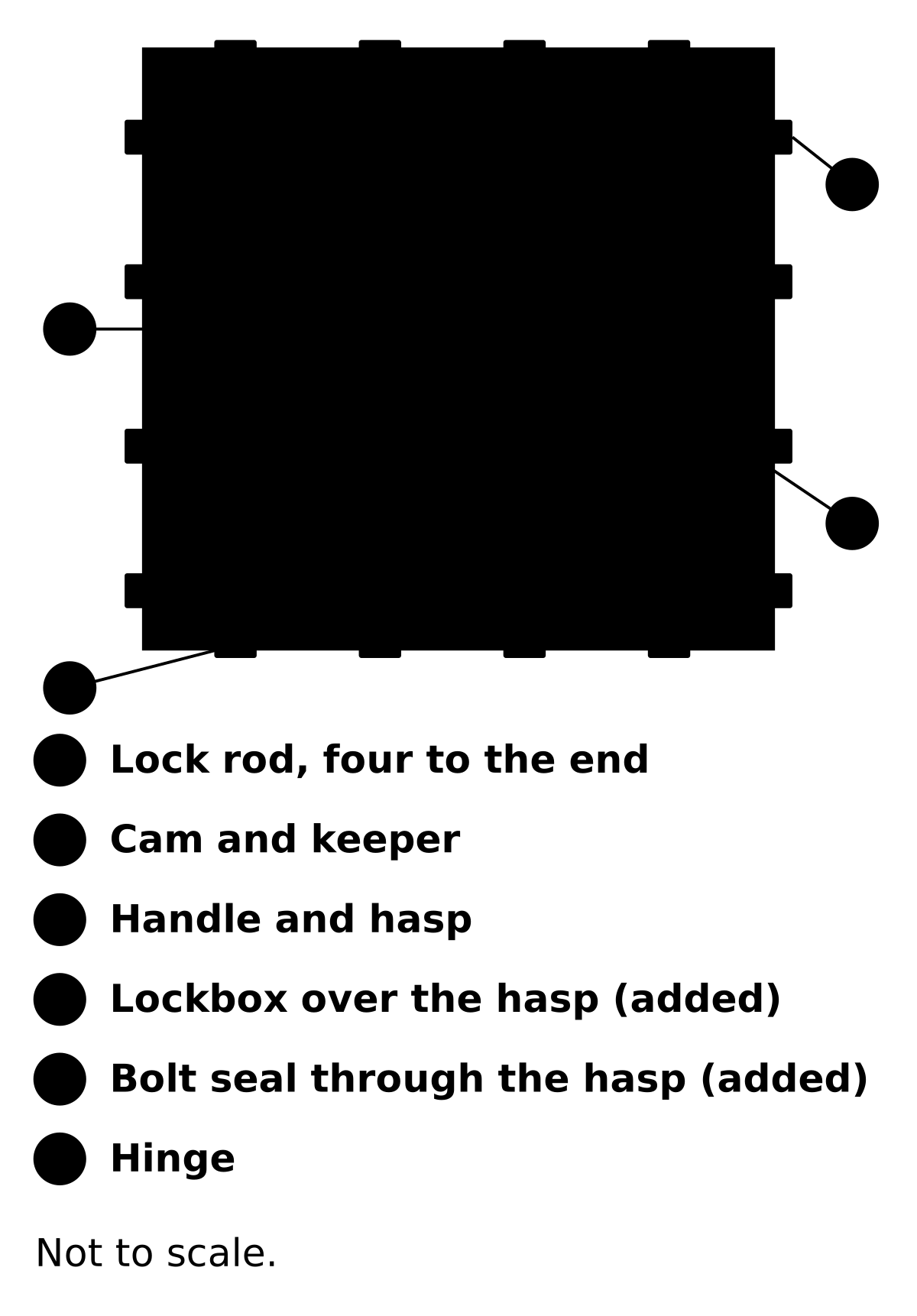 Container locks & sealsLockbox · Padlock · Bolt seal · ISO 17712
Building with containers
From the first plan to the envelope: what a steel box needs to become a room.
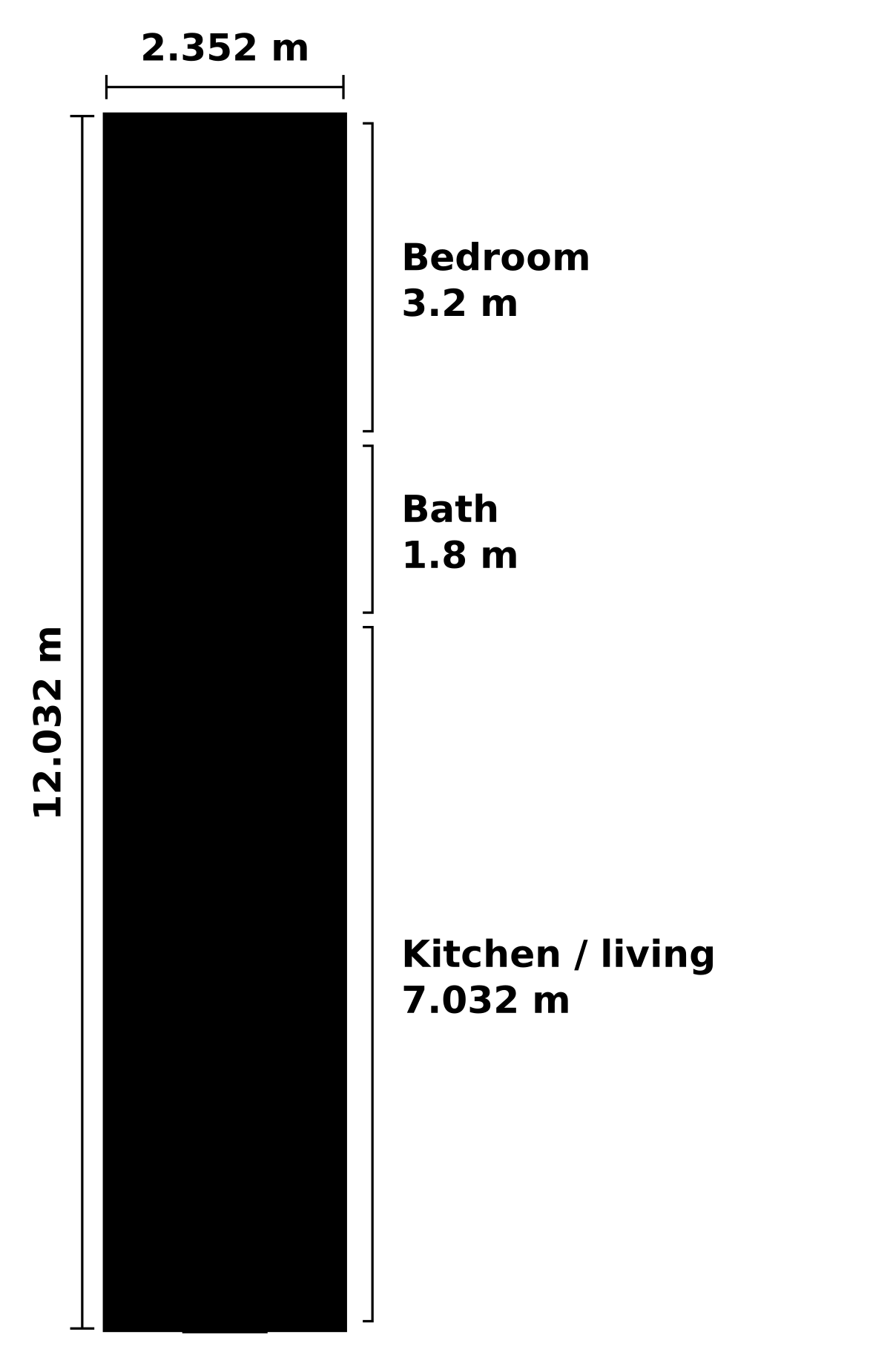
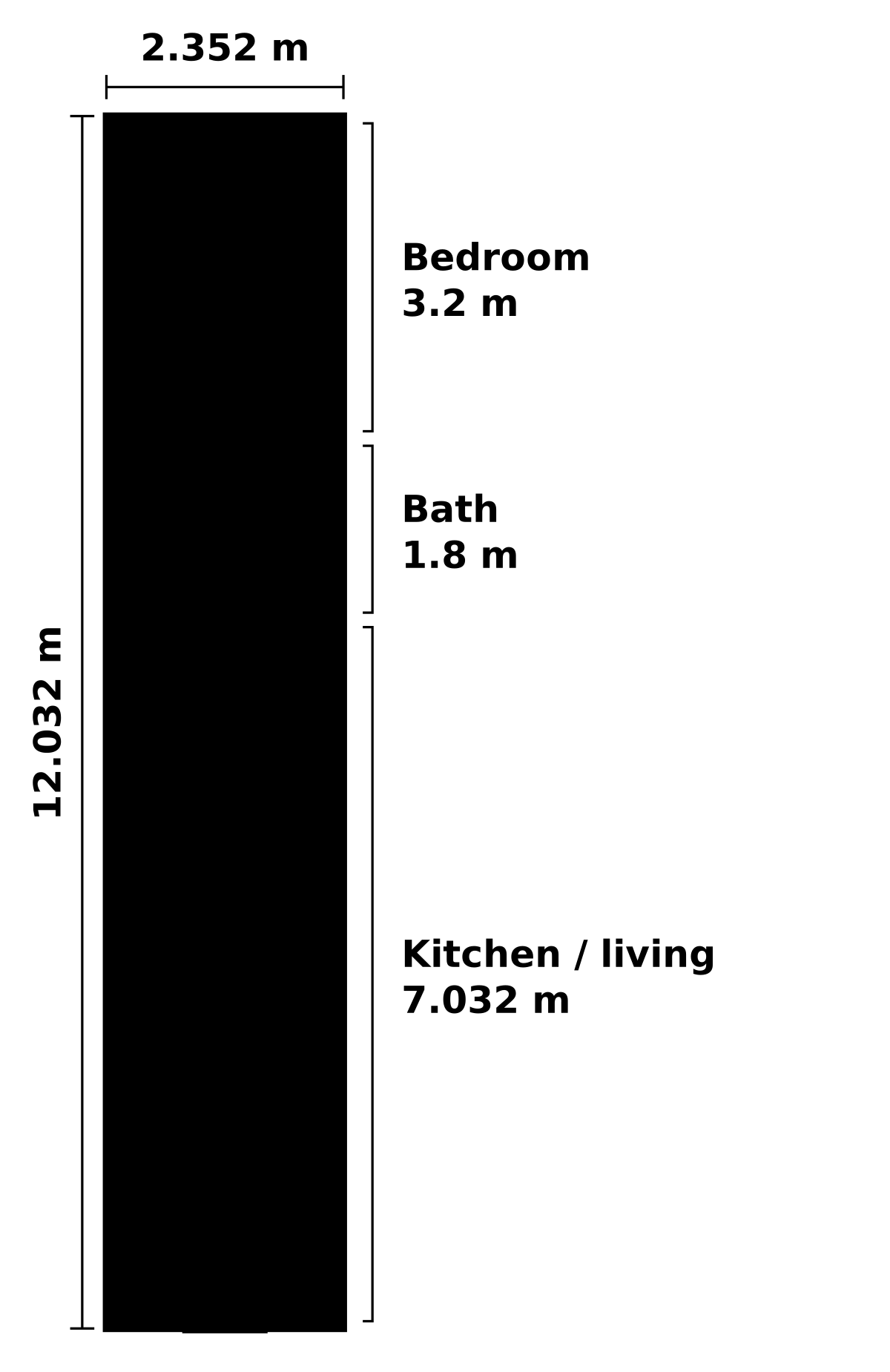 Container home dimensionsFloor plans · Stacking · Cost · Permits
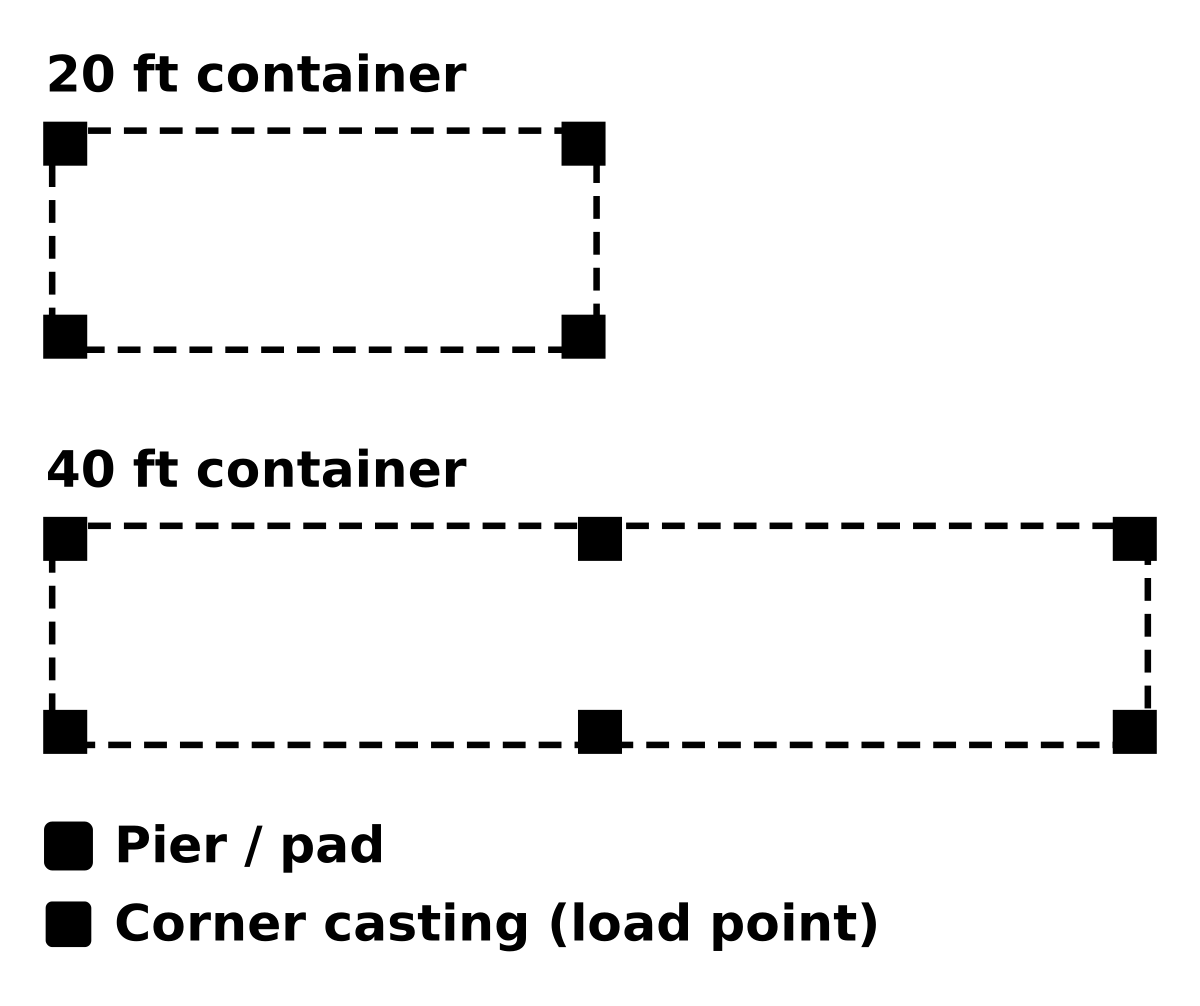
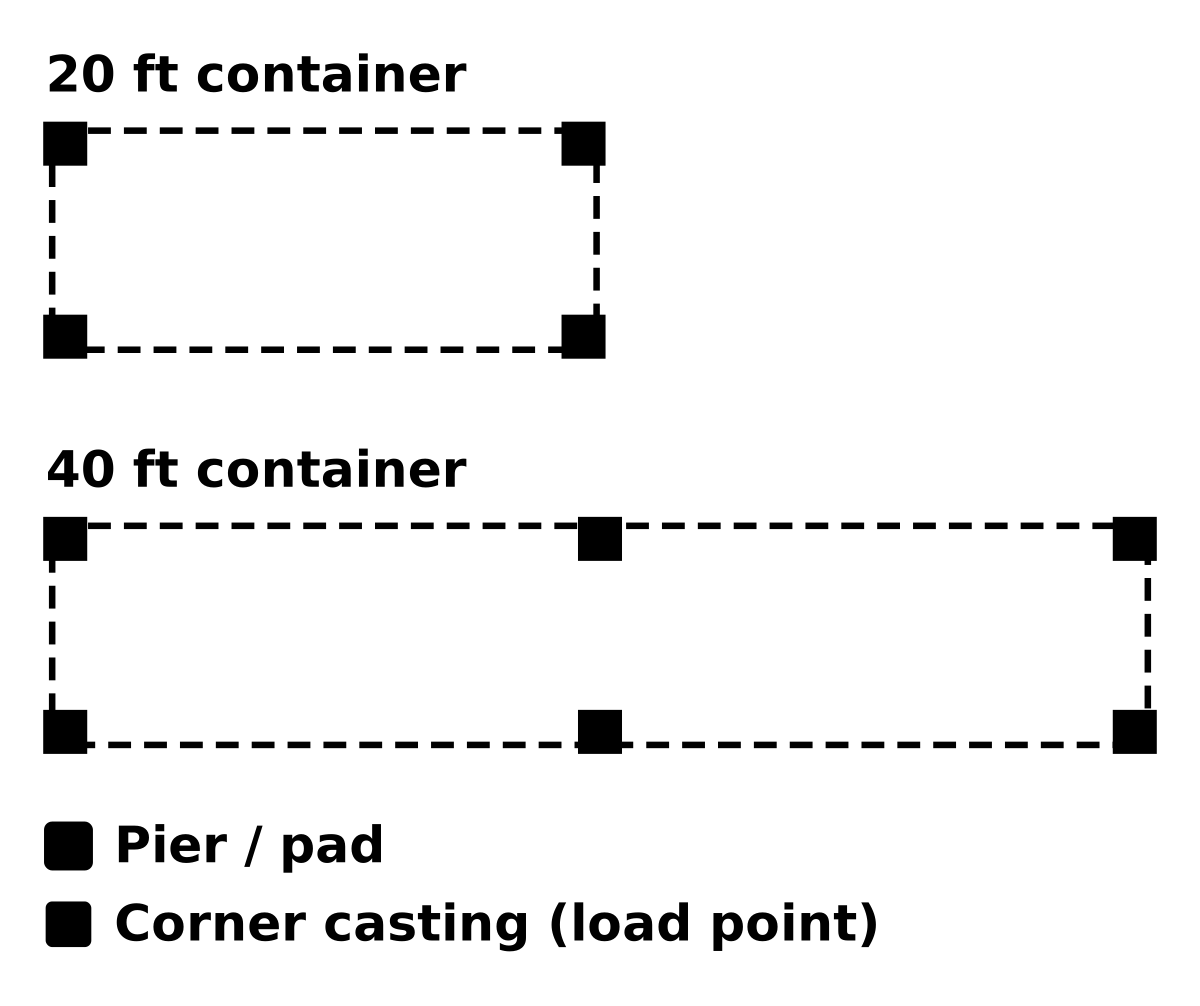 Container foundationsFour corners carry everything
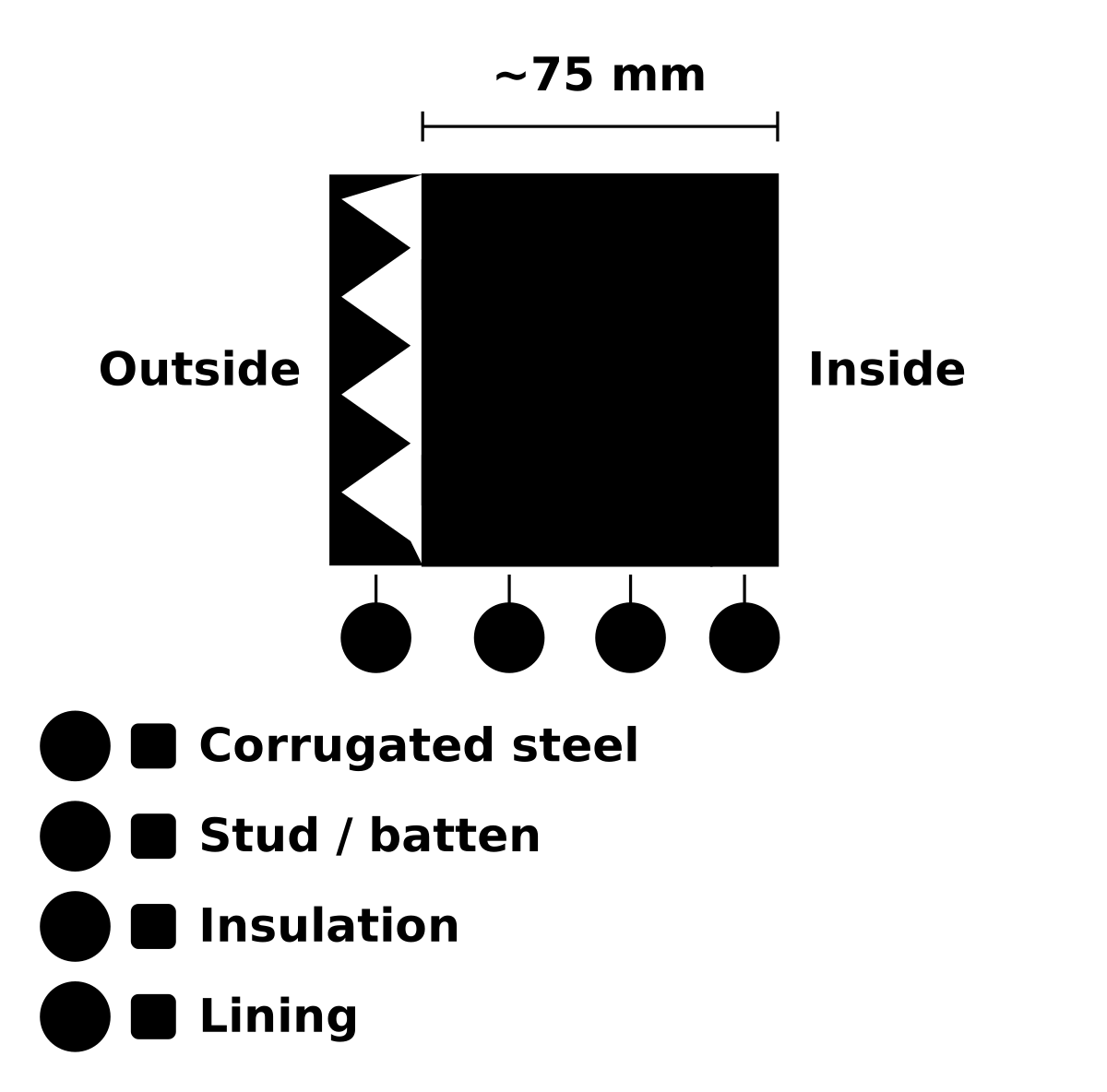
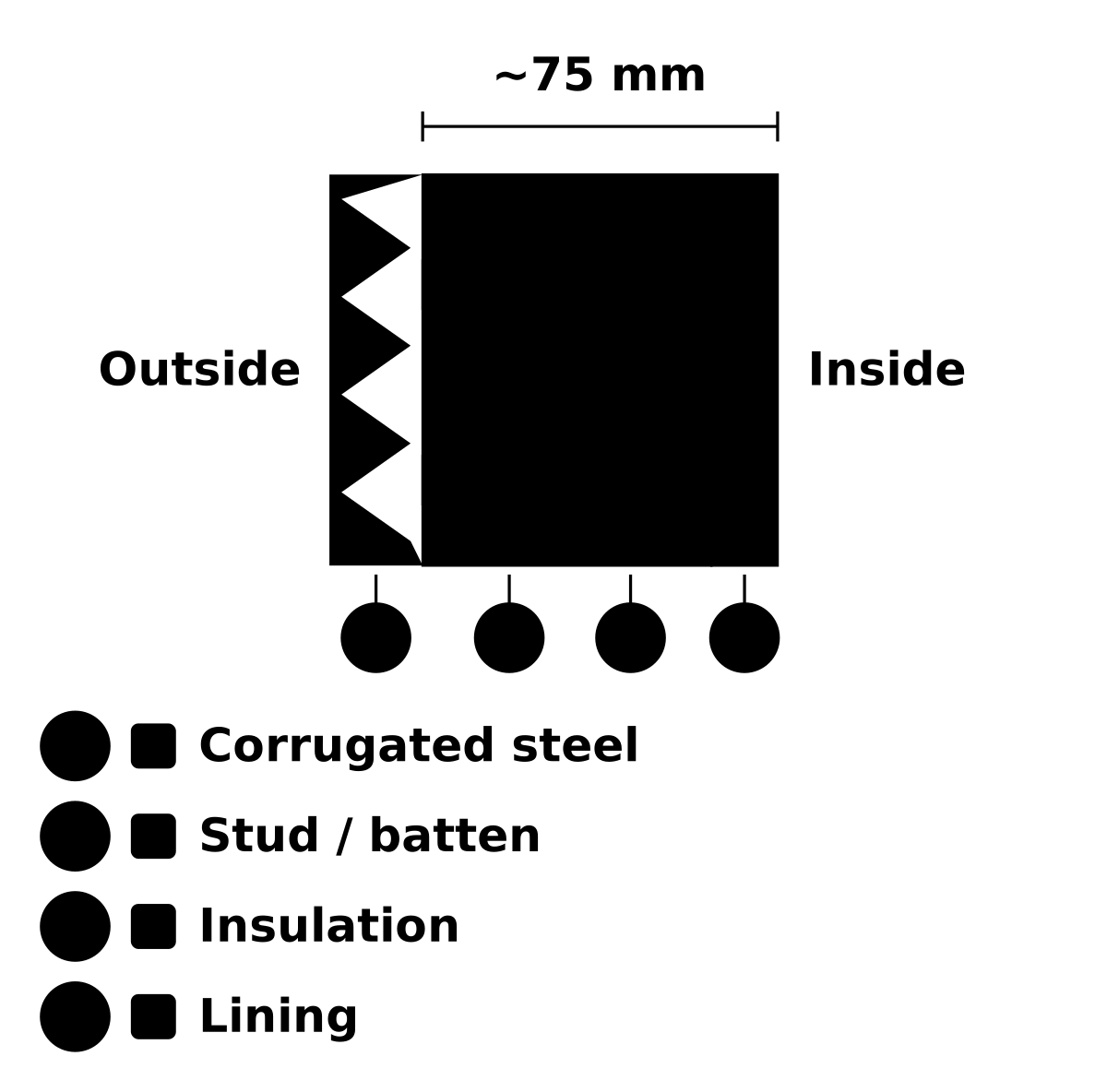 Container insulationSpray foam · PIR panels · Rockwool
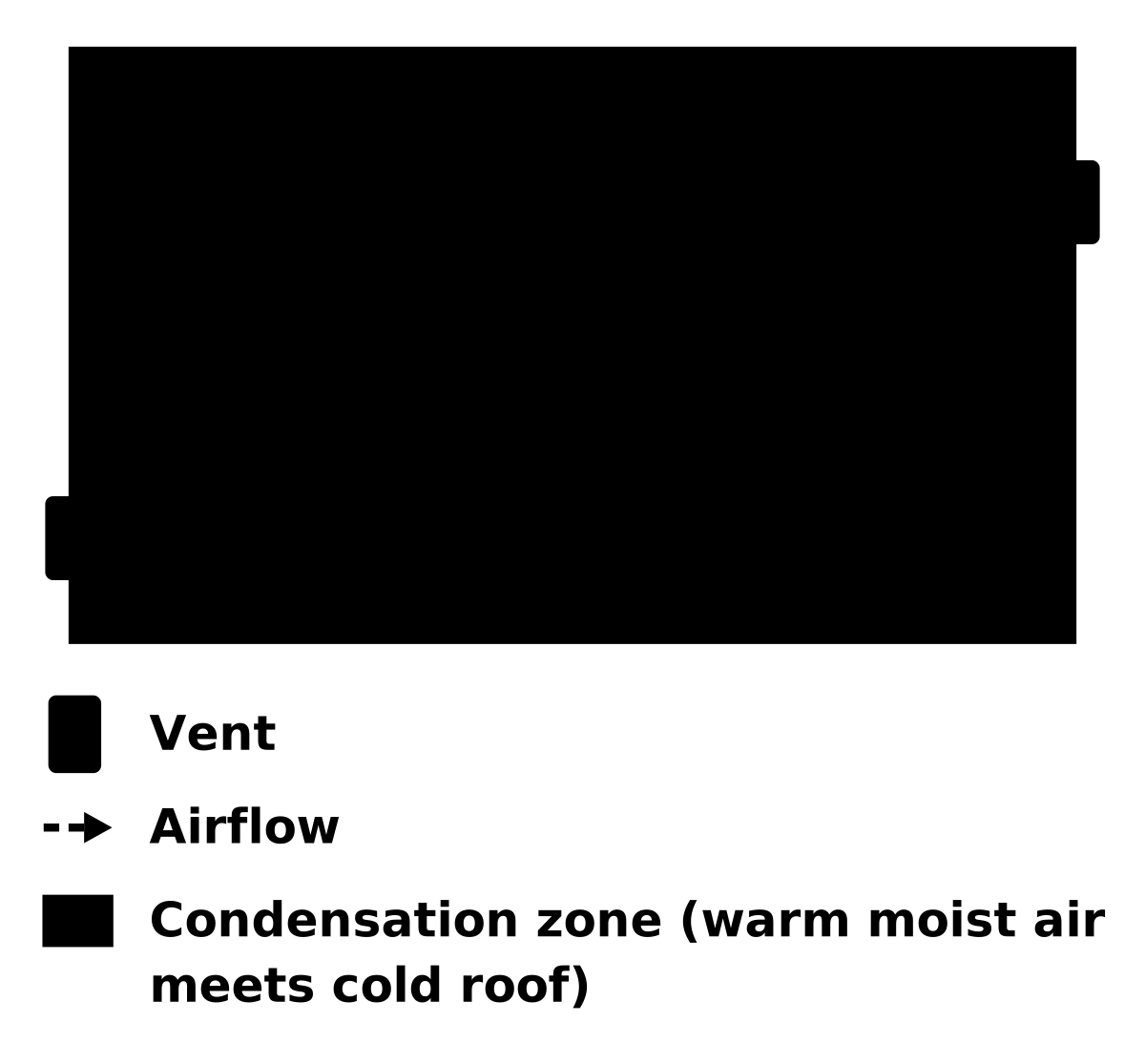
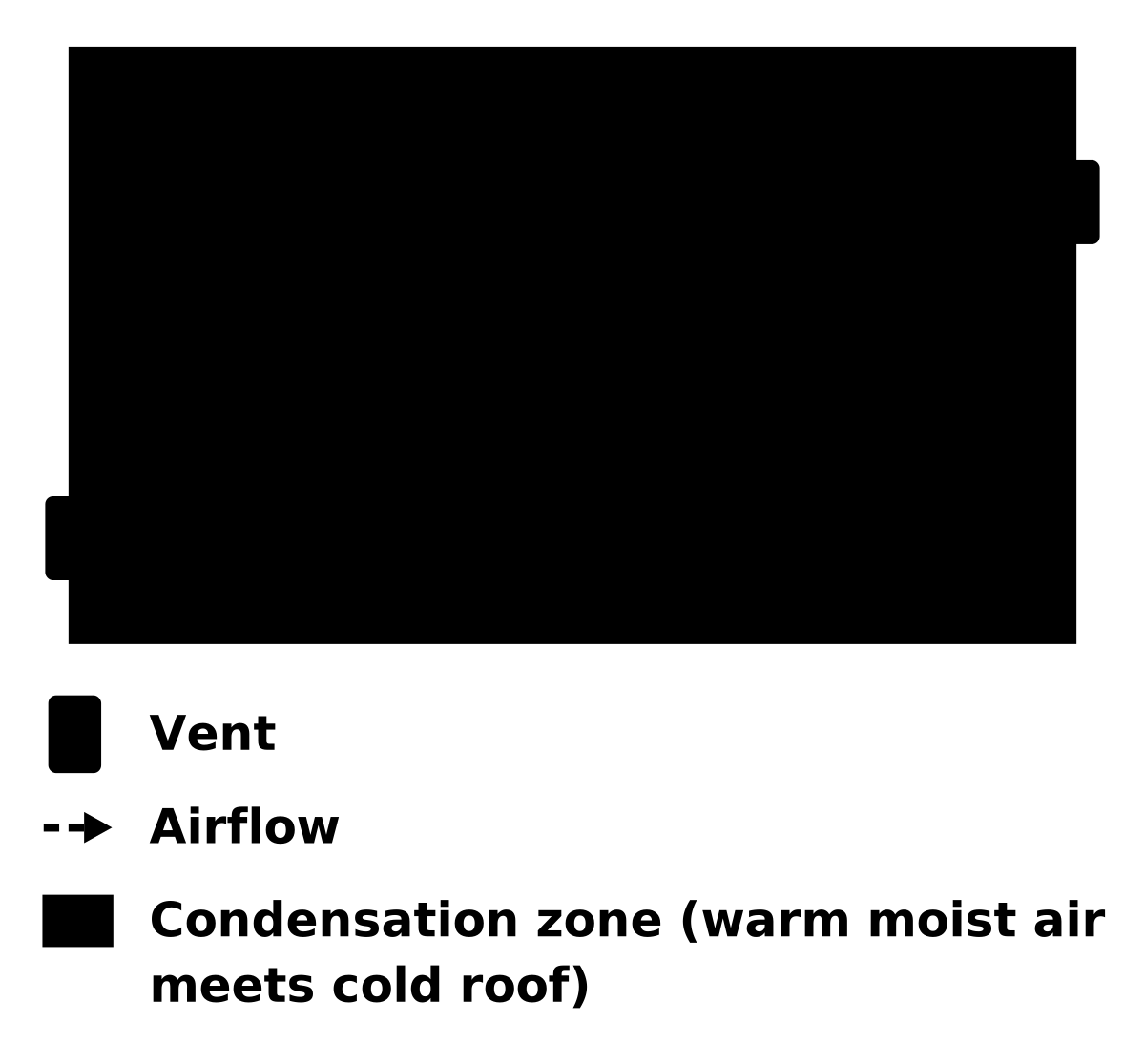 Ventilation & condensationDew point · Cross-flow · Desiccants
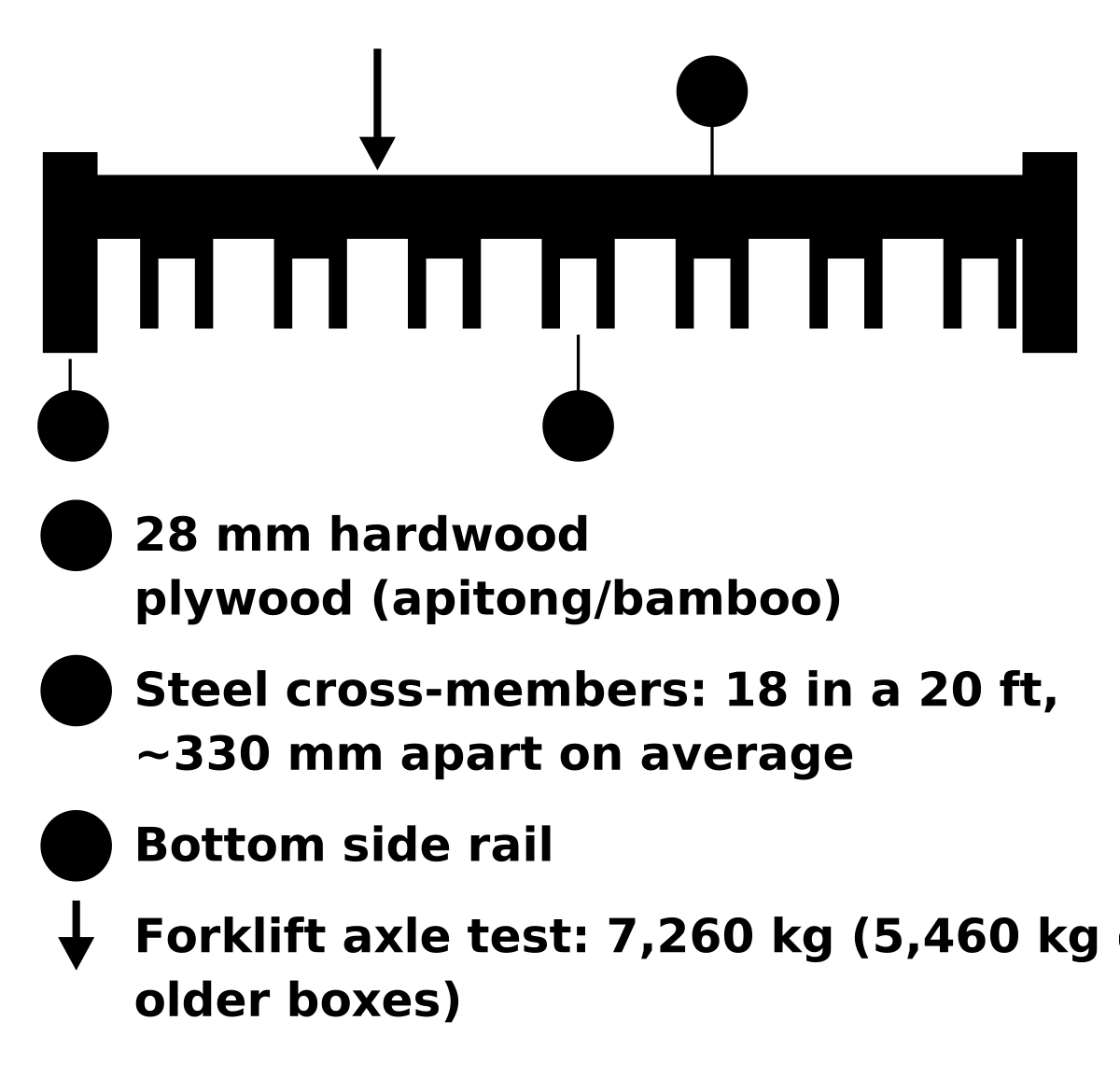
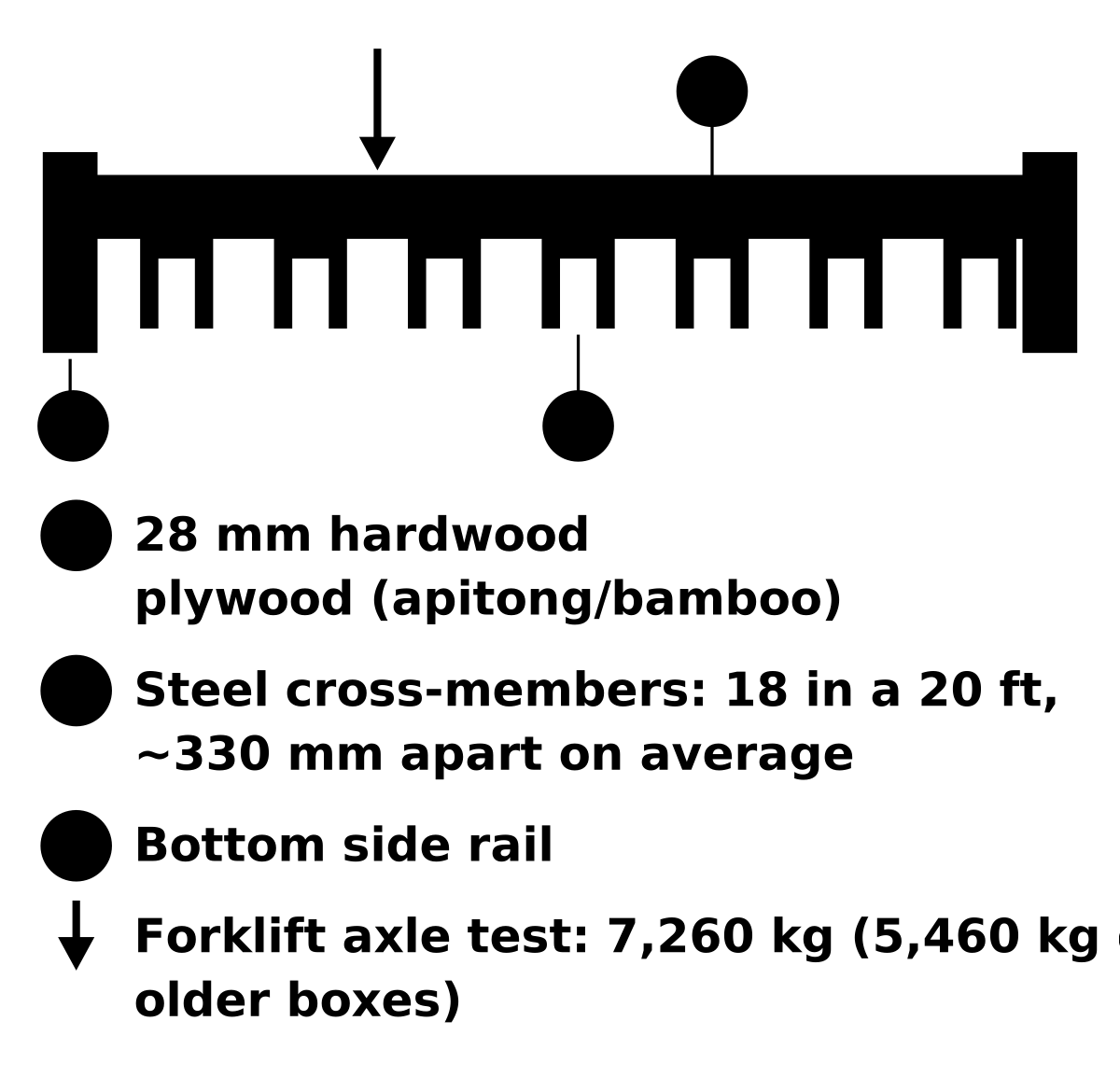 Container flooring28 mm hardwood ply · 7,260 kg axle test
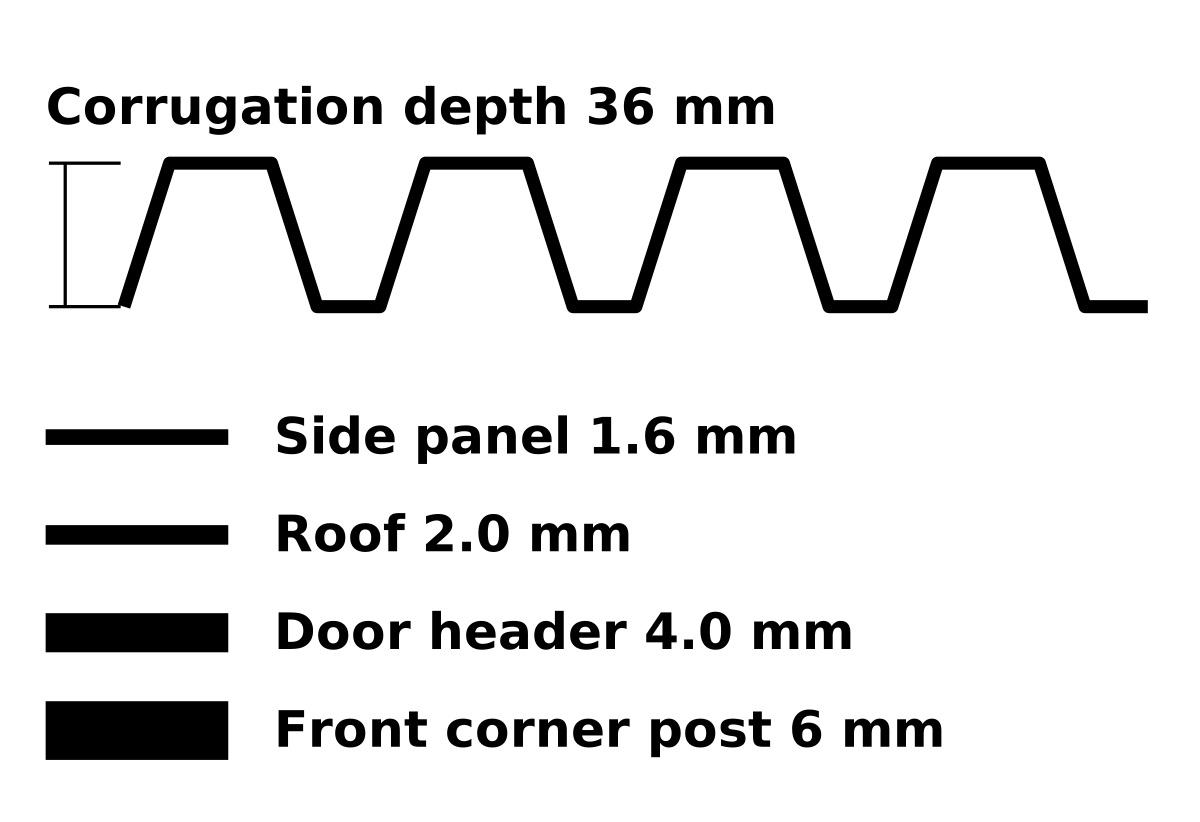
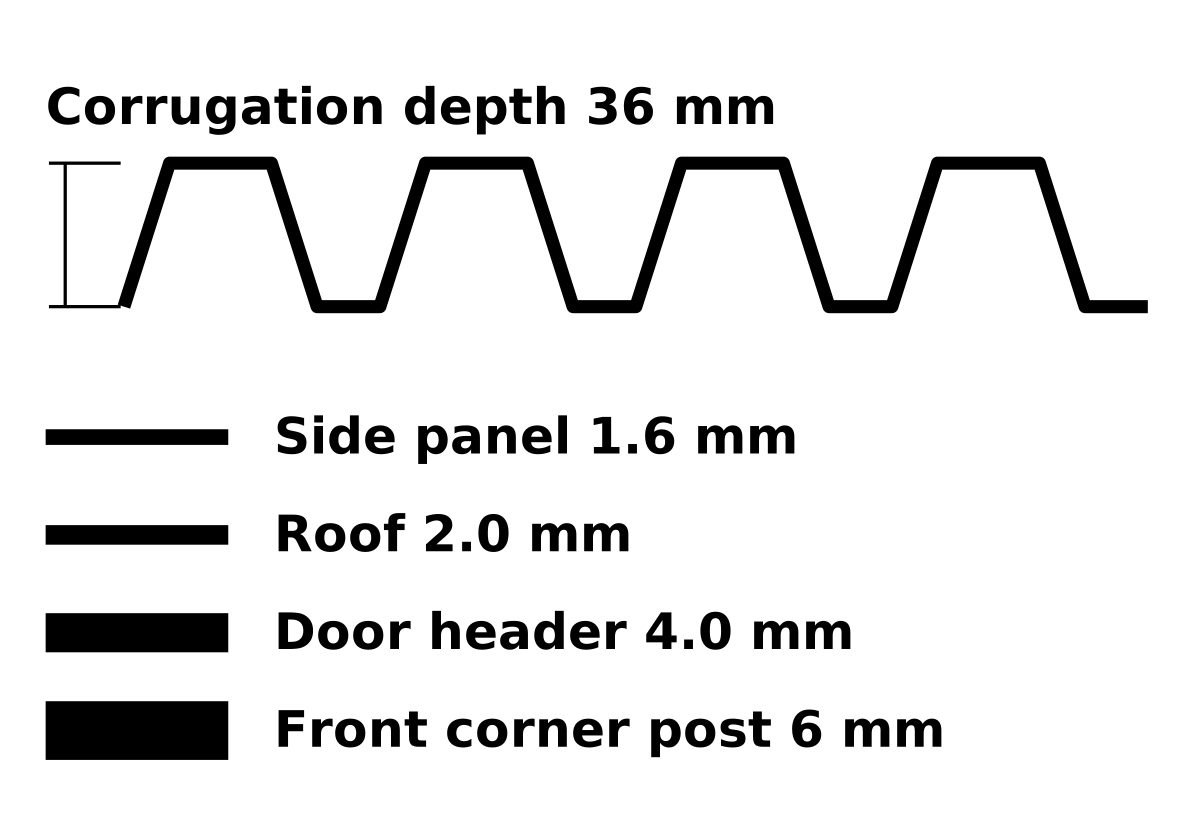 What containers are made ofCorten steel · panel by panel
- Shipping container office13.9 / 28.3 m² · Desks · HVAC · Cost
- Shipping container garageCar fit · Doors · Foundation · Cost
- Shipping container shed10 vs 20 ft · Shelving · Condensation · Cost
- Shipping container cabin20 vs 40 ft · Off-grid · One-lift delivery
 Shipping container poolSwim lengths · Litres · Structure · Cost
Around the box
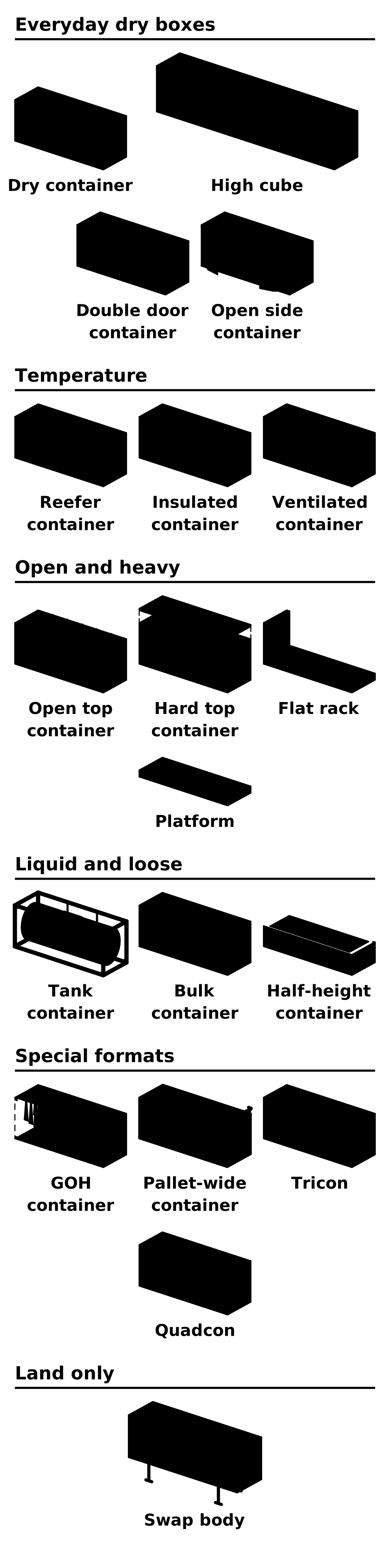
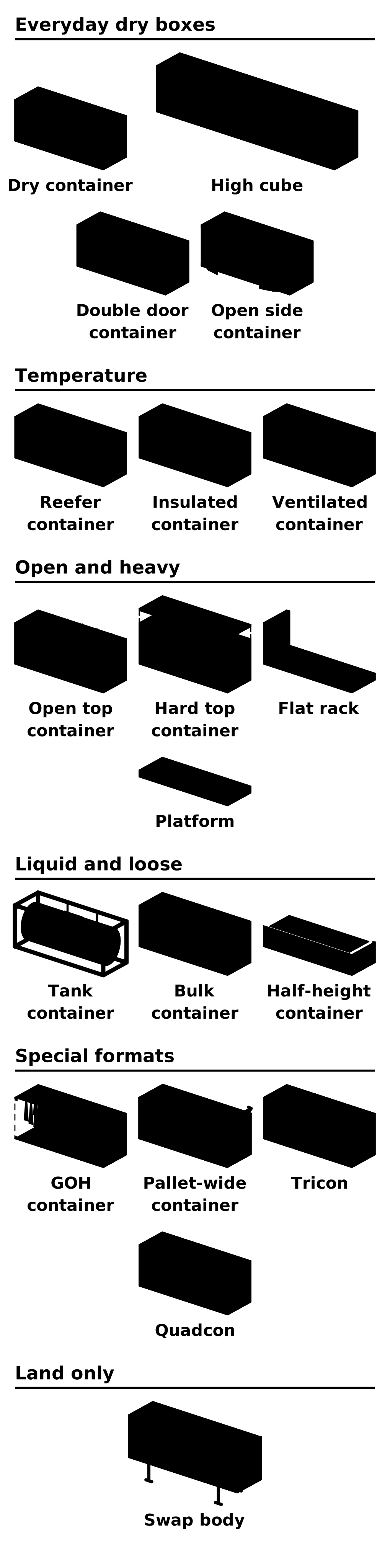
The container types, the ships that carry them and their air-freight counterparts.
Our own research
Things we measured ourselves because nobody had published them.
Answers and terms
Short answers to common questions, and the trade vocabulary defined.
Every size, drawn
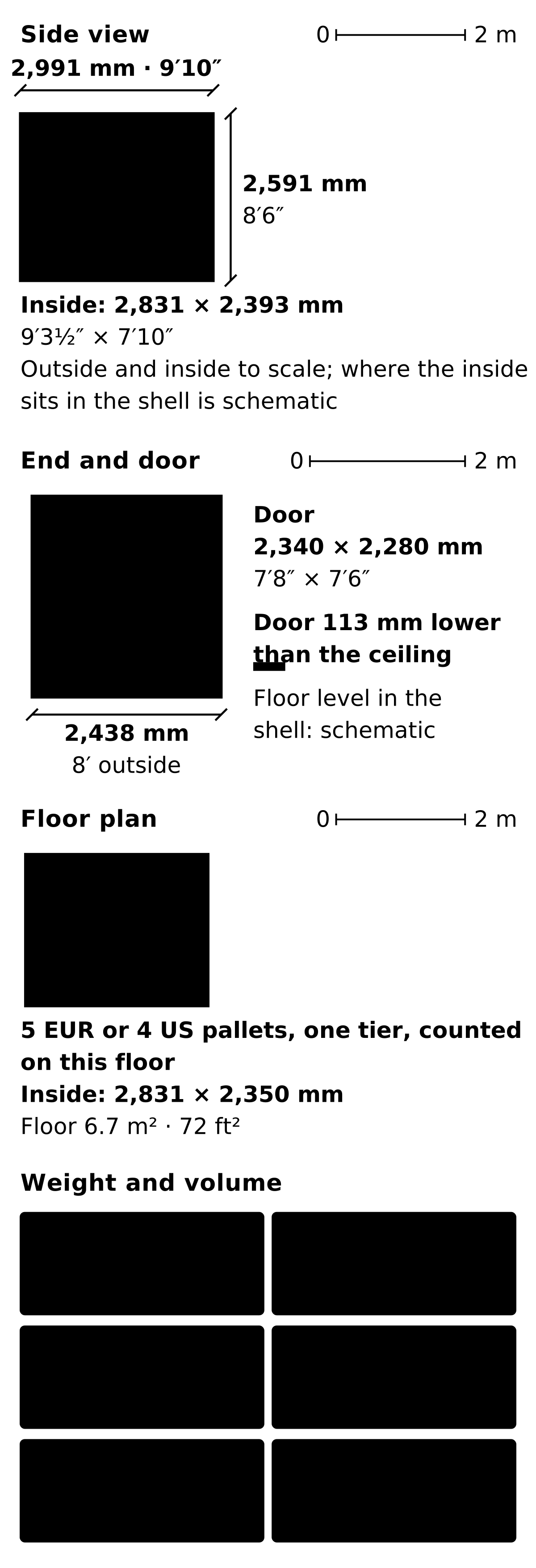
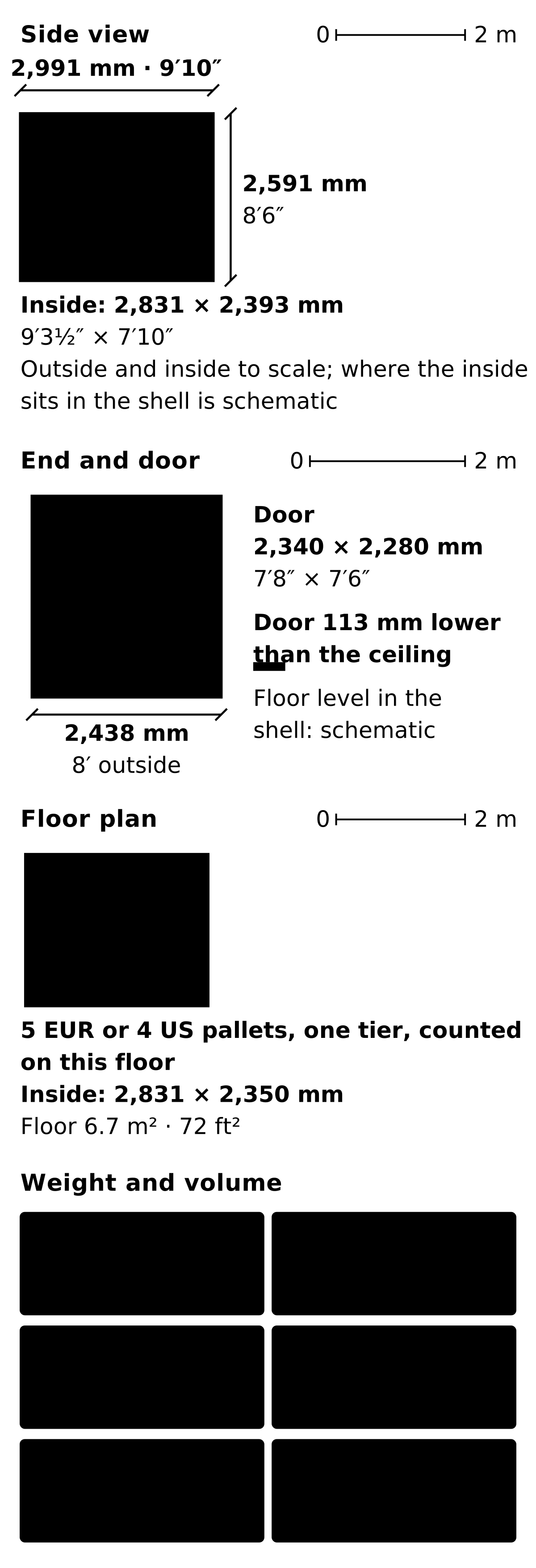
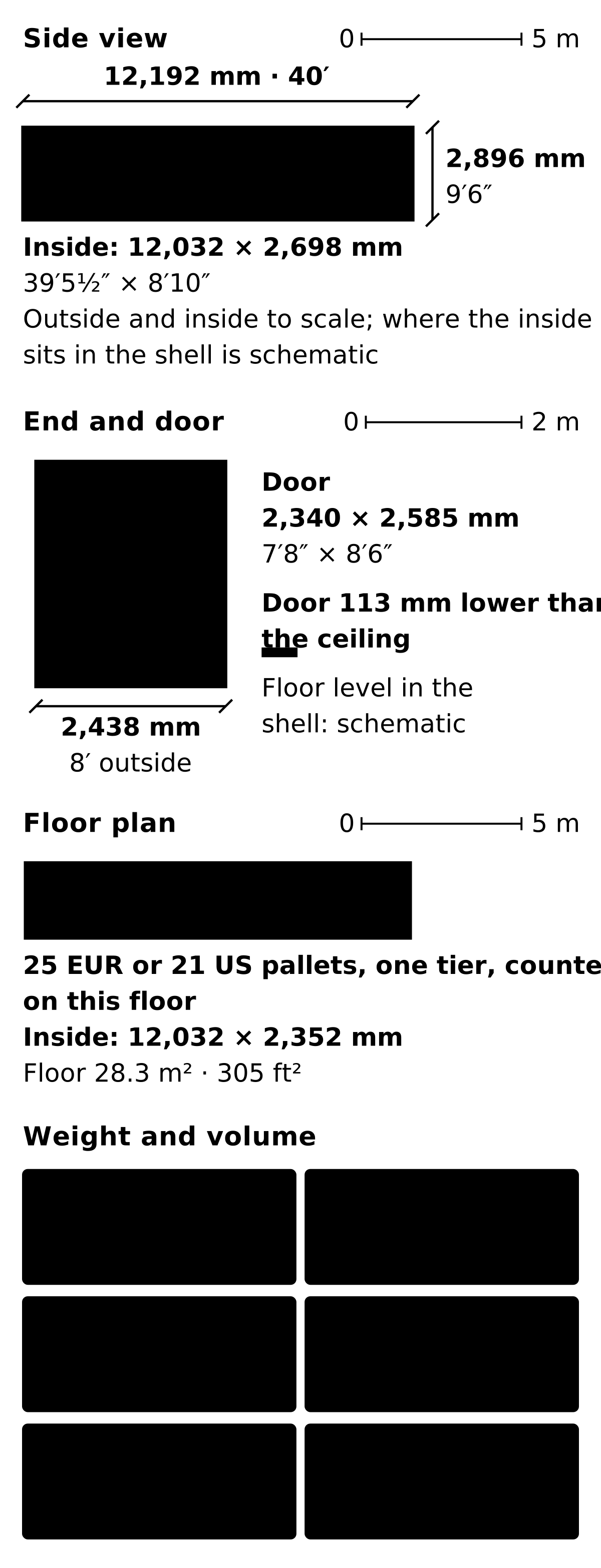
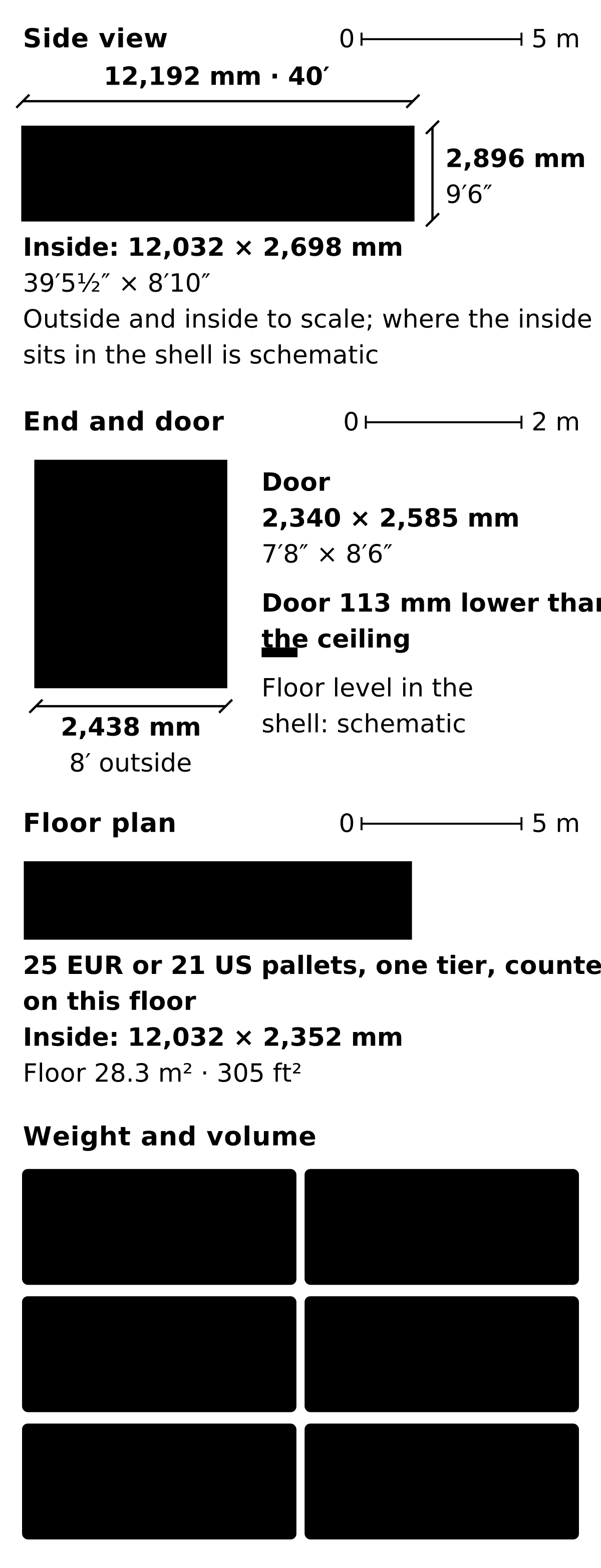
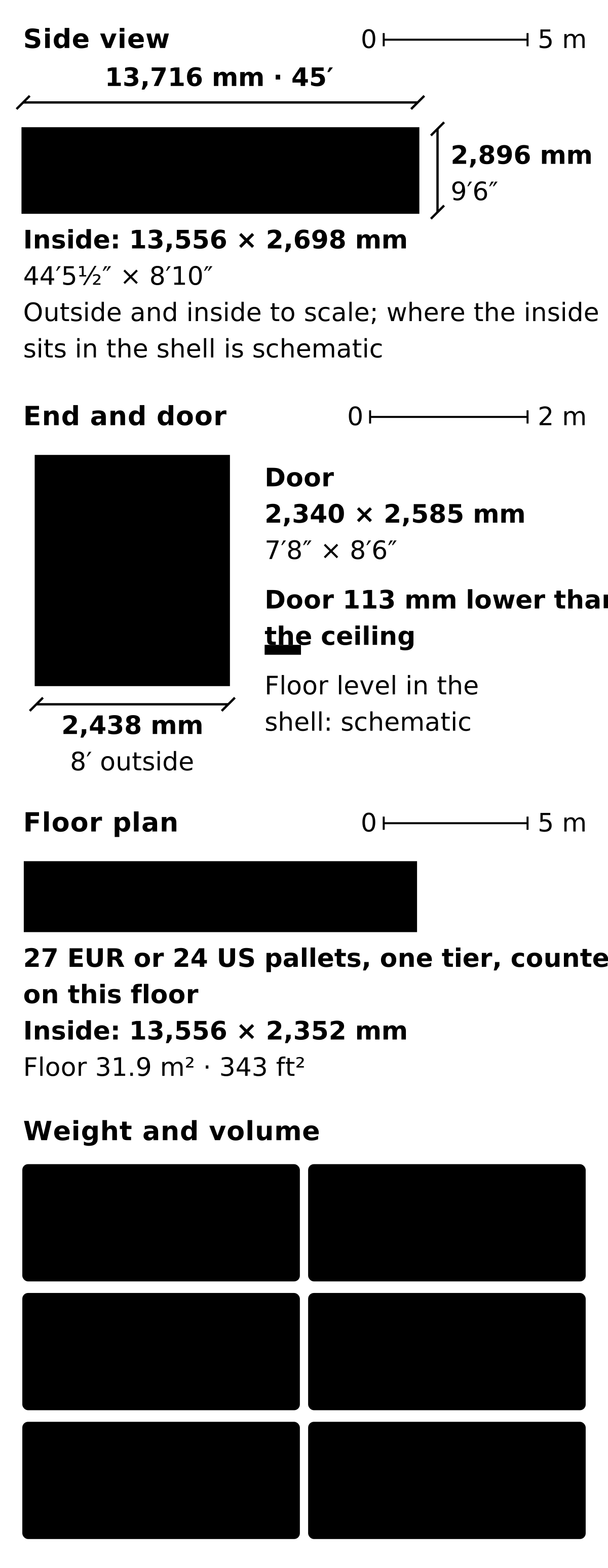
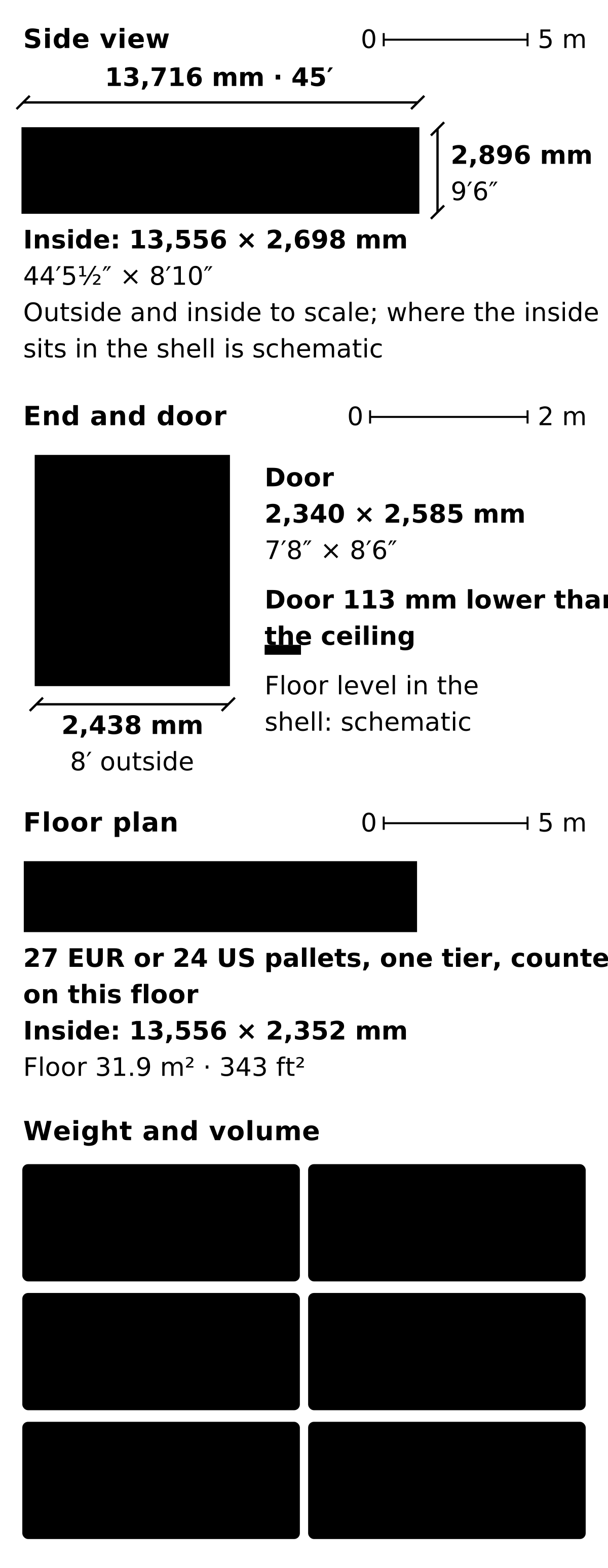
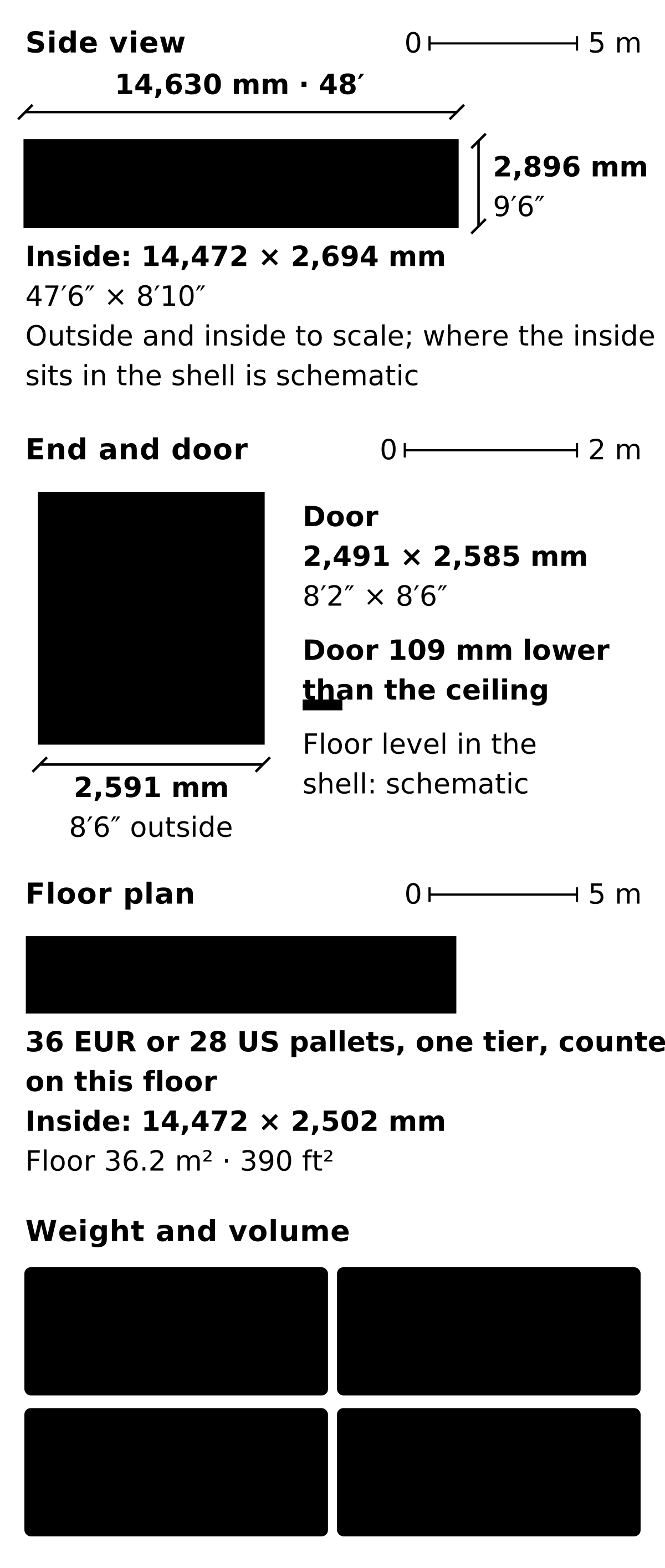
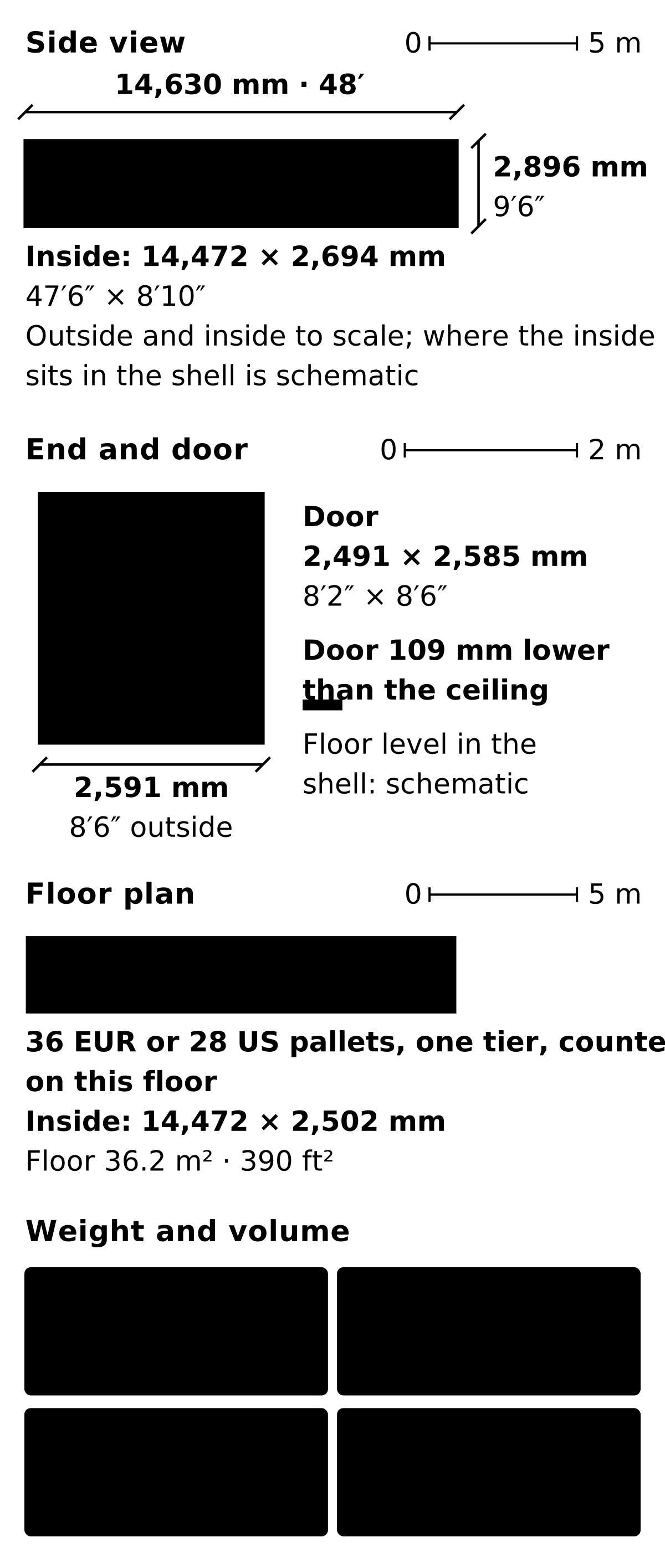
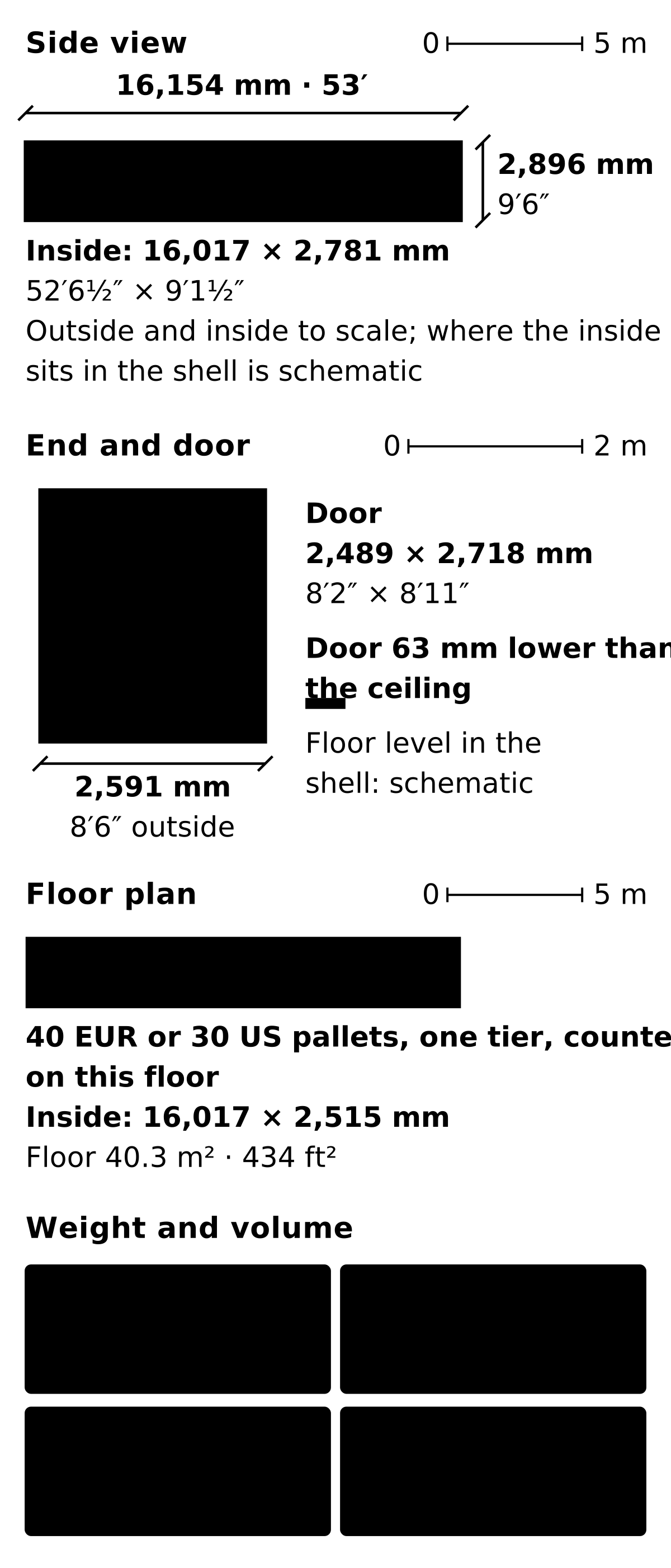
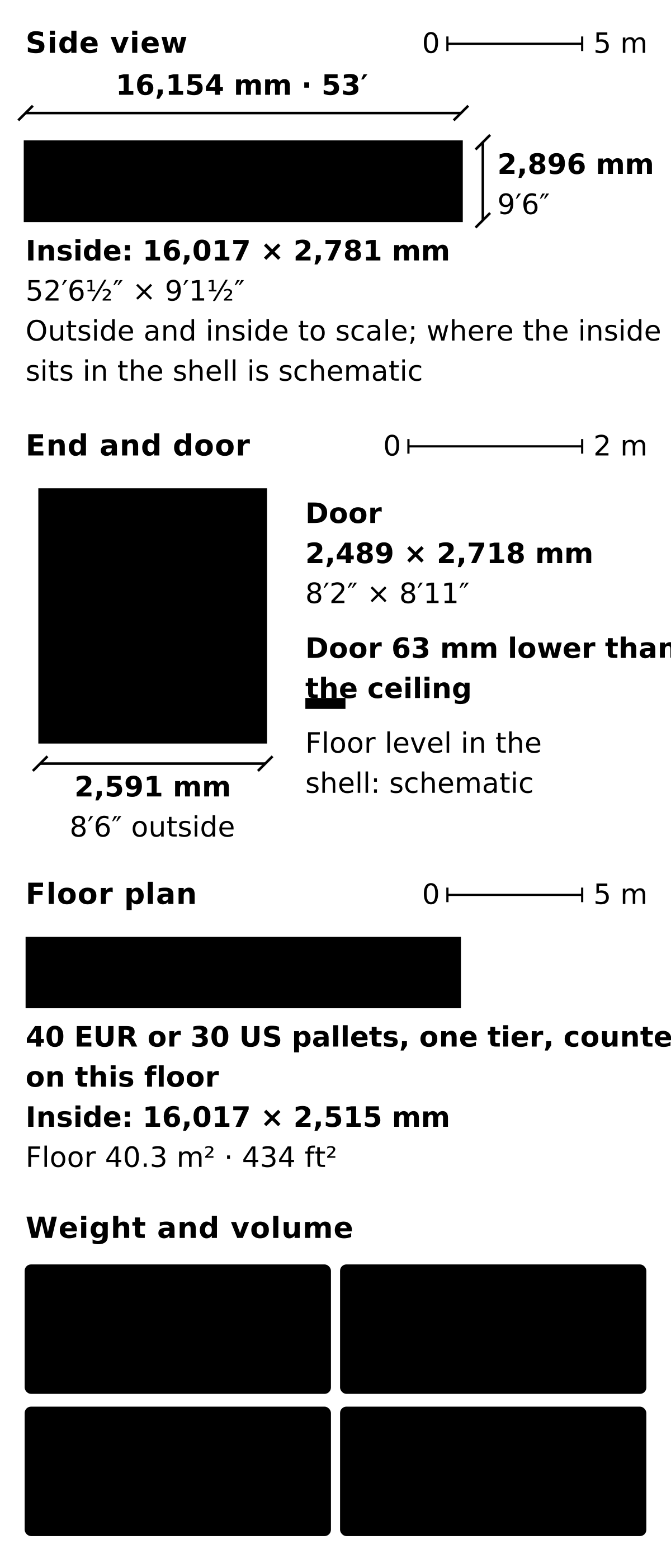
Each size has a page that opens with its dimension sheet: outside, inside, the door, the floor with its pallets, and the weights.
Every container type
The types with a page of their own; the atlas shows all of them side by side and helps you choose. All types in one atlas →

















Tools for your own numbers
The guides explain the rules; the tools apply them to your cargo. All free, nothing to sign up for.
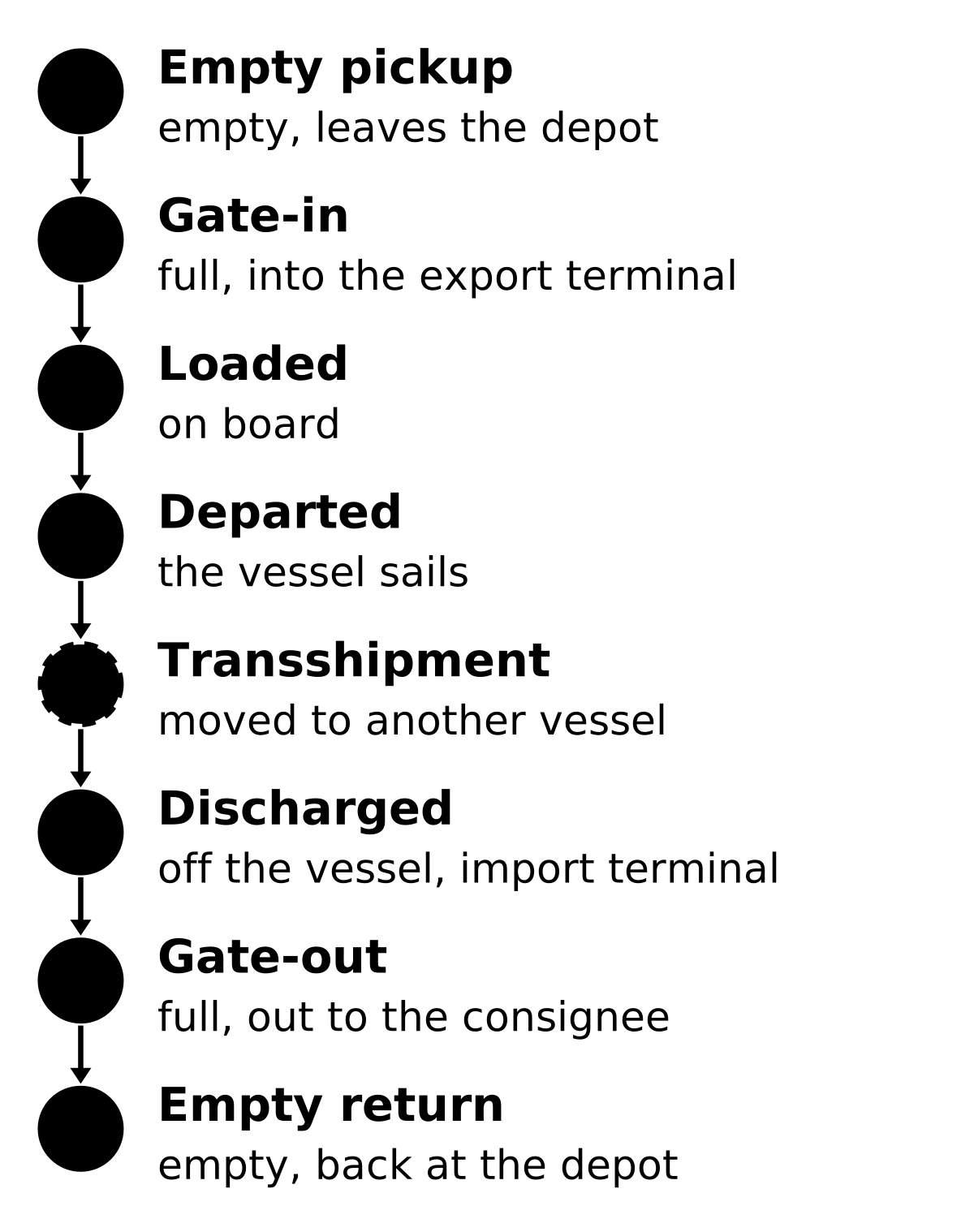
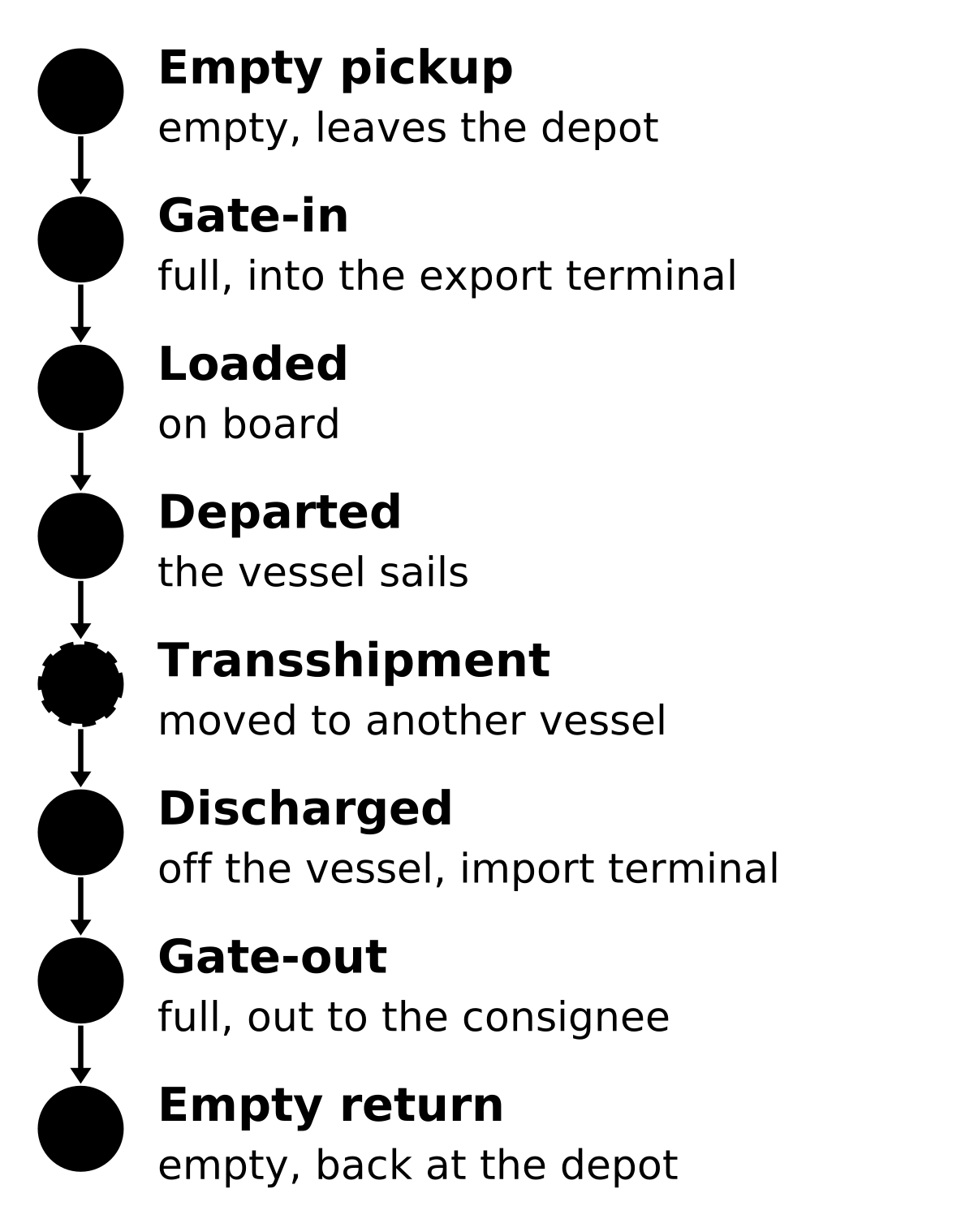 Container trackingTo track a container, enter its 11-character number on the operating carrier’s own tracking page, which is free and needs no account.
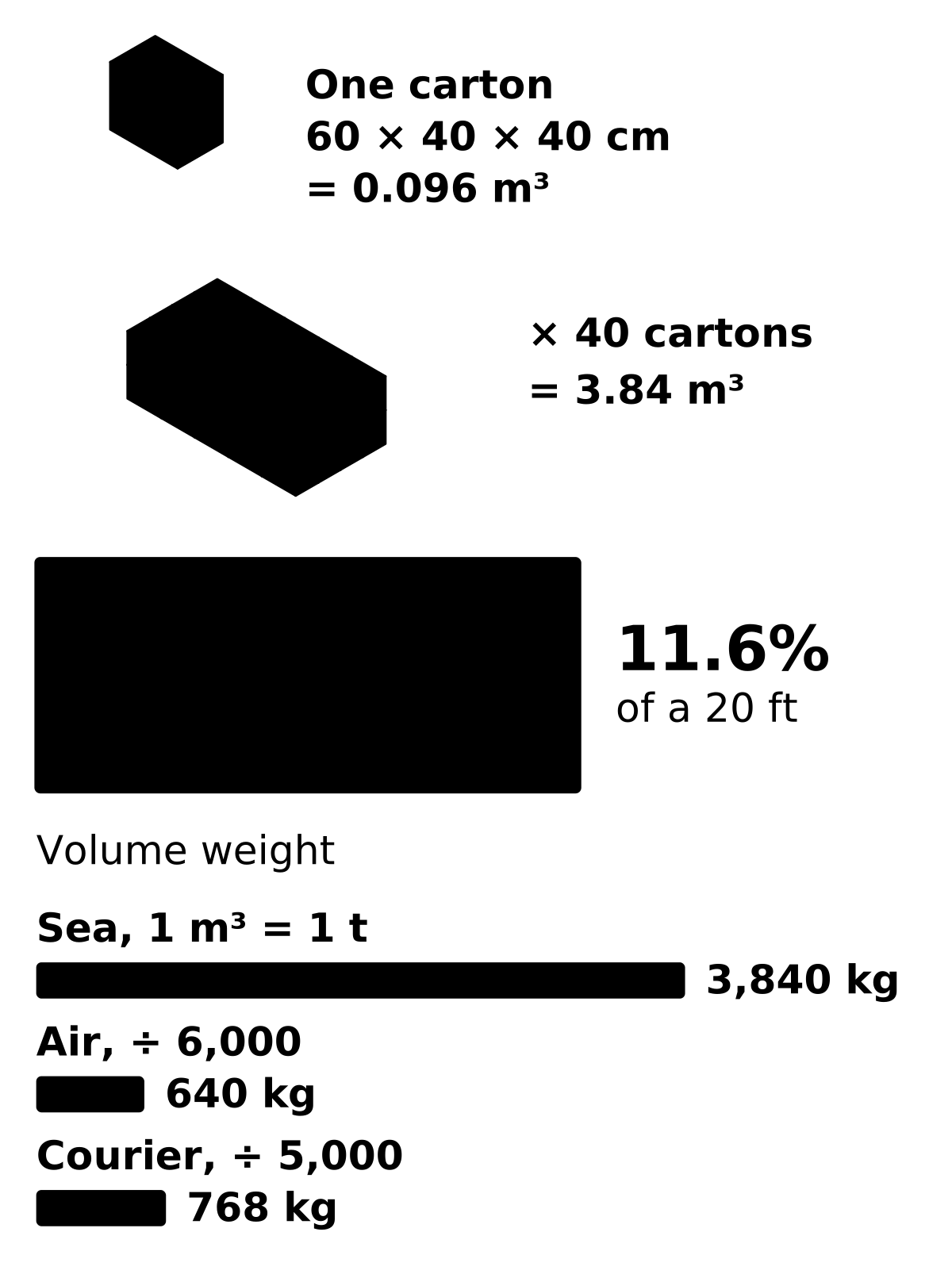
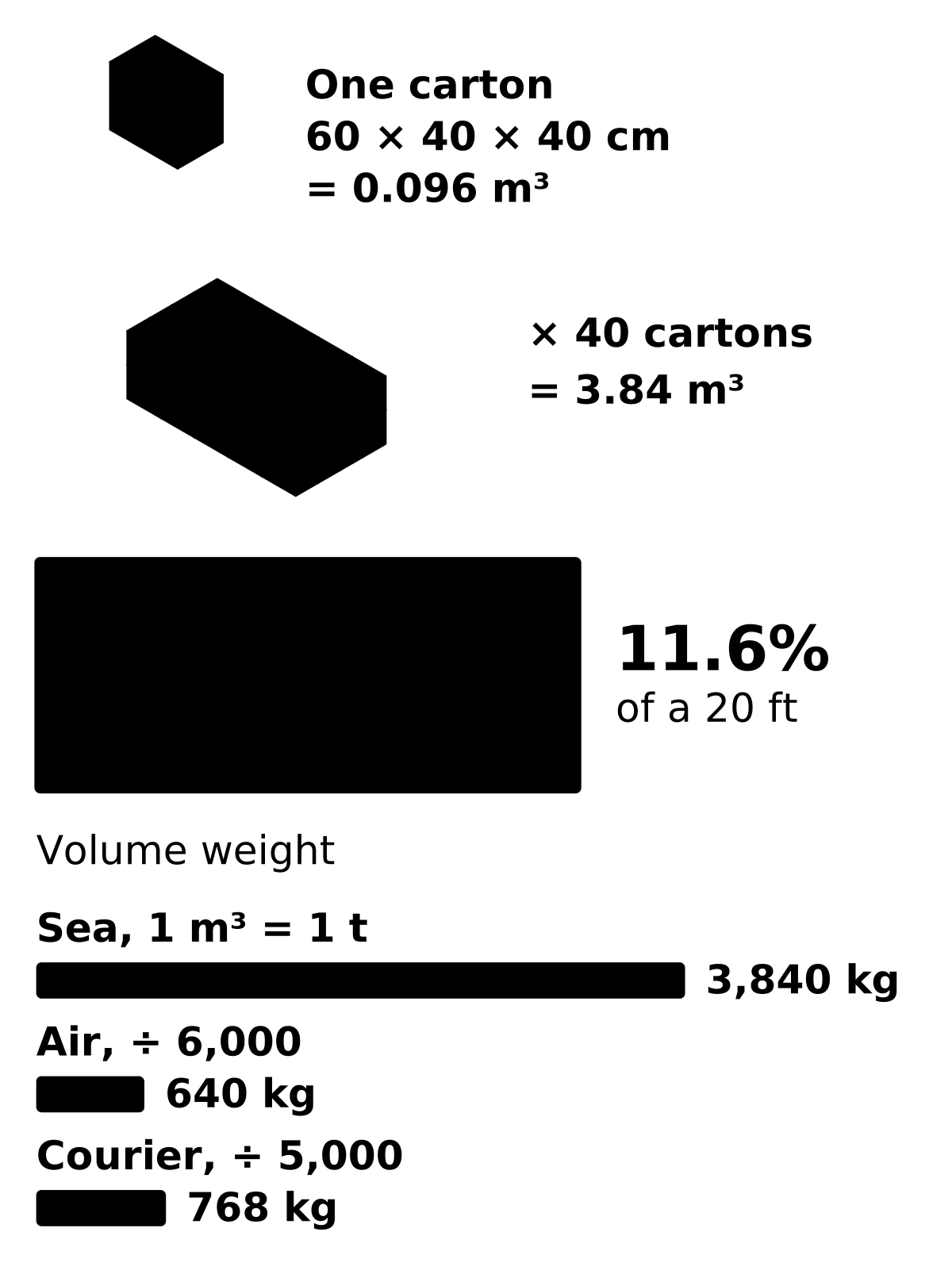 CBM calculatorCBM (cubic metre) is the volume of cargo: length × width × height in metres, multiplied by the number of packages. A 60 × 40 × 40 cm carton is 0.096…
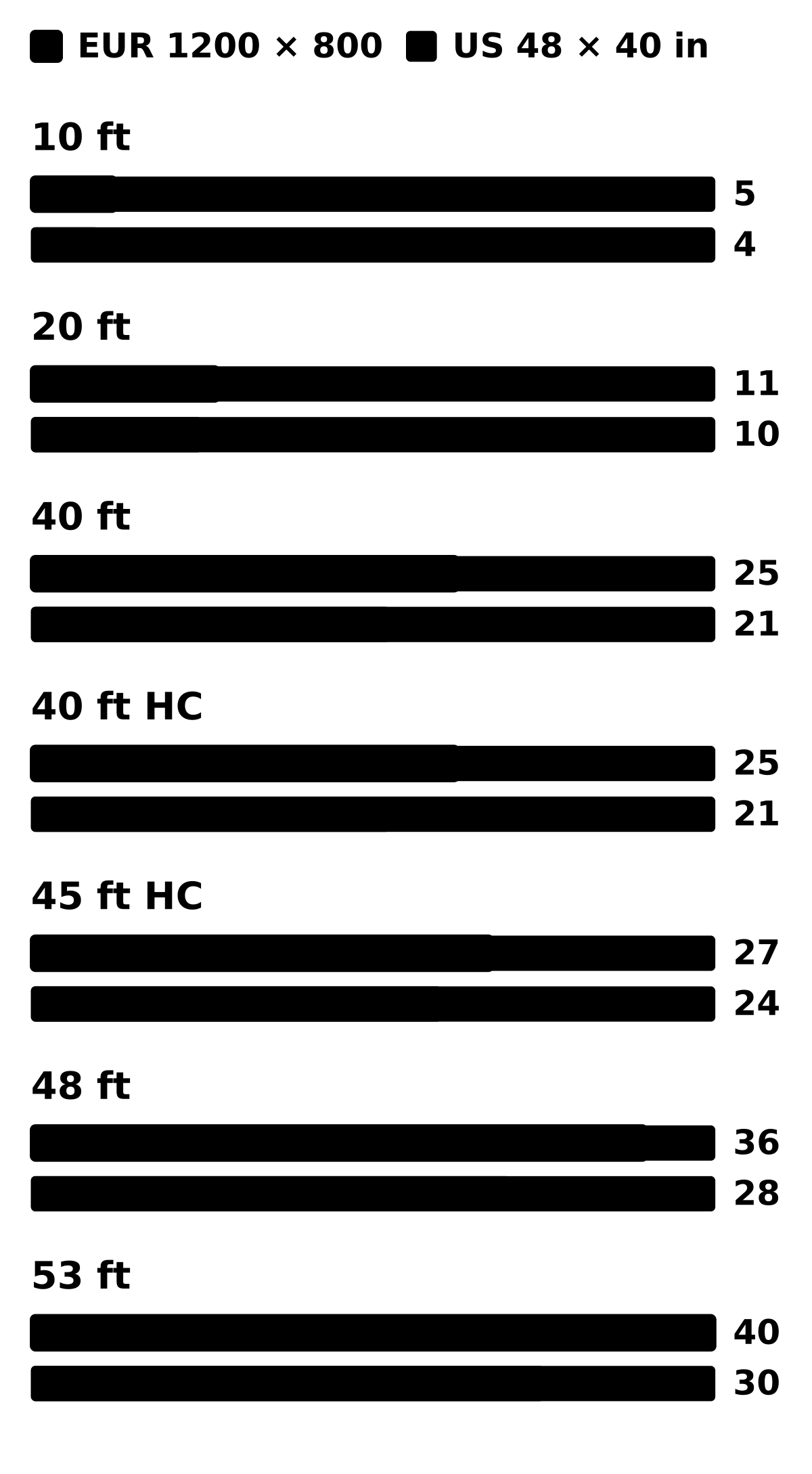
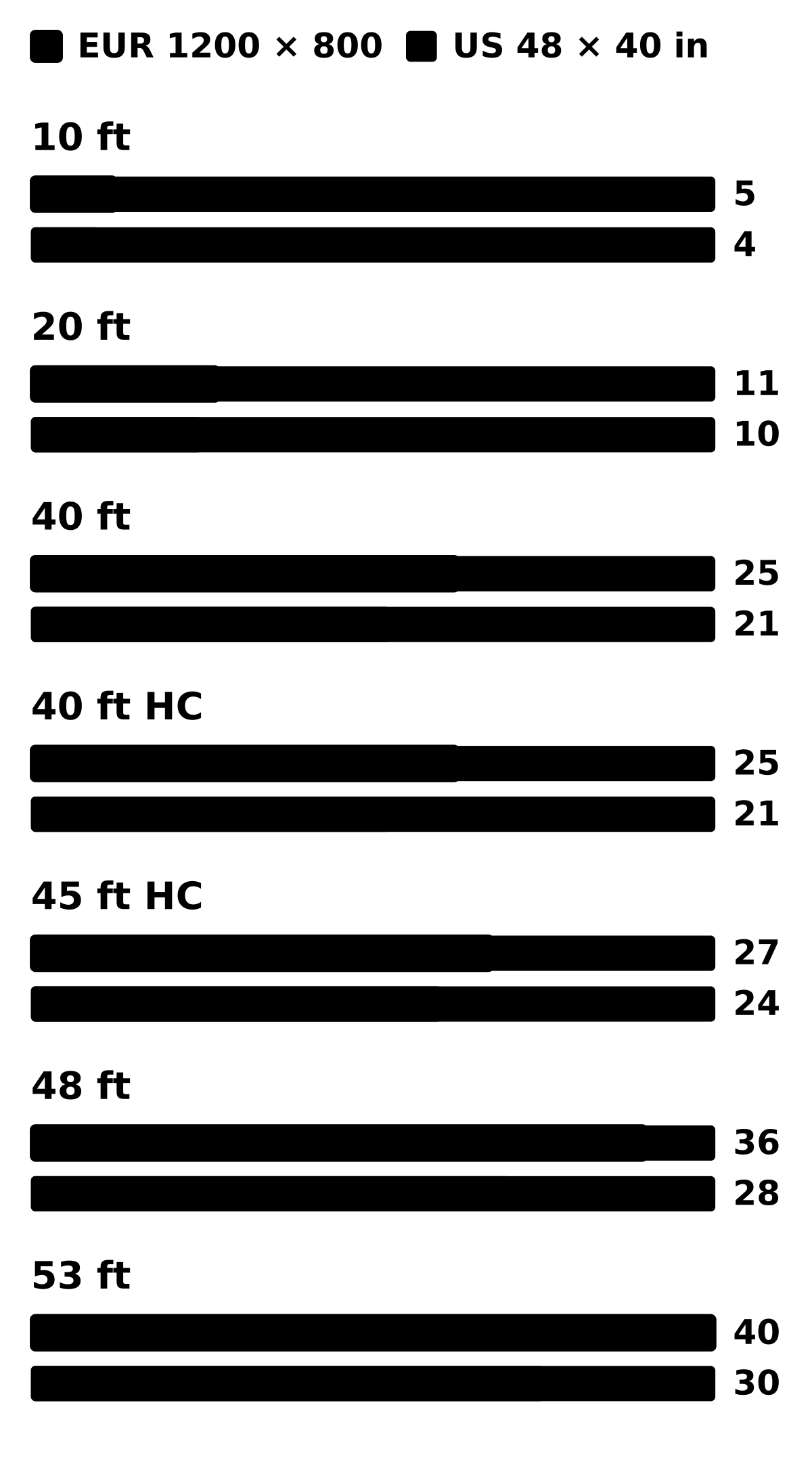 Pallet calculatorA 20 ft container holds 11 EUR pallets (1,200 × 800 mm, 47.2 × 31.5 in) on one floor tier; a 40 ft or 40 ft high cube holds 25.
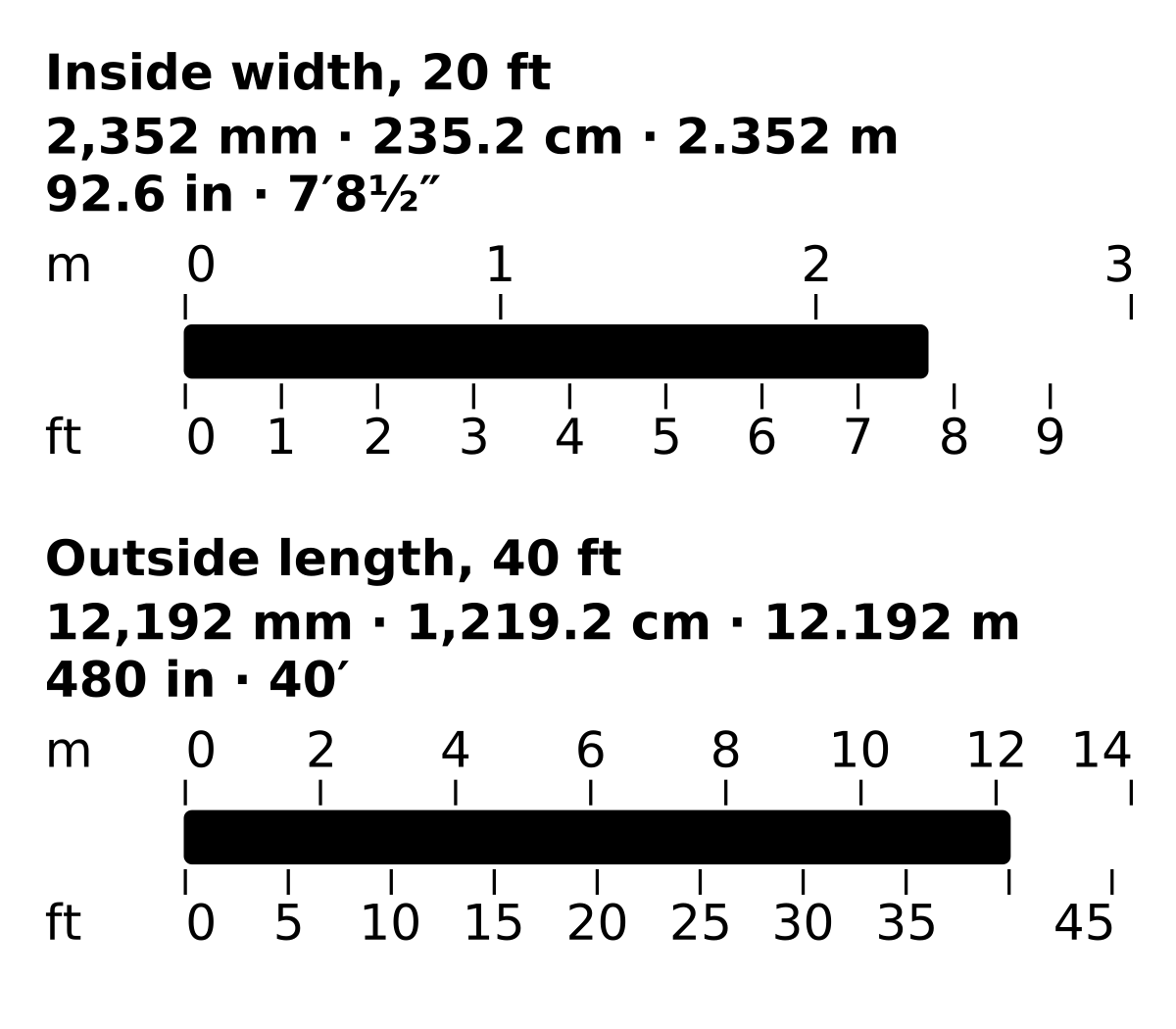
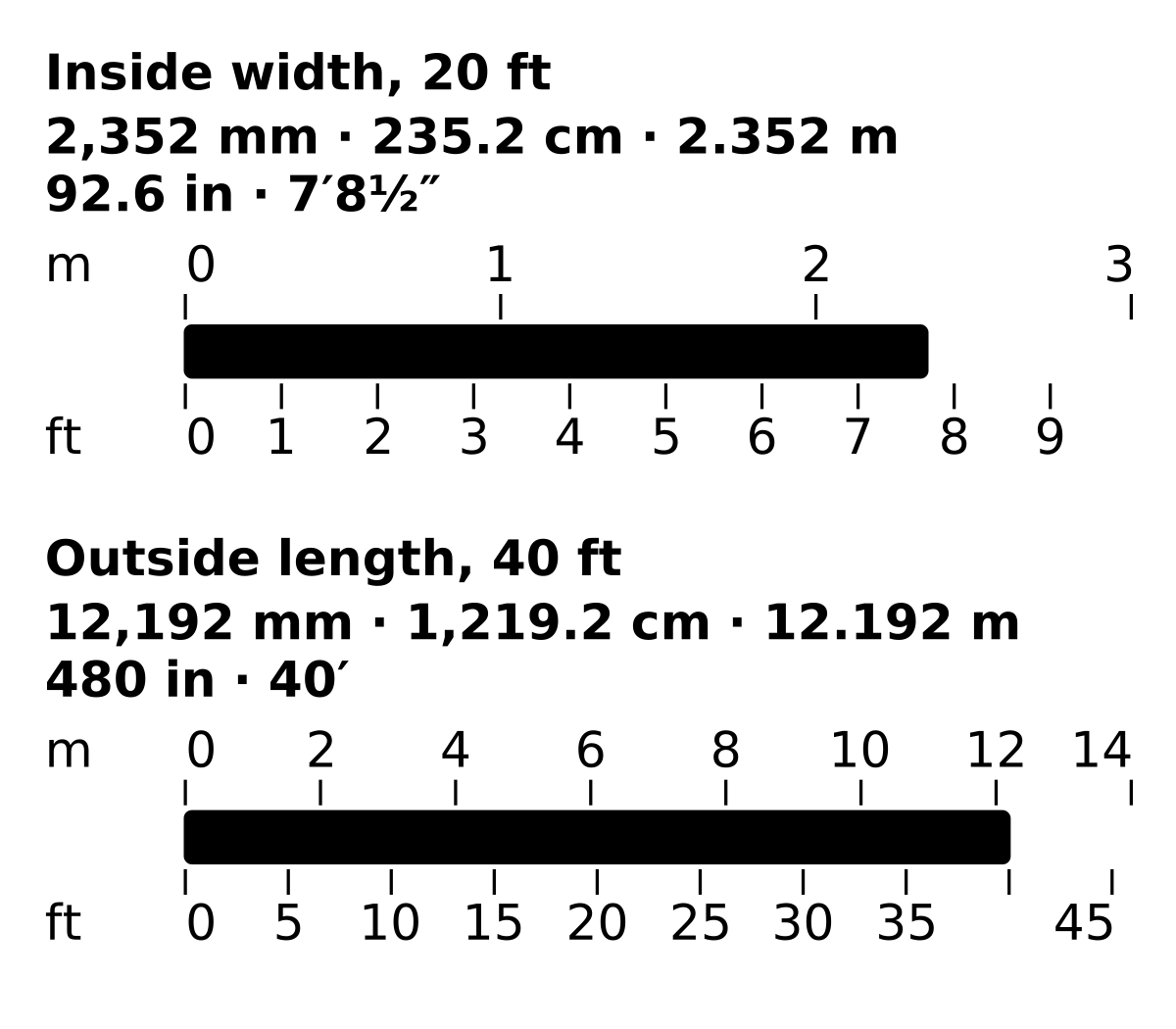 Unit converterThis converter translates any container dimension between millimetres, centimetres, metres, inches and feet, and also shows the result in…
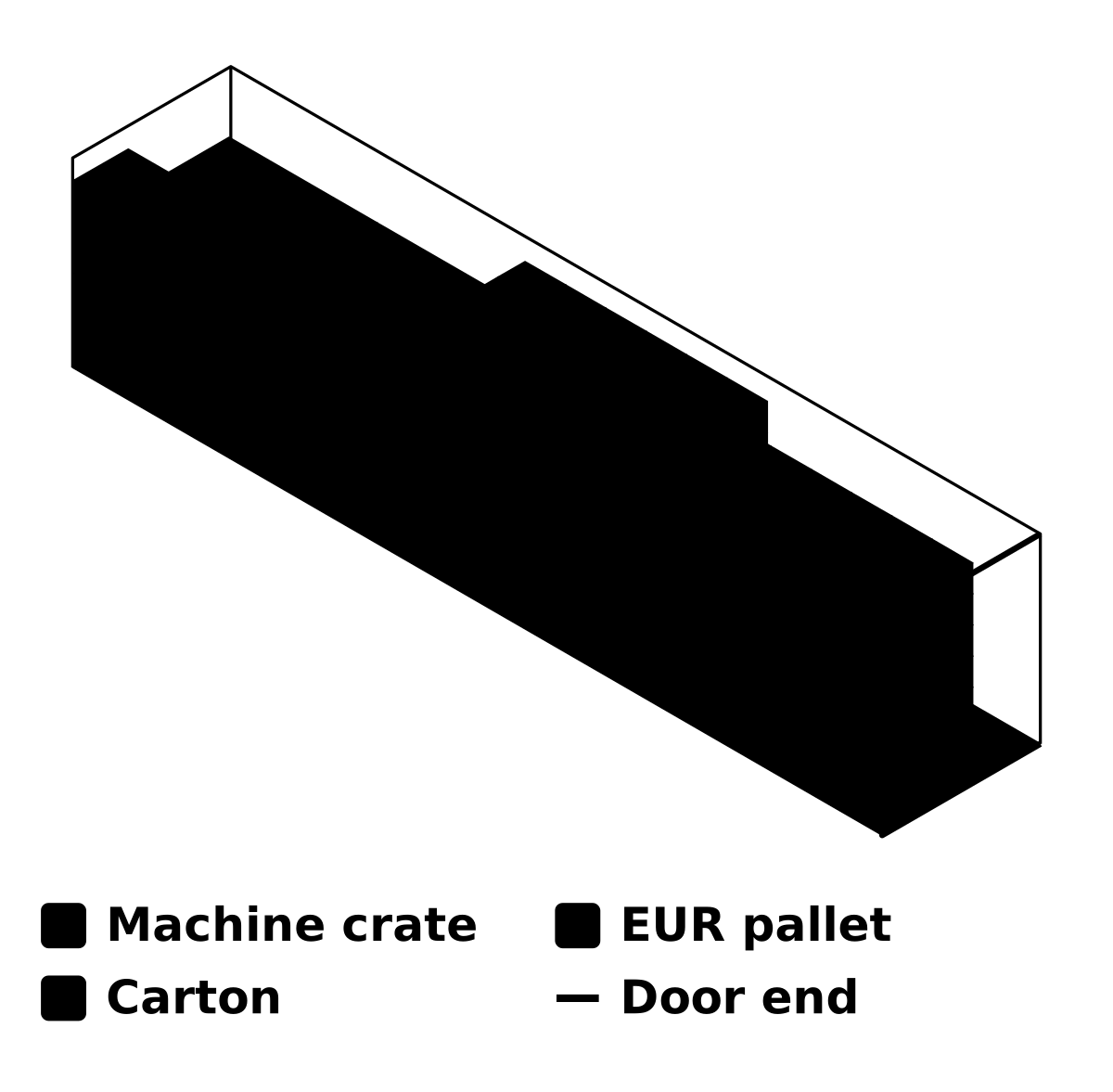
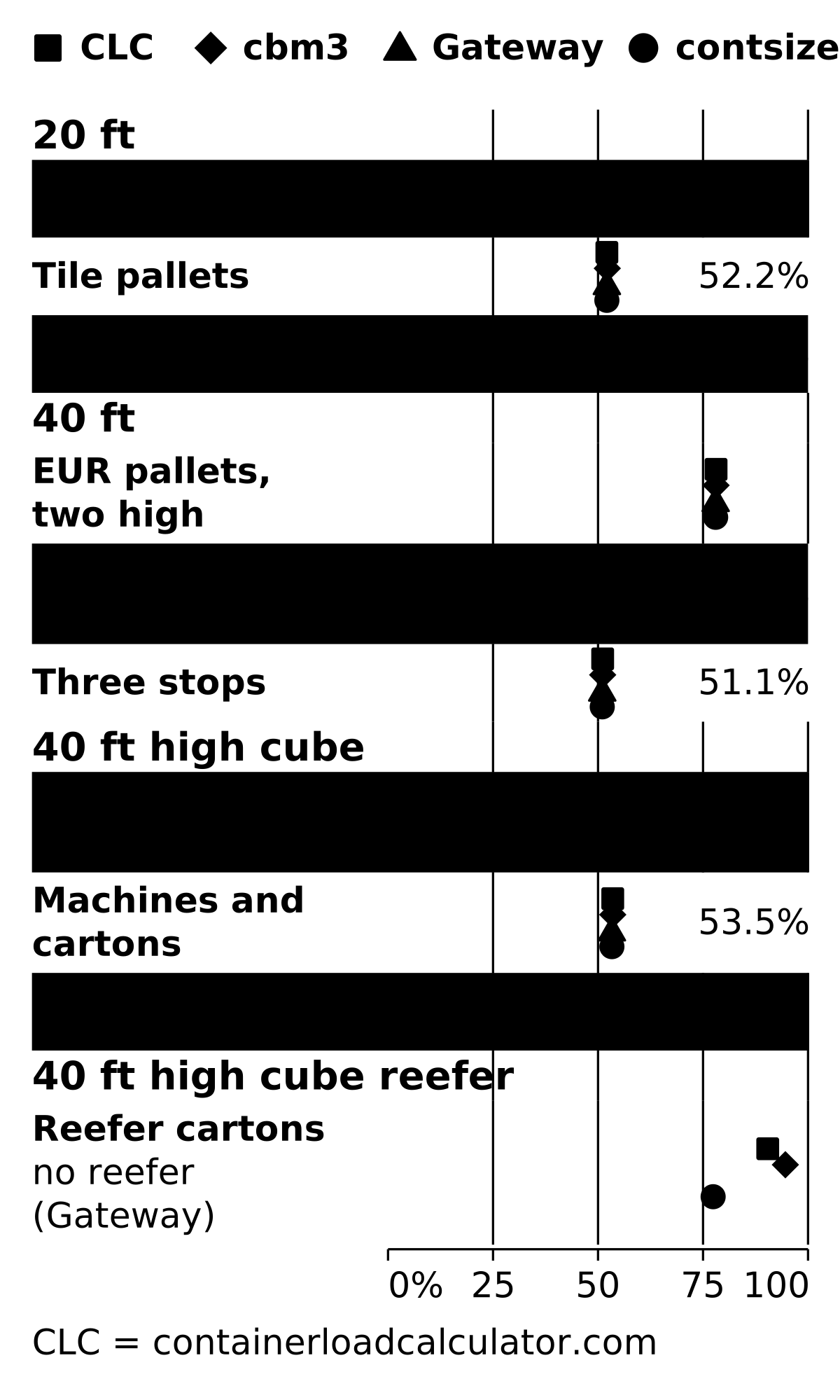
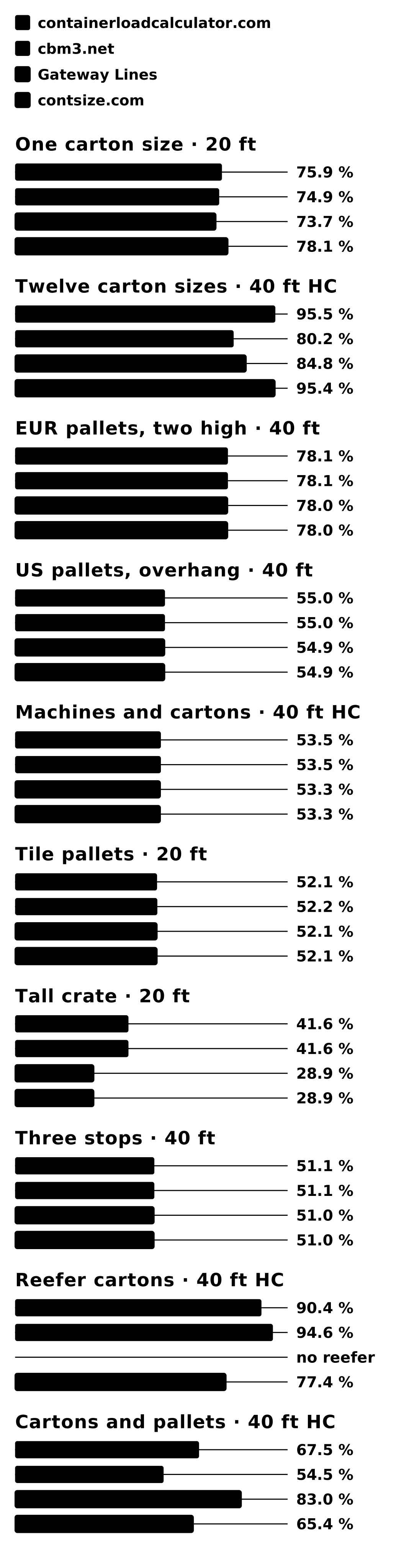
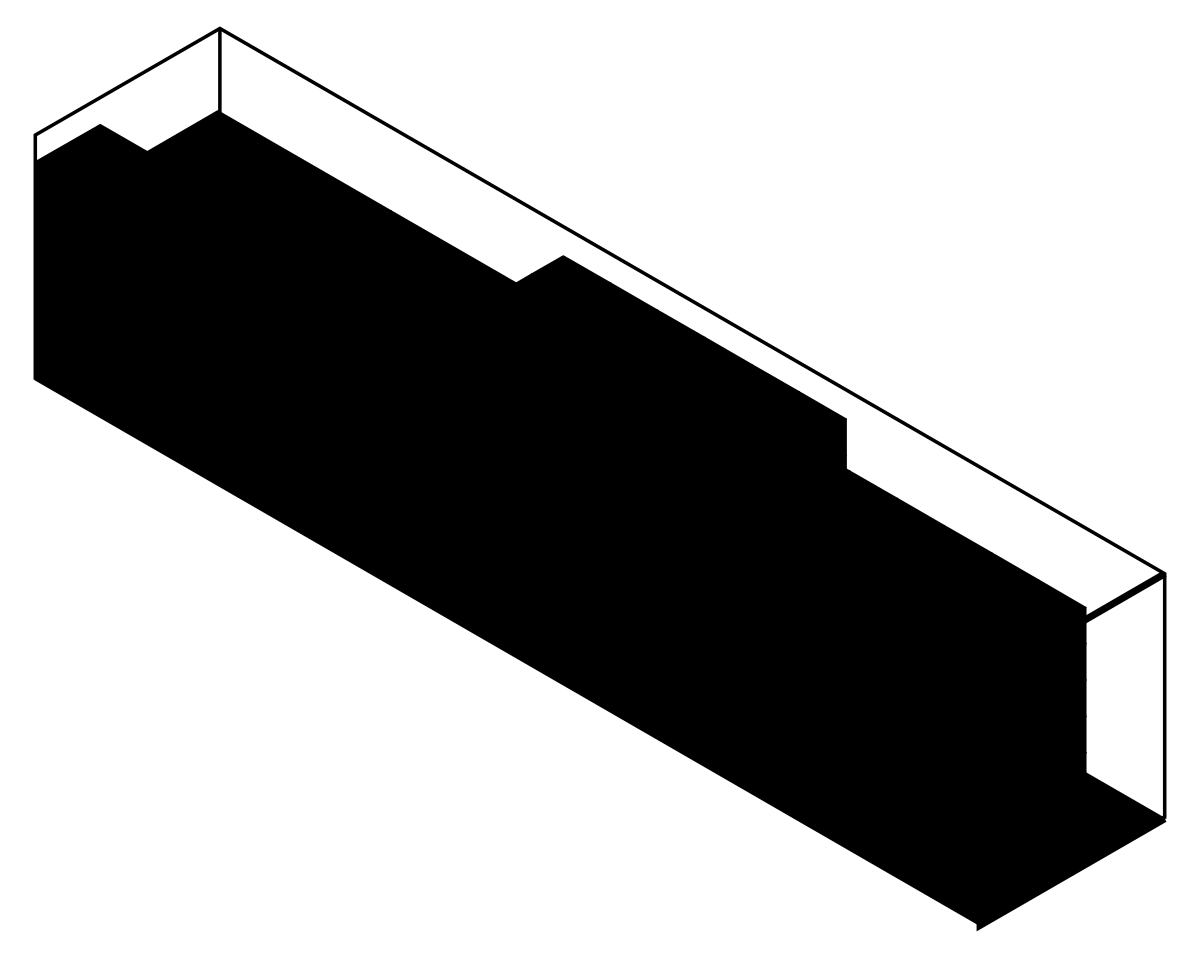 Container load calculatorThis free container load calculator places every carton, pallet and crate of a packing list in 3D, trying each piece every way it may turn, across…
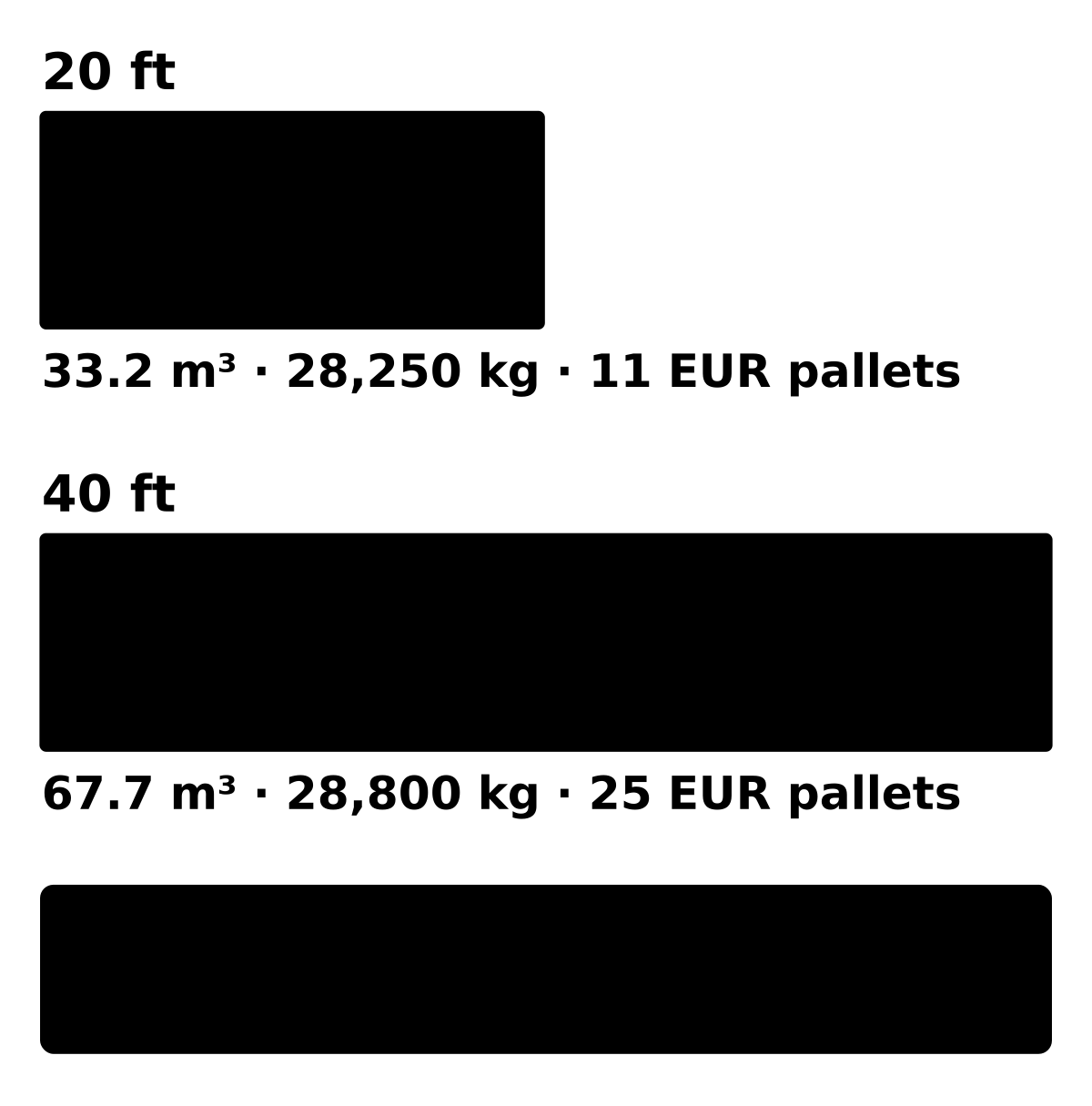
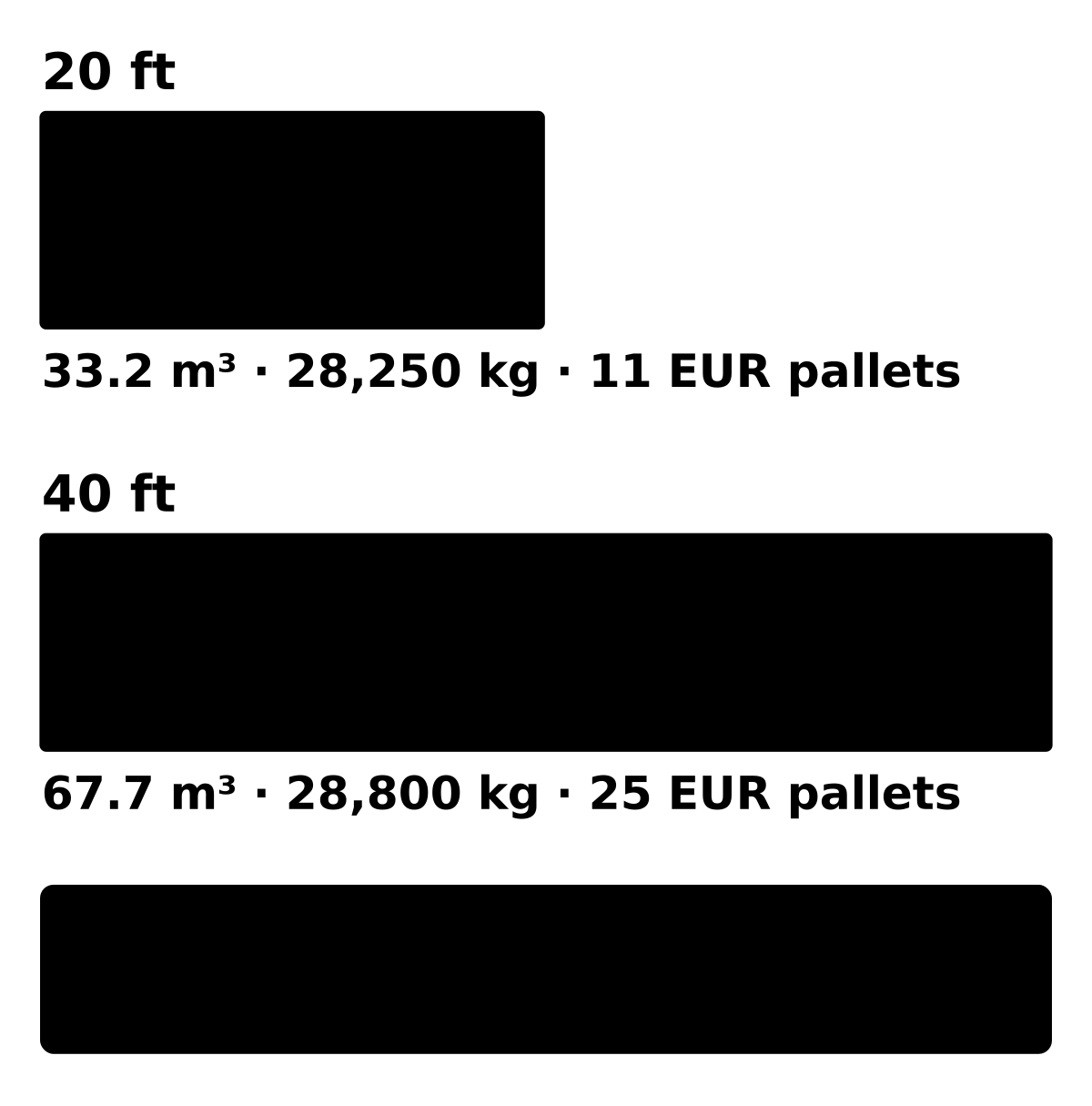 Container comparisonPick any two containers below and compare twelve specifications side by side, with both silhouettes drawn to a single scale. The headline verdict…
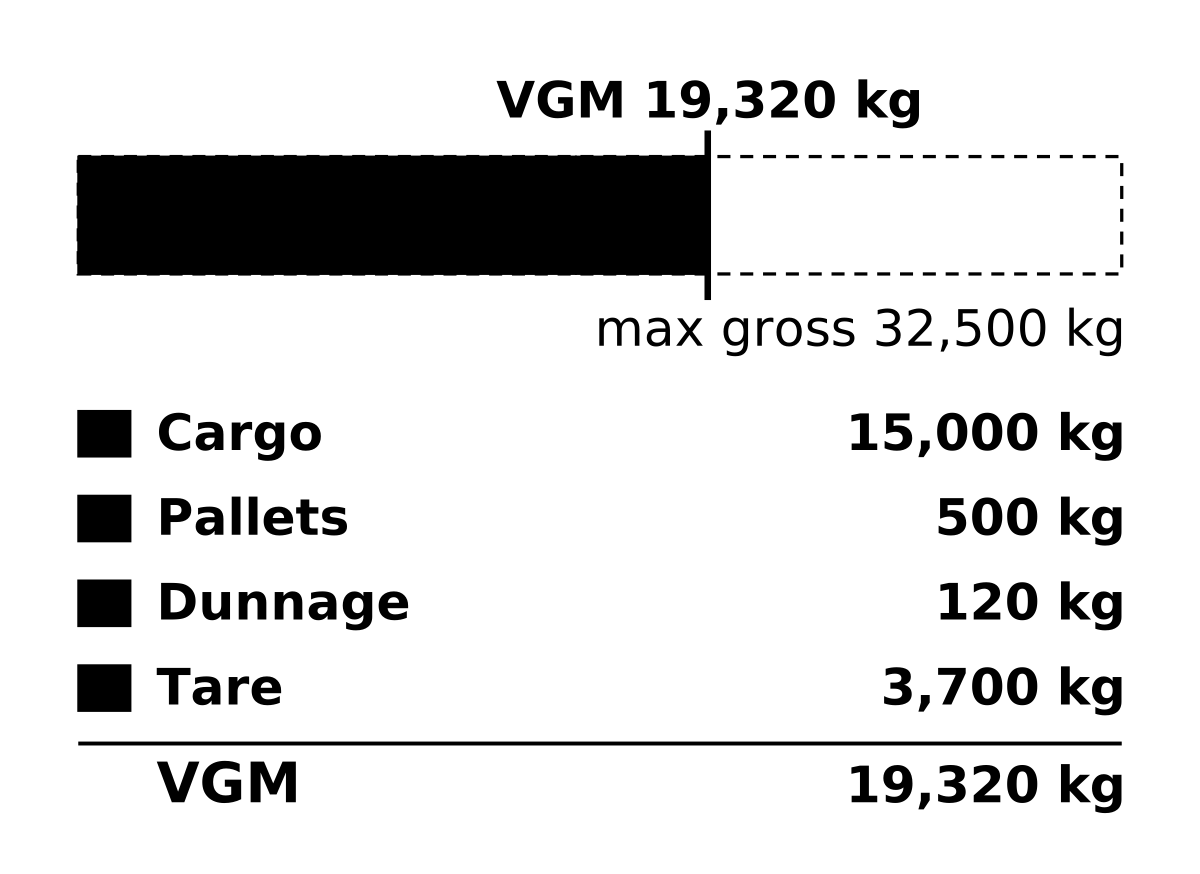
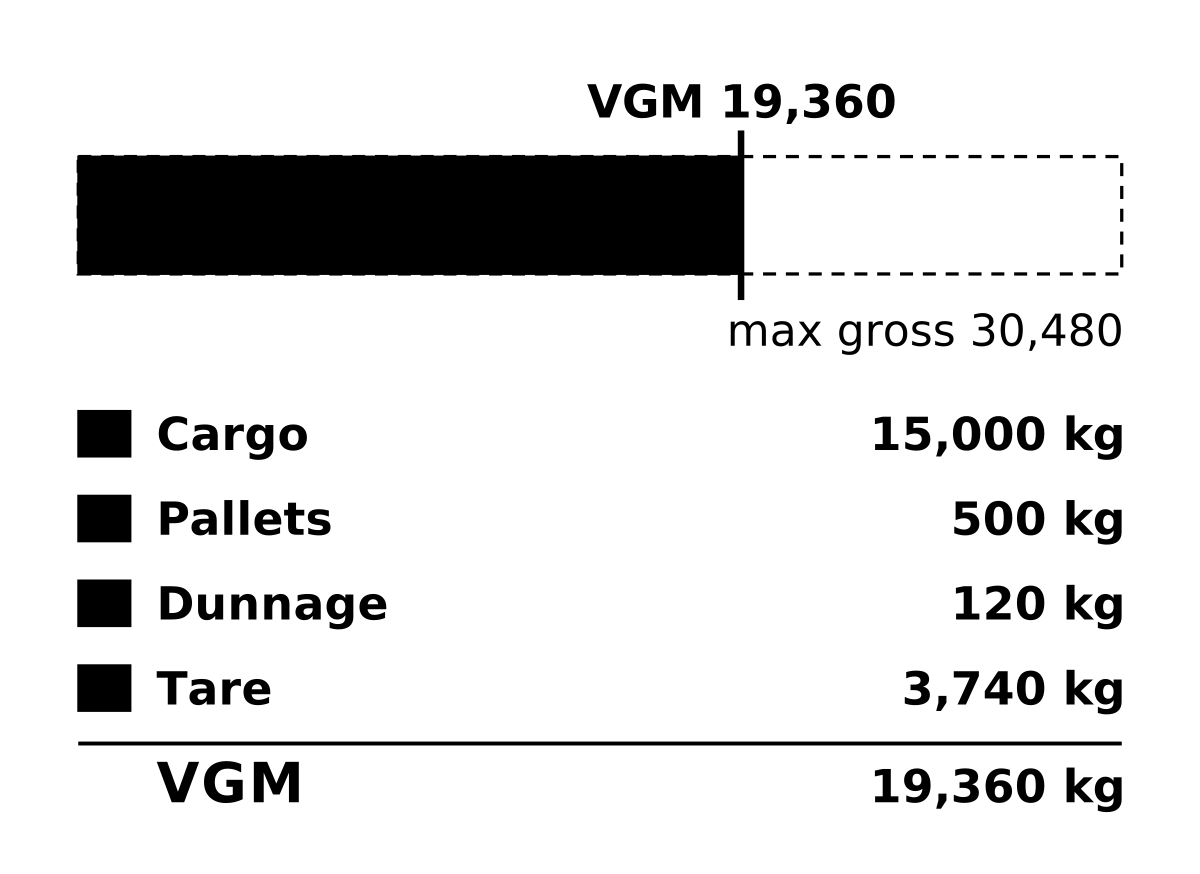 VGM calculatorVGM (verified gross mass) is the weight of the packed container: cargo, packing, pallets, dunnage and the container’s own tare — a 40 ft adds about…
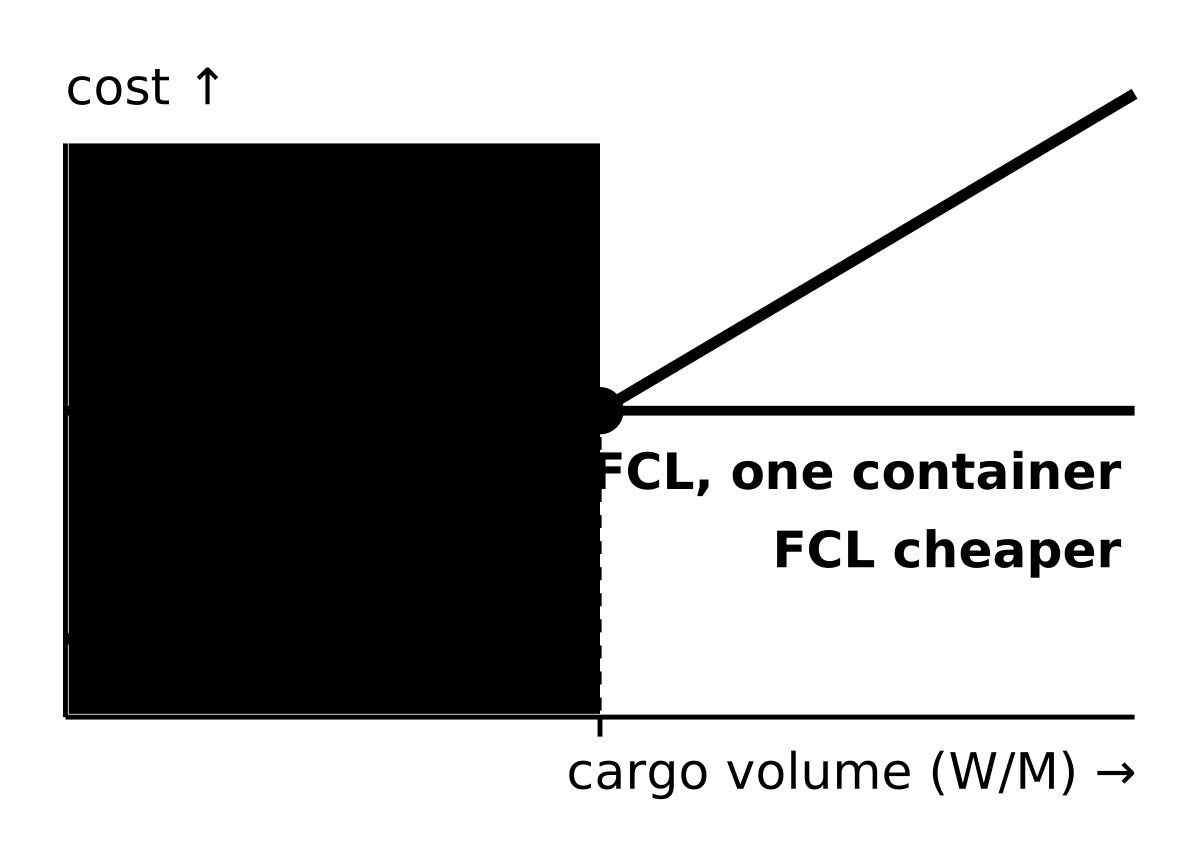
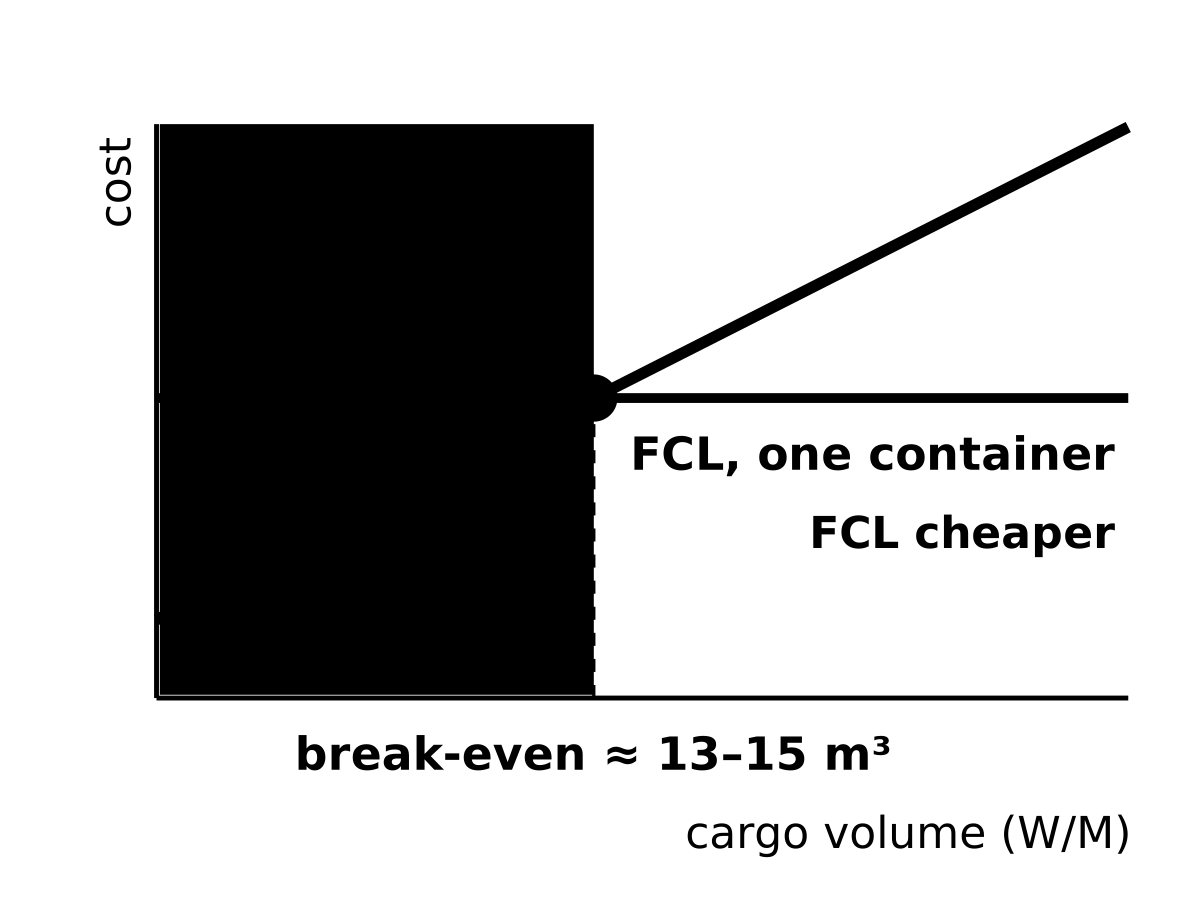 LCL vs FCL calculatorLCL is cheaper for a small cargo and a full container for a large one, and the two cross where the LCL charge reaches the price of one 20 ft: its…
- Container check digit calculatorThe check digit is the 11th character of a container number, worked out from the first 10 by the rule of ISO 6346 (read in its Indian adoption, IS…
All 455 questions, and where each is answered
Every question the guides, size pages, type pages and tools answer, grouped as above. A link opens the answer itself.
Dimensions and units 36 questions
- Are all shipping containers 8 feet wide? Container size chart (all 17)
- What size is a 40 ft container? Container size chart (all 17)
- What is the most common container size? Container size chart (all 17)
- Why are internal dimensions smaller than external? Container size chart (all 17)
- How many square feet is a shipping container? Container size chart (all 17)
- What are the interior dimensions of a shipping container? Container size chart (all 17)
- What are container dimensions in mm? Container dimensions in meters
- What is a 40 ft container in metres? Container dimensions in meters
- What is a 20 ft container in metres? Container dimensions in meters
- How many square metres is a container floor? Container dimensions in meters
- How many inches is a 40 ft container? Container dimensions in feet & inches
- What are container dimensions in cm? Container dimensions in feet & inches
- Why is a 20 ft container shorter than 20 feet? Container dimensions in feet & inches
- How many TEU is a 40 ft container? What is a TEU?
- Is TEU a measure of weight? What is a TEU?
- How much cargo is 1 TEU? What is a TEU?
- Why is a 45 ft container 2.25 TEU? What is a TEU?
- What does 24,000 TEU mean? What is a TEU?
- What is the difference between a container and a TEU? What is a TEU?
- What does 22G1 mean on a container? ISO container standards
- What is ISO 668? ISO container standards
- How is the container check digit calculated? ISO container standards
- Why is it called a conex box? Conex box & container names
- Is it conex or connex? Conex box & container names
- How much does a 20 ft conex box cost? Conex box & container names
- How much does a 40 ft conex box cost? Conex box & container names
- What is the difference between a conex box and a shipping container? Conex box & container names
- What are the dimensions of a conex box? Conex box & container names
- What are the disadvantages of a conex box? Conex box & container names
- How long does a conex box last? Conex box & container names
- Can you move a loaded conex box? Conex box & container names
- Do conex boxes come in sizes other than 20 and 40 ft? Conex box & container names
- How wide is a container door opening? Container door dimensions
- Are container doors smaller than the interior? Container door dimensions
- How high is a high cube container door? Container door dimensions
- Can a forklift drive through a container door? Container door dimensions
Loading and pallets 51 questions
- Is a 40 ft container double the price of a 20 ft? 20 ft vs 40 ft container
- Does a 20 ft container carry more weight than a 40 ft? 20 ft vs 40 ft container
- Is it better to ship two 20 ft containers or one 40 ft? 20 ft vs 40 ft container
- How much more volume does a 40 ft have than a 20 ft? 20 ft vs 40 ft container
- Do a 20 ft and 40 ft container have the same door size? 20 ft vs 40 ft container
- How many pallets fit in a 20 ft vs a 40 ft container? 20 ft vs 40 ft container
- When is a 20 ft container the right choice? 20 ft vs 40 ft container
- Should I choose a standard 40 ft or a 40 ft high cube? 20 ft vs 40 ft container
- How many CBM fits in a 40 ft container? Container CBM guide
- How do I calculate CBM? Container CBM guide
- How many CBM is a 20 ft container? Container CBM guide
- How much is 1 CBM? Container CBM guide
- Is CBM the same as a cubic meter? Container CBM guide
- How do I convert cubic feet to CBM? Container CBM guide
- How much does an empty 20 ft container weigh? Shipping container weight
- How much does an empty 40 ft container weigh? Shipping container weight
- What is the maximum weight a container can hold? Shipping container weight
- What is tare weight? Shipping container weight
- How is VGM measured? Shipping container weight
- How many Euro pallets fit in a 20 ft container? Pallets in a 20 ft container
- How many standard US pallets fit in a 20 ft container? Pallets in a 20 ft container
- Can you double-stack pallets in a 20 ft container? Pallets in a 20 ft container
- How many pallets fit in a 20 ft reefer? Pallets in a 20 ft container
- How do you calculate how many pallets fit in a container? Pallets in a 20 ft container
- How many UK pallets (1200 × 1000) fit in a 20 ft container? Pallets in a 20 ft container
- How much weight can I load on pallets in a 20 ft container? Pallets in a 20 ft container
- Is a 20 ft or 40 ft container cheaper per pallet? Pallets in a 20 ft container
- How many pallets fit in a 40 ft container? Pallets in a 40 ft container
- How many Euro pallets fit in a 40 ft container? Pallets in a 40 ft container
- How many pallets fit in a 40 ft high cube? Pallets in a 40 ft container
- How many 48 × 40 pallets fit in a 53 ft container? Pallets in a 40 ft container
- How do you calculate pallets per container? Pallets in a 40 ft container
- How many skids fit in a 53 ft trailer? Pallets in a 40 ft container
- Can you double-stack pallets in a 40 ft container? Pallets in a 40 ft container
- What is the difference between Euro pallets and standard US pallets? Pallets in a 40 ft container
- What if my pallets are mixed sizes? Pallets in a 40 ft container
- How much does a pallet weigh? Pallet sizes & dimensions
- What is the standard pallet size? Pallet sizes & dimensions
- What are euro pallet dimensions? Pallet sizes & dimensions
- How tall is a standard pallet? Pallet sizes & dimensions
- Are pallet dimensions listed as length × width or width × length? Pallet sizes & dimensions
- What is the ISPM-15 stamp? Pallet sizes & dimensions
- Can a car fit in a 20 ft container? Car in a shipping container
- How many cars fit in a 40 ft container? Car in a shipping container
- How do you secure a car in a container? Car in a shipping container
- Is container car shipping better than RoRo? Car in a shipping container
- What is the difference between demurrage and detention? Demurrage vs detention
- Is detention the same as per diem? Demurrage vs detention
- What does “14 days free detention at destination” mean? Demurrage vs detention
- How many free days do you get before demurrage starts? Demurrage vs detention
- What is the difference between storage and demurrage? Demurrage vs detention
Buying and owning 43 questions
- How much does a shipping container cost? Shipping container prices
- How much is a 20 ft shipping container? Shipping container prices
- How much is a 40 ft container? Shipping container prices
- How much is a 10 ft shipping container? Shipping container prices
- How much does a refrigerated (reefer) container cost? Shipping container prices
- How much does it cost to deliver a shipping container? Shipping container prices
- Can you buy a shipping container for under $1,000? Shipping container prices
- How much do 12 shipping containers cost? Shipping container prices
- Is it cheaper to build a shed or buy a shipping container? Shipping container prices
- Is it cheaper to rent or buy a shipping container? Shipping container prices
- Are container prices going up or down? Shipping container prices
- Why are containers cheaper near ports? Shipping container prices
- What does cargo-worthy mean? Container grades & condition
- Is a one-trip container new? Container grades & condition
- What grade of container do I need for storage? Container grades & condition
- How long does a one-trip container last? Container grades & condition
- What should I look for when buying a shipping container? Buying a container: checklist
- Is it better to buy a one-trip or used container? Buying a container: checklist
- Can I inspect a container before buying? Buying a container: checklist
- Do I need a CSC plate on my container? Buying a container: checklist
- How long does a shipping container last? Buying a container: checklist
- How much does it cost to move a shipping container? Moving a shipping container
- Can you move a shipping container with a forklift? Moving a shipping container
- How much space does container delivery need? Moving a shipping container
- Do I need a permit to transport a shipping container? Moving a shipping container
- Can you move a loaded shipping container? Moving a shipping container
- What sizes do storage containers come in? Storage container sizes
- What is the standard storage container size? Storage container sizes
- What are the dimensions of a 20 ft storage container? Storage container sizes
- How much does a storage container cost? Storage container sizes
- How much does a 20 ft storage container cost? Storage container sizes
- What is the smallest and largest storage container? Storage container sizes
- What is the difference between PODS and a shipping container? Storage container sizes
- Can a storage container be put on grass or gravel? Storage container sizes
- Do I need a permit for a storage container? Storage container sizes
- What is the best lock for a shipping container? Container locks & seals
- How do you lock up a shipping container? Container locks & seals
- What size padlock fits a container lockbox? Container locks & seals
- What is the difference between a container seal and a lock? Container locks & seals
- What is an ISO 17712 high-security seal? Container locks & seals
- Can thieves break into a locked shipping container? Container locks & seals
- Are shipping containers secure for storage? Container locks & seals
- Do container doors lock without a padlock? Container locks & seals
Building with containers 75 questions
- Is it really cheaper to build a container home? Container home dimensions
- Are container homes legal in the US? Container home dimensions
- How many square feet is a 40 ft container home? Container home dimensions
- How many containers do I need for a 3-bedroom house? Container home dimensions
- What are the downsides of container homes? Container home dimensions
- What is the life expectancy of a container home? Container home dimensions
- Can a tornado pick up a 40 ft container home? Container home dimensions
- Do container homes rust? Container home dimensions
- What insulation does a container home need? Container home dimensions
- Do you need a concrete slab for a container home? Container home dimensions
- What ceiling height does a container home have? Container home dimensions
- How high can you stack container homes? Container home dimensions
- Does a shipping container need a foundation? Container foundations
- How many piers does a 40 ft container need? Container foundations
- Can you put a shipping container on gravel? Container foundations
- Why do container doors jam after siting? Container foundations
- Can a shipping container withstand a tornado or hurricane? Container foundations
- What is the best insulation for a shipping container? Container insulation
- How much interior space does insulation take? Container insulation
- Can you insulate a shipping container from the outside? Container insulation
- Do you need a vapour barrier in a container? Container insulation
- How much does it cost to insulate a 20 ft container? Container insulation
- Why does my shipping container sweat inside? Ventilation & condensation
- How many vents does a shipping container need? Ventilation & condensation
- Do desiccants stop container condensation? Ventilation & condensation
- What is container rain? Ventilation & condensation
- Will insulation stop condensation in a container? Ventilation & condensation
- How thick is a shipping container floor? Container flooring
- How much weight can a container floor take? Container flooring
- Are shipping container floors toxic? Container flooring
- Can you replace a container floor? Container flooring
- What steel are shipping containers made of? What containers are made of
- How thick are shipping container walls? What containers are made of
- Do shipping containers rust? What containers are made of
- What makes Corten steel special? What containers are made of
- How many desks fit in a container office? Shipping container office
- How much does a shipping container office cost? Shipping container office
- Do container offices need insulation? Shipping container office
- What air conditioning does a container office need? Shipping container office
- Do I need a permit for a container office? Shipping container office
- Is a 20 ft or 40 ft container better for an office? Shipping container office
- How long does a container office conversion take? Shipping container office
- Can you connect two containers into a bigger office? Shipping container office
- Can you use a shipping container as a garage? Shipping container garage
- Will a full-size pickup fit in a container? Shipping container garage
- Is a container garage cheaper than building one? Shipping container garage
- Does a container garage need a foundation? Shipping container garage
- Will my car get condensation damage inside a container? Shipping container garage
- What size container do I need for two cars? Shipping container garage
- Can I cut a garage door into the side of a container? Shipping container garage
- Is a container tall enough for a car lift? Shipping container garage
- Is a shipping container cheaper than building a shed? Shipping container shed
- How much does a container shed cost? Shipping container shed
- Does a container shed need a foundation? Shipping container shed
- Will my tools rust inside a container? Shipping container shed
- How long will a container shed last? Shipping container shed
- Do I need a permit for a container shed? Shipping container shed
- How much fits in a 20 ft shed container? Shipping container shed
- Can I put shelves on container walls? Shipping container shed
- How much does a shipping container cabin cost? Shipping container cabin
- Is a container cabin cheaper than building a cabin? Shipping container cabin
- Are container cabins legal? Shipping container cabin
- What size solar system does a container cabin need? Shipping container cabin
- How do you heat a container cabin? Shipping container cabin
- Do container cabins have condensation problems? Shipping container cabin
- How long does a container cabin last? Shipping container cabin
- Can I move my container cabin later? Shipping container cabin
- How much does a shipping container pool cost? Shipping container pool
- How much is a 40 ft container pool? Shipping container pool
- Are container pools worth it? Shipping container pool
- Can I build a container pool myself? Shipping container pool
- What are the drawbacks of a container pool? Shipping container pool
- Do I need a permit for a container pool? Shipping container pool
- How long does a container pool last? Shipping container pool
- Can you heat a shipping container pool? Shipping container pool
Around the box 25 questions
- How many types of shipping containers are there? Types of shipping containers
- What are shipping containers called? Types of shipping containers
- What are the main types of shipping containers? Types of shipping containers
- What is the most common shipping container type? Types of shipping containers
- What are the 7 types of shipping containers? Types of shipping containers
- Which container type carries the most weight? Types of shipping containers
- What is the cheapest type of container? Types of shipping containers
- Which container type is used for oversized cargo? Types of shipping containers
- What is a GOH container? Types of shipping containers
- Ventilated vs refrigerated container: what is the difference? Types of shipping containers
- What is a Tricon container? Types of shipping containers
- Do all container types stack and ship the same way? Types of shipping containers
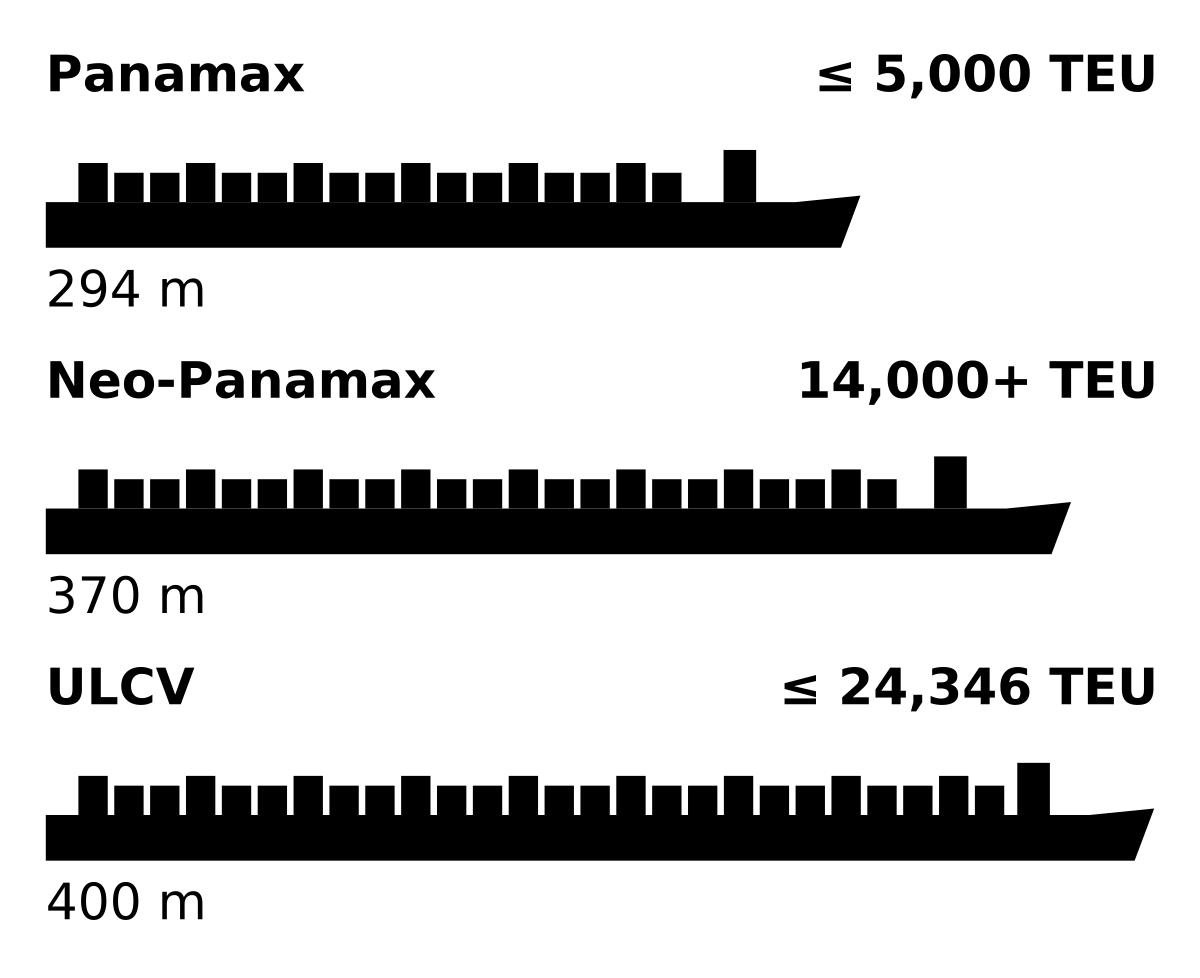
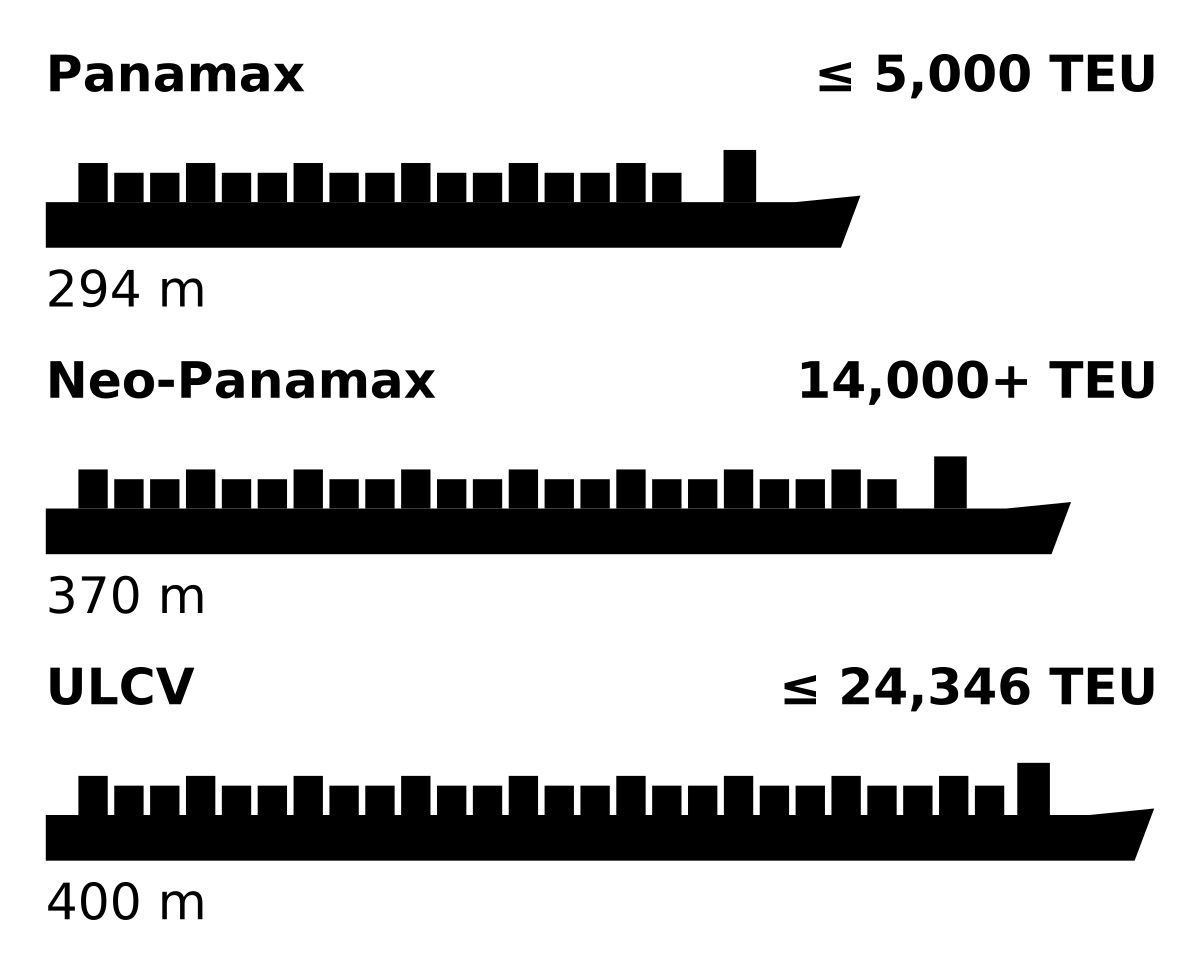
- What is the biggest container ship in the world? Container ship sizes
- How many containers fit on a cargo ship? Container ship sizes
- What does Panamax mean? Container ship sizes
- How deep does a loaded container ship sit in the water? Container ship sizes
- Who owns the largest container ships? Container ship sizes
- What is a ULD in air freight? Air cargo container (ULD) sizes
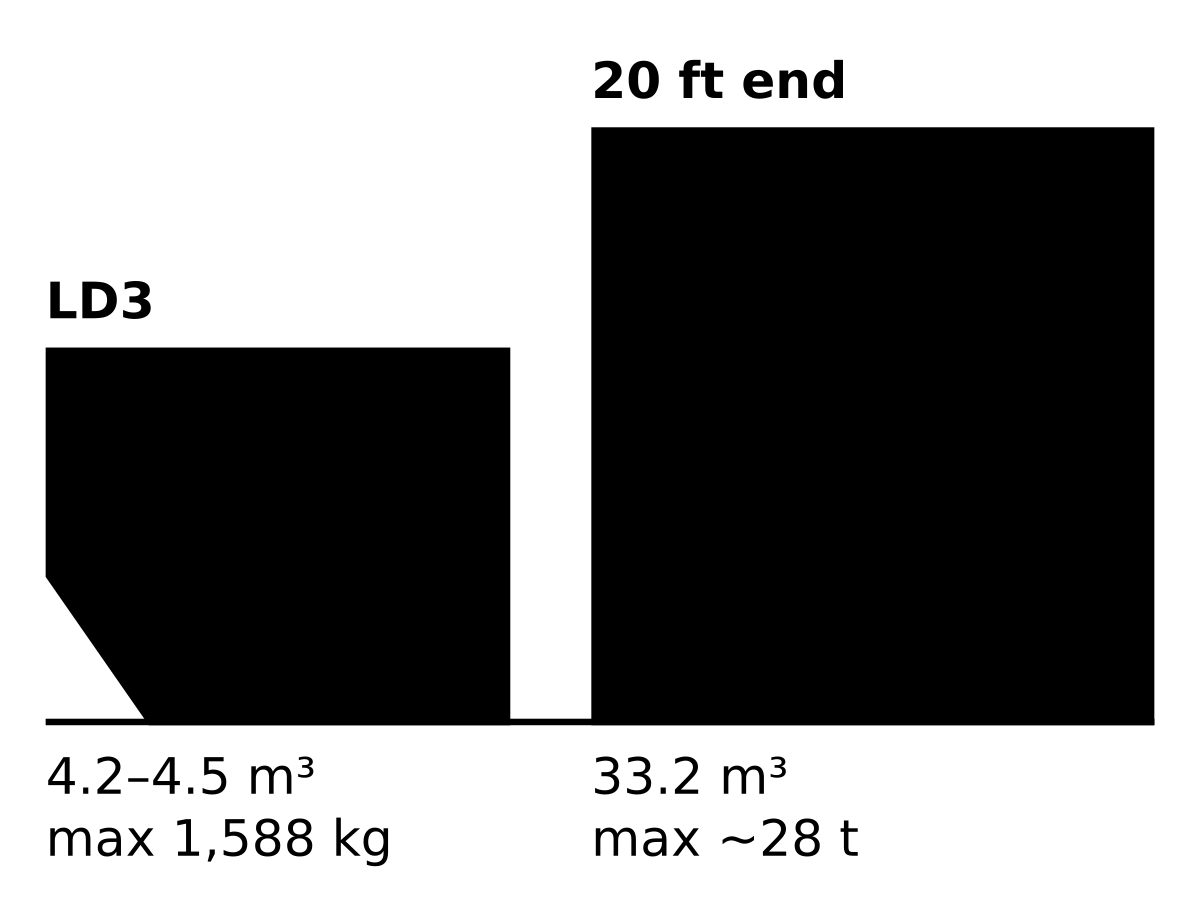
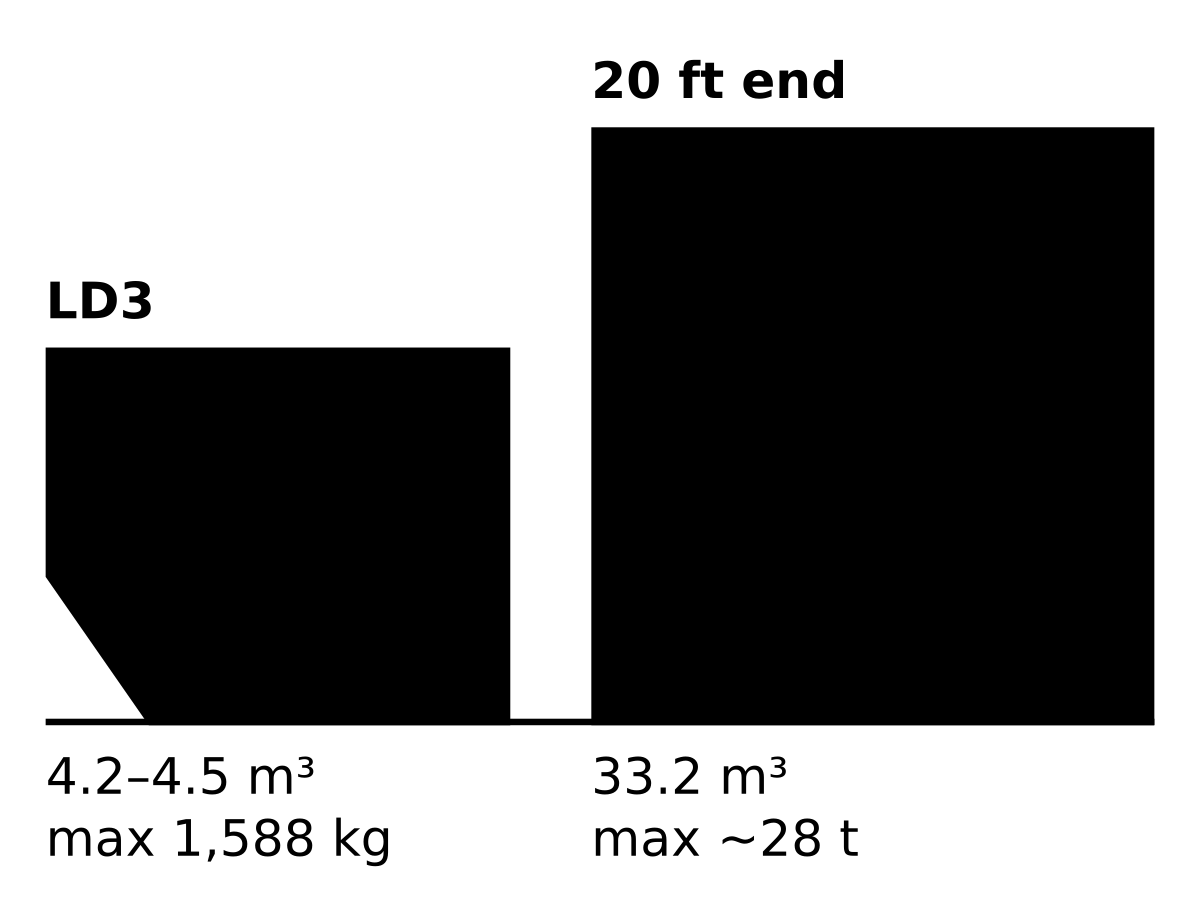
- What are LD3 container dimensions? Air cargo container (ULD) sizes
- How many LD3 containers fit on an A330? Air cargo container (ULD) sizes
- What is the difference between a ULD container and a pallet? Air cargo container (ULD) sizes
- What does AKE stand for? Air cargo container (ULD) sizes
- What is the maximum weight of an LD3? Air cargo container (ULD) sizes
- Who owns ULDs? Air cargo container (ULD) sizes
- How is chargeable weight calculated for air freight? Air cargo container (ULD) sizes
Our own research 18 questions
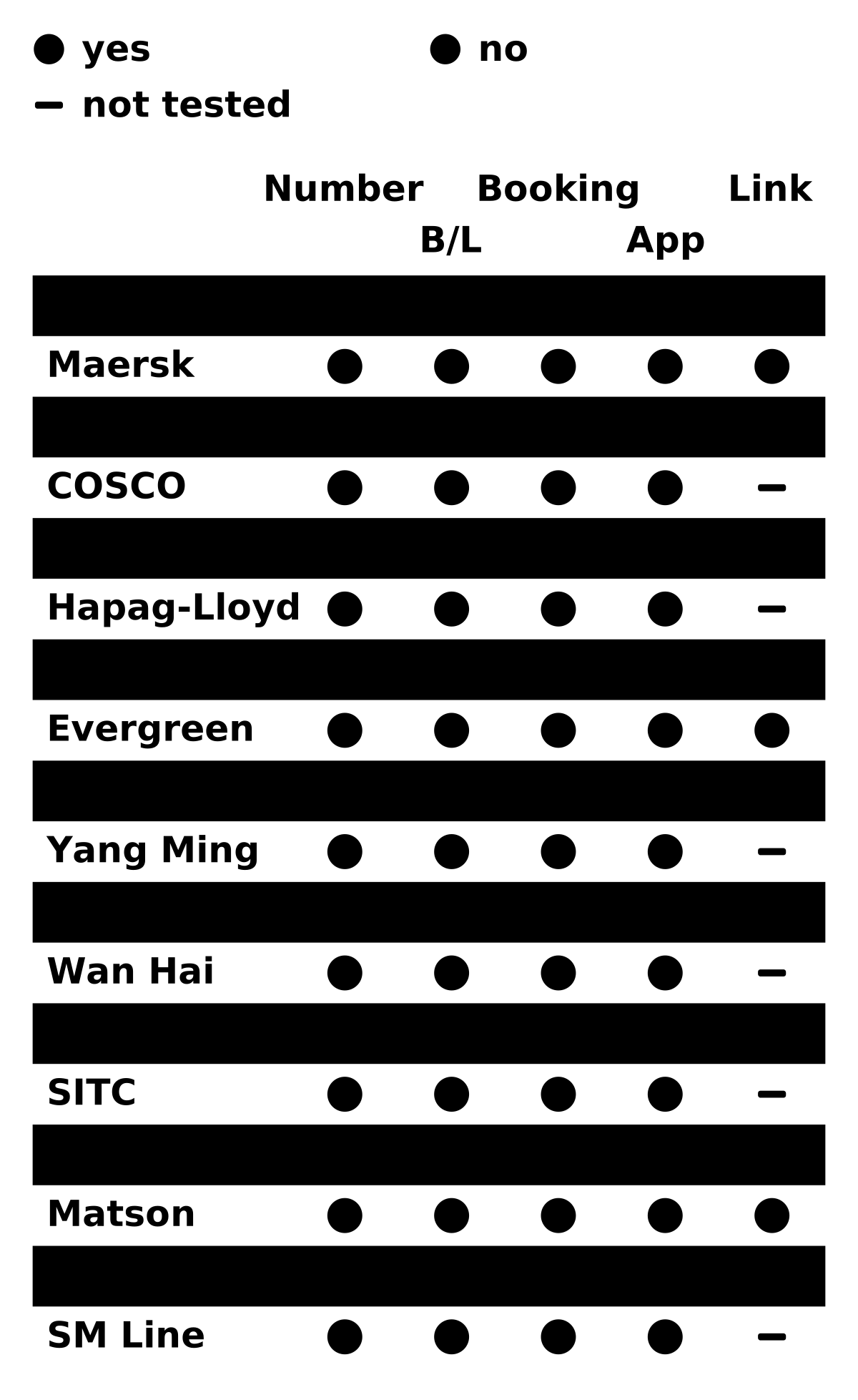
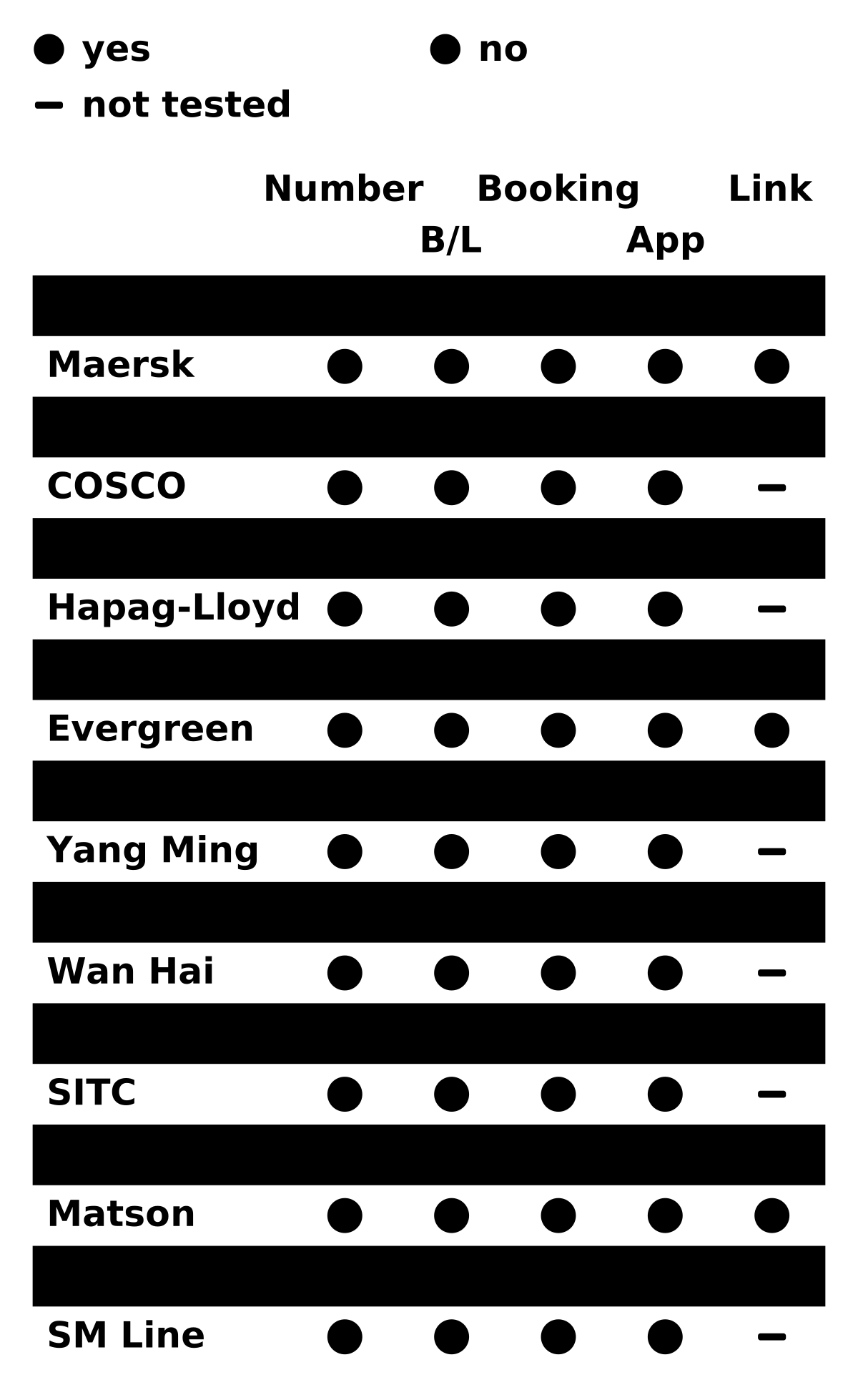
- How many carrier trackers support deep links? Carrier tracker study 2026
- Which container tracking identifier works everywhere? Carrier tracker study 2026
- Why can I not track a TCKU or TEMU container on the owner’s site? Carrier tracker study 2026
- What does "not tested" mean in the results table? Carrier tracker study 2026
- When was this study run? Carrier tracker study 2026
- Can I reuse this data? Carrier tracker study 2026
- How much does the tare weight of a 40 ft container vary by carrier? Container spec variance index
- What is the tare weight of a 40 ft high cube container by carrier? Container spec variance index
- How much does an empty 20 ft container weigh according to the sheets? Container spec variance index
- Why do carriers publish different tare weights for the same container? Container spec variance index
- Which tare weight should I use for the VGM or a weight declaration? Container spec variance index
- Can I reuse this comparison? Container spec variance index
- Which free container load calculator packs the most cartons? Load calculator test 2026
- Do container load calculators check the door height? Load calculator test 2026
- Which load calculator respects a reefer load line? Load calculator test 2026
- How fast are free container load calculators? Load calculator test 2026
- Is this comparison fair to the other tools? Load calculator test 2026
- Can I repeat the test? Load calculator test 2026
Answers and terms 34 questions
- Are all shipping containers 8 ft wide? Container FAQ
- What are the standard container sizes? Container FAQ
- What are the actual dimensions of a 20 ft container? Container FAQ
- How tall is a shipping container? Container FAQ
- What is a TEU? Container FAQ
- What is the biggest shipping container? Container FAQ
- How much does a 40 ft container weigh empty? Container FAQ
- How much weight can a shipping container hold? Container FAQ
- How many 48×40 pallets fit in a 53 ft container? Container FAQ
- How many cars fit in a container? Container FAQ
- What do the codes on a container door mean? Container FAQ
- What does CSC stand for? Container FAQ
- Are shipping containers waterproof? Container FAQ
- What temperature does it get inside a container? Container FAQ
- Shipping container vs storage container: what is the difference? Container FAQ
- What is a conex box? Container FAQ
- Where can you buy a shipping container? Container FAQ
- What is a one-trip container? Container FAQ
- How long do shipping containers last? Container FAQ
- What is not allowed in a shipping container? Container FAQ
- Can you stack a 40 ft container on a 20 ft? Container FAQ
- How do containers attach to each other? Container FAQ
- Can you move a loaded container with a forklift? Container FAQ
- How many containers fall off ships every year? Container FAQ
- Can a tornado pick up a shipping container? Container FAQ
- Are container homes legal? Container FAQ
- Do you need a permit to place a container on your property? Container FAQ
- Do you need a concrete slab under a container? Container FAQ
- How much water does a shipping container pool hold? Container FAQ
- Does a car fit inside a shipping container garage? Container FAQ
- Is a container shed cheaper than building a wood shed? Container FAQ
- Can a shipping container work as an off-grid cabin? Container FAQ
- What is the best way to lock a shipping container? Container FAQ
- How many desks fit in a shipping container office? Container FAQ
Sizes 47 questions
- How big is a 10 ft shipping container? 10 ft container
- How much does a 10 ft container weigh? 10 ft container
- How much does a 10 ft container cost? 10 ft container
- How many square meters (square feet) is a 10 ft container? 10 ft container
- Can 10 ft containers be shipped by sea? 10 ft container
- Will a 10 ft container fit in a parking space? 10 ft container
- What are the dimensions of a 20 ft container? 20 ft container
- How much does a 20 ft container weigh? 20 ft container
- How many cubic metres (cubic feet) is a 20 ft container? 20 ft container
- How much does a 20 ft container cost? 20 ft container
- How many square meters (square feet) is a 20 ft container? 20 ft container
- How many pallets fit in a 20 ft container? 20 ft container
- Why is a 20 ft container called 1 TEU? 20 ft container
- What are the dimensions of a 40 ft container? 40 ft container
- How much does a 40 ft container weigh? 40 ft container
- How many cubic metres (cubic feet) is a 40 ft container? 40 ft container
- How much does a 40 ft container cost? 40 ft container
- How many square meters (square feet) is a 40 ft container? 40 ft container
- Does a 40 ft container carry twice as much as a 20 ft? 40 ft container
- What are the dimensions of a 40 ft high cube container? 40 ft high cube container
- How tall is a high cube container? 40 ft high cube container
- How many cubic metres (cubic feet) is a 40 ft high cube? 40 ft high cube container
- How much does a 40 ft high cube container cost? 40 ft high cube container
- How many square meters (square feet) is a 40 ft high cube? 40 ft high cube container
- How tall is a high cube container on a truck? 40 ft high cube container
- Do high cube containers cost more to ship? 40 ft high cube container
- How do I recognise a high cube container? 40 ft high cube container
- What are the dimensions of a 45 ft container? 45 ft high cube container
- How much does a 45 ft container weigh? 45 ft high cube container
- How much does a 45 ft container cost? 45 ft high cube container
- How many square meters (square feet) is a 45 ft container? 45 ft high cube container
- How many pallets fit in a 45 ft container? 45 ft high cube container
- Do 45 ft containers exist? 45 ft high cube container
- Is a 45 ft container 2 TEU or 2.25 TEU? 45 ft high cube container
- What are the dimensions of a 48 ft container? 48 ft container
- How much does a 48 ft container weigh? 48 ft container
- How many pallets fit in a 48 ft container? 48 ft container
- How much does a 48 ft container cost? 48 ft container
- How many square meters (square feet) is a 48 ft container? 48 ft container
- Can a 48 ft container be shipped internationally? 48 ft container
- What are the dimensions of a 53 ft container? 53 ft container
- How much does a 53 ft container weigh? 53 ft container
- What are the door dimensions of a 53 ft container? 53 ft container
- How much does a 53 ft container cost? 53 ft container
- How many square meters (square feet) is a 53 ft container? 53 ft container
- How many pallets fit in a 53 ft container? 53 ft container
- Why do 53 ft containers exist? 53 ft container
Container types 62 questions
- How much taller is a high cube container? High cube container
- Is a high cube container worth it? High cube container
- Is a high cube container better than a standard container? High cube container
- How much does a high cube container cost? High cube container
- Is shipping a high cube more expensive? High cube container
- Do 20 ft high cube containers exist? High cube container
- What is the internal height of a high cube container? High cube container
- 40 ft standard vs 40 ft high cube: what is the difference? High cube container
- What are the dimensions of a 20 ft reefer? Reefer container
- What are the dimensions of a 40 ft reefer container? Reefer container
- How much does a reefer container cost? Reefer container
- Why is a reefer smaller inside than a dry container? Reefer container
- What temperature range can a reefer hold? Reefer container
- How much does a reefer container weigh? Reefer container
- Why is it called a reefer container? Reefer container
- What is an open top container used for? Open top container
- What are the roof opening dimensions of an open top container? Open top container
- How much weight can an open top container carry? Open top container
- How much does an open top container cost? Open top container
- Can an open top container carry taller-than-standard cargo? Open top container
- Is an open top container waterproof? Open top container
- How much weight can a flat rack carry? Flat rack container
- What is the loading area of a 20 ft flat rack? Flat rack container
- What is the loading area of a 40 ft flat rack? Flat rack container
- How much does a flat rack container cost? Flat rack container
- Can cargo overhang a flat rack? Flat rack container
- How is cargo secured on a flat rack? Flat rack container
- What is the difference between a flat rack and a flatbed? Flat rack container
- Can flat rack containers go by rail? Flat rack container
- How many litres does a tank container hold? Tank container
- How many gallons does an ISO tank hold? Tank container
- How much does a tank container weigh? Tank container
- How much does a tank container cost? Tank container
- Are tank containers the same size as normal containers? Tank container
- What do tank container T-codes mean? Tank container
- Why is it called an ISO tank? Tank container
- Are double door containers the same size as standard ones? Double door container
- What are the side opening dimensions of an open-side container? Double door container
- What are the dimensions of a 40 ft double door container? Double door container
- How much does a double door container cost? Double door container
- How much more does a double door container weigh? Double door container
- What is a side opening container called? Double door container
- What are the dimensions of an open side container? Open side container
- How much weight can an open side container carry? Open side container
- What is the ISO code of an open side container? Open side container
- What is an open side container used for? Open side container
- Is an open side container as strong as a standard container? Open side container
- What is an insulated shipping container? Insulated container
- What is the difference between an insulated container and a reefer? Insulated container
- How long does an insulated container keep cargo cool? Insulated container
- What is the ISO code for an insulated container? Insulated container
- Can I use an old reefer as an insulated container? Insulated container
- What is a bulk container? Bulk container
- How much can a 20 ft bulk container carry? Bulk container
- What is the ISO code of a bulk container? Bulk container
- How is a bulk container unloaded? Bulk container
- Bulk vs half-height container: what is the difference? Bulk container
- What is a ventilated container? Ventilated container
- Why is a ventilated container called a coffee container? Ventilated container
- What are the dimensions of a ventilated container? Ventilated container
- Does a ventilated container have a fan? Ventilated container
- What is the ISO code for a ventilated container? Ventilated container
Tools 64 questions
- Where do I find the container number? Container tracking
- What is the format of a container number? Container tracking
- How do I track a container by container number? Container tracking
- My container starts with TRLU or TGHU — which line is carrying it? Container tracking
- Can I track someone else’s container? Container tracking
- Why does container tracking show nothing? Container tracking
- What is the difference between a container number and a B/L number? Container tracking
- What do the letters in a container number mean? Container tracking
- How much does it cost to track a container? Container tracking
- Can I track a container on my phone? Container tracking
- How do I track a TEMU, Triton or Textainer container? Container tracking
- Can I track a container live on a map? Container tracking
- What does a size/type code like 22G1 or 45G1 mean? Container tracking
- Why is 1 CBM 167 kg? CBM calculator
- How many CBM is a 40 ft container? CBM calculator
- What is volumetric weight? CBM calculator
- What DIM factor does air freight use? CBM calculator
- How many CBM fit in a 20 ft container? CBM calculator
- How many pallets fit in a container? Pallet calculator
- Does the calculator account for double stacking? Pallet calculator
- How many tiers of 1.2 m pallets fit in a container? Pallet calculator
- Why does my real load differ from the calculated count? Pallet calculator
- How much can each pallet weigh in a full 40 ft container? Pallet calculator
- Can I enter a custom pallet size? Pallet calculator
- Does the calculator check container weight limits? Pallet calculator
- Is floor-loading better than using pallets? Pallet calculator
- How many meters is a 40 ft container? Unit converter
- What is 8 ft 6 in in meters? Unit converter
- How many centimeters is a container wide? Unit converter
- Why is a 20 ft container 6.058 m and not 6.096 m? Unit converter
- Is 8 ft 6 in the same as 2.6 m? Unit converter
- Does a 4 × 8 ft plywood sheet fit inside a container? Unit converter
- Is there a free 3D container loading calculator? Container load calculator
- How many boxes fit in a 20 ft container? Container load calculator
- How many 60 × 40 × 40 cm cartons fit in a 40 ft high cube? Container load calculator
- Can I use it for a 40 HQ container? Container load calculator
- What is the container loading calculation formula? Container load calculator
- Is there an Excel version of the container load calculator? Container load calculator
- How do I make a loading plan for the warehouse? Container load calculator
- Does the load calculator work for trucks? Container load calculator
- Can I mix pallets and cartons in one plan? Container load calculator
- Does the calculator check weight distribution? Container load calculator
- What is the 60/40 rule in container loading? Container load calculator
- Why does it say my item does not pass the door? Container load calculator
- How accurate is the load plan? Container load calculator
- How high can I stack cargo in a reefer container? Container load calculator
- Which container size is the most cost-effective? Container comparison
- Is a 40 ft container double a 20 ft? Container comparison
- What specifications matter most when comparing containers? Container comparison
- Is a high cube worth it over a standard 40 ft? Container comparison
- What are the smallest and largest ISO containers? Container comparison
- Where do the numbers in this tool come from? Container comparison
- How do you calculate VGM? VGM calculator
- Does VGM include the container tare? VGM calculator
- Who is responsible for the VGM? VGM calculator
- What is the difference between VGM and gross weight? VGM calculator
- Is LCL or FCL cheaper? LCL vs FCL calculator
- Why is LCL so expensive per cubic metre? LCL vs FCL calculator
- What is W/M in an LCL quote? LCL vs FCL calculator
- How much does FCL cost? LCL vs FCL calculator
- How do you calculate a container check digit? Container check digit calculator
- How do I check if a container number is valid? Container check digit calculator
- What does 45G1 mean on a container? Container check digit calculator
- Why is the check digit sometimes 0 when the remainder is 10? Container check digit calculator
Recently revised
The five guides that changed last. A date moves only when the content does.
How these guides are made
- Every figure comes from one dataset, the same one behind the specification tables, so a guide and a table cannot disagree.
- Each of the 191 container figures carries its status and the documents behind it: 44 set by ISO 668 and ISO 1496-1 (read in IS 6566:2001, ГОСТ Р 51876-2008 and ГОСТ Р 53350-2009), 114 printed alike by most of the published sheets, 21 where the sheets spread and 12 from a single sheet. The data sources page gives them figure by figure; the citations page lists all 308 documents read.
- Where the sheets differ, a page gives the most common figure and the span the sheets print, never one number as if it were the only one.
- A guide opens with its answer. If the first sentence does not carry the verdict and the figure, we treat that as a defect.