SOLAS method 2 · in your browser
VGM Calculator

VGM (verified gross mass) is the weight of the packed container: cargo, packing, pallets, dunnage and the container’s own tare — a 40 ft adds 3,740 kg (8,245 lb) and a 20 ft 2,230 kg (4,916 lb). By method 2 you weigh the contents and add the tare; the calculator does the sum, checks it against the box’s maximum gross and prints the declaration.
Enter each kind of package with its weighed weight and count, the pallets under them and the dunnage, then the container. The tare and maximum gross are the usual figures for the size until you type the ones painted on the door, which are the ones that count. Nothing leaves your browser.
Method 2: enter what you weighed — the packages, the pallets under them and the dunnage — and the calculator adds the container’s tare. Nothing leaves your browser and nothing is kept.
| Packages | 0 kg |
|---|---|
| Cargo, packing and securing | 0 kg |
| Container tare (usual for the size) | 2,230 kg |
| Verified gross mass | 2,230 kg4,916 lb |
| Maximum gross | 30,480 kg |
Method 1 and method 2
SOLAS chapter VI, regulation 2 has required a verified gross mass for every packed export container since 1 July 2016 (IMO). Method 1: weigh the packed and sealed container, usually on a certified weighbridge with the truck, and take the truck and chassis off. Method 2: weigh every package and item of packing and securing, and add the container’s tare.
Method 2 needs a shipper whose method is approved where that is required, scales that are calibrated, and the tare from the container door — not an estimate. Where the cargo is loose bulk that cannot be weighed piece by piece, method 1 is the only one.
What counts in method 2
Everything that is inside the box when it is closed: the cargo, its cartons and wrapping, the pallets or skids, dunnage, airbags, bracing and lashing — and the container’s tare. In the worked example, twenty EUR pallets of 750 kg in a 40 ft: 15,000 kg of cargo, 500 kg of empty pallets, 120 kg of dunnage and the 3,740 kg tare give a VGM of 19,360 kg.
The most common mistakes are leaving out the tare, leaving out the pallets, and declaring the figure from the invoice instead of one weighed. A difference the terminal finds when it weighs the box can stop it from being loaded.
VGM, gross weight and payload
The gross weight on a commercial invoice or bill of lading is usually the cargo with its packing, without the container. The VGM always includes the tare. The maximum gross on the CSC plate is the limit for the VGM; the payload is that limit minus the tare — the most cargo the box may carry. Road limits are usually lower still: see how much a container weighs.

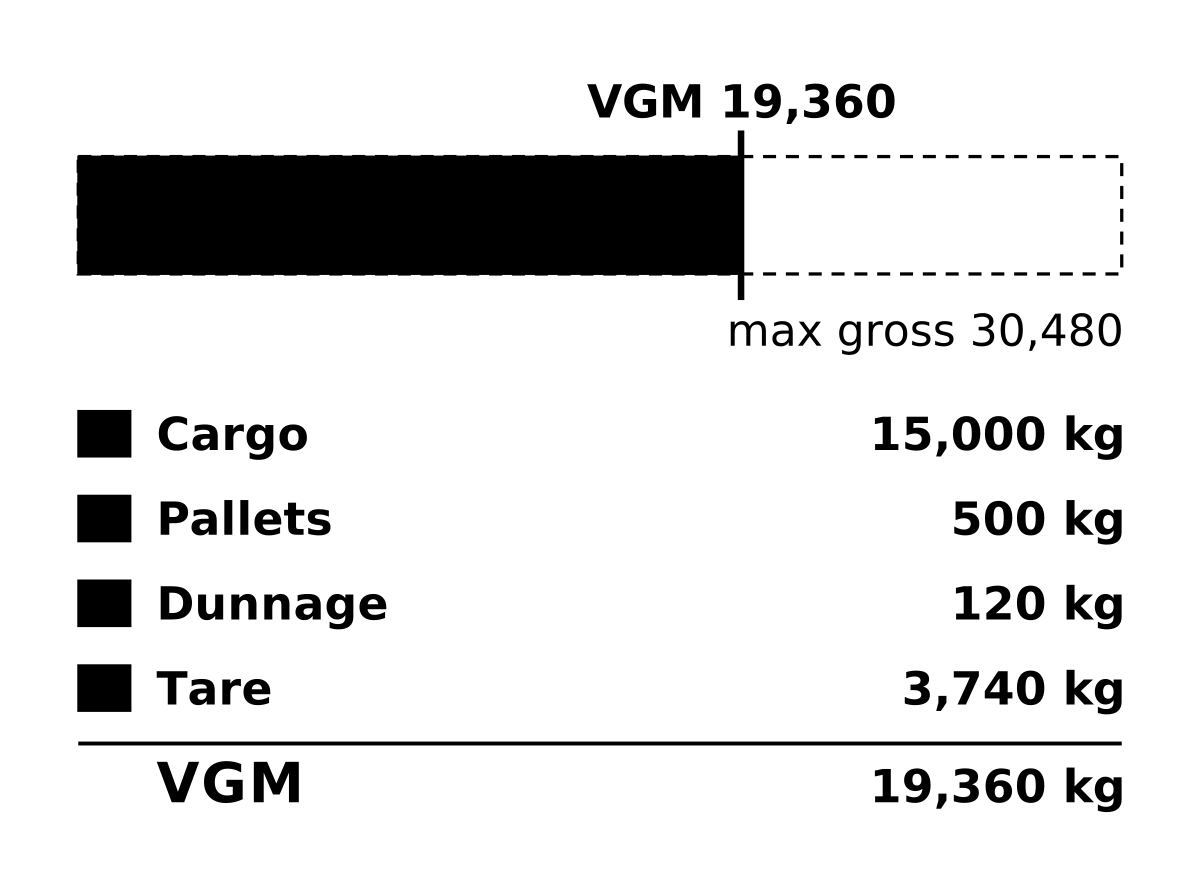
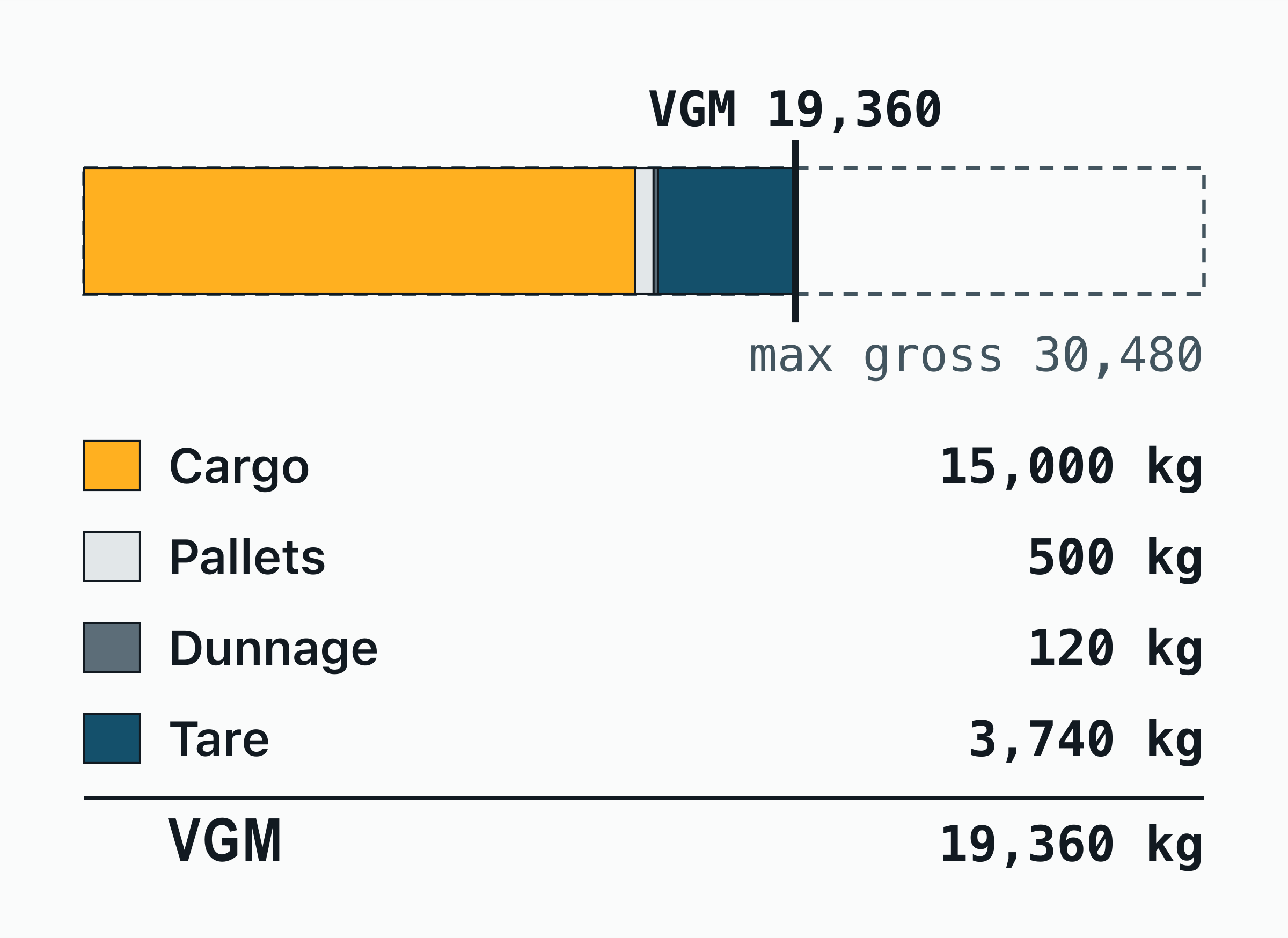
The numbers in this chart
| Part | kg |
|---|---|
| Cargo | 15,000 |
| Pallets | 500 |
| Dunnage | 120 |
| Tare | 3,740 |
| VGM | 19,360 |
Frequently asked questions
How do you calculate VGM?
VGM is the weight of everything inside the container plus its tare: by method 2, add the weighed cargo, its packing, pallets and dunnage, then the tare on the container door — for example 15,620 kg of contents in a 40 ft with a 3,740 kg tare is a VGM of 19,360 kg.
Does VGM include the container tare?
Yes: the verified gross mass is the packed container’s total, so it always includes the tare — about 2,230 kg for a 20 ft and 3,740 kg for a 40 ft, but use the figure on the door.
Who is responsible for the VGM?
The shipper named on the bill of lading is responsible for the VGM: they obtain it, sign it and send it to the carrier and the terminal before the cut-off, and a container without one is not loaded.
What is the difference between VGM and gross weight?
The difference is the container’s tare: gross weight on the invoice or bill of lading is usually the cargo with its packing, while VGM is the packed container as a whole, tare included.