ISO 22G2 · Doors down the long side
Open Side Container

An open side container is a 20 ft box whose long side opens on bi-fold doors, so a forklift reaches every pallet position without unloading from the back. Inside it measures 5.898 × 2.287 × 2.302 m (19′4″ × 7′6″ × 7′7″), 31.1 m³ — a little less than a dry box, because the door frame takes width and height. It weighs about 3,200 kg and is usually rated 24,000 kg gross.
- External dimensions
- 6.06 × 2.44 × 2.59 m19′11″ × 8′ × 8′6″
- Internal dimensions
- 5.90 × 2.29 × 2.30 m19′4″ × 7′6″ × 7′7″
- Capacity (volume)
- 31.1 m³1,098 ft³
- Max payload
- 20,800 kg45,856 lb

The numbers in this chart
| Figure | Value |
|---|---|
| Outside, L × W × H | 6.06 × 2.44 × 2.59 m |
| Volume | 31.1 m³ |
| Payload | 20,800 kg |
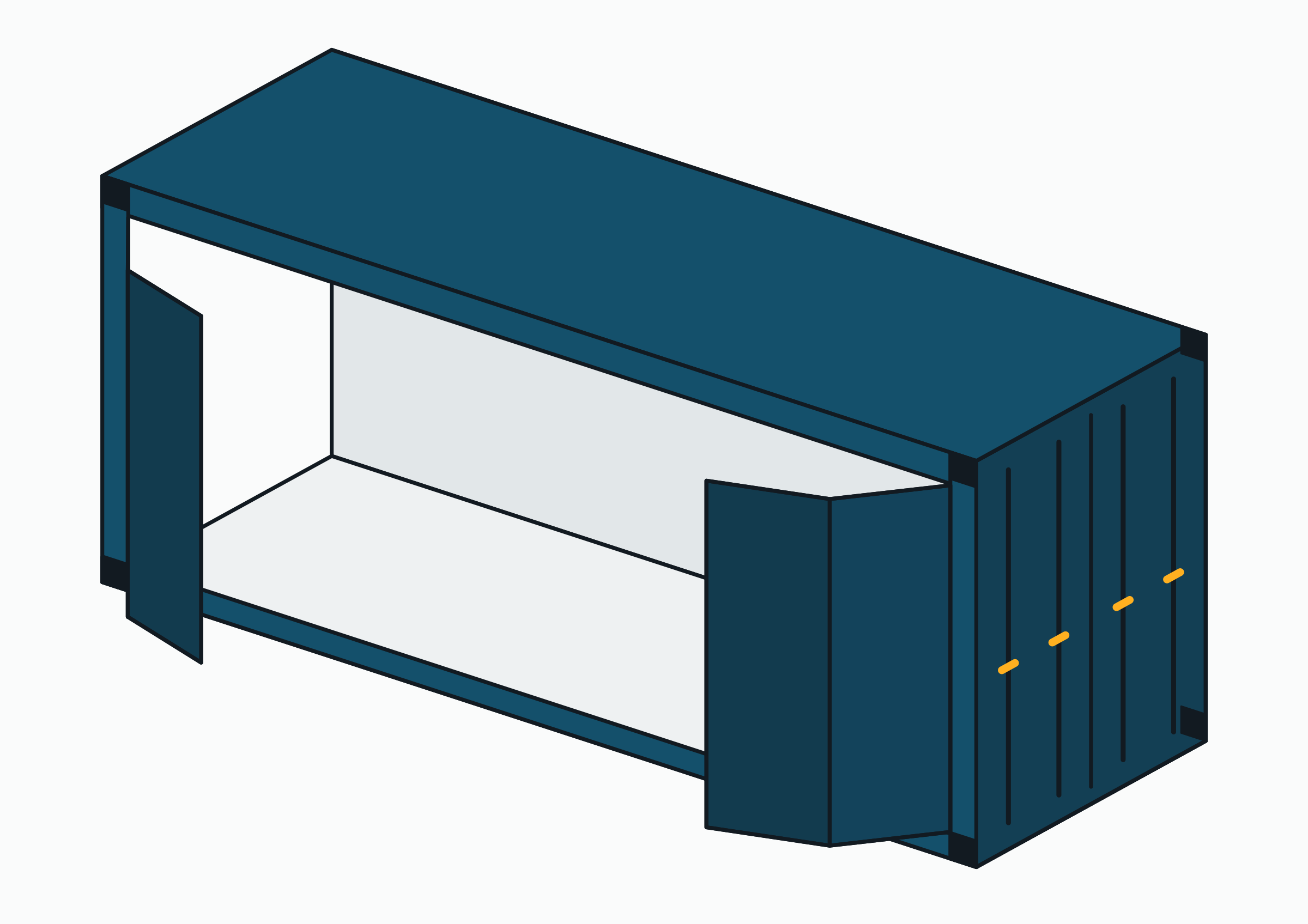
A standard container is loaded from one end, so the first pallet in is the last one out. An open side container keeps the end doors and adds a second way in: one long wall is a row of bi-fold doors that fold back to open almost the whole length of the box. Every part of the floor is a forklift’s reach from the side.
The price of that opening is structure. With no wall to carry the roof along one side, the side rails and the door frame are heavier, and they take room: inside, the box is 2.287 m wide and 2.302 m high, against 2.352 and 2.393 m in a 20 ft dry container. The volume falls from 33.2 to 31.1 m³.
The weights move the other way. Two makers’ sheets give a tare of about 3,200 kg and a maximum gross of 24,000 kg, which leaves 20,800 kg for cargo — some 7 t less than a dry twenty. One of them also plates the same box at 30,480 kg gross, so read the CSC plate on the door of the unit you are given rather than a catalogue.
The ISO size/type code is 22G2: a general-purpose box (G) with full openings in one or both sides (2). It handles, stacks and ships exactly like any other 20 ft container.
| Metric | Imperial | |
|---|---|---|
| External dimensions | ||
| Length | 6.058 m | 19′11″ |
| Width | 2.438 m | 8′ |
| Height | 2.591 m | 8′6″ |
| Internal dimensions | ||
| Length | 5.898 m | 19′4″ |
| Width | 2.287 m | 7′6″ |
| Height | 2.302 m | 7′7″ |
| Specification | ||
| Tare weight * | 3,200 kg | 7,055 lb |
| Max gross weight | 24,000 kg | 52,911 lb |
| Max payload * | 20,800 kg | 45,856 lb |
| Capacity (volume) | 31.1 m³ | 1,098 ft³ |
| TEU | 1 | — |
* Typical value — varies by manufacturer
Data: ISO 668:2020 · Hapag-Lloyd Container Specifications · Maersk Container Specifications
One page, every container
Stop looking these numbers up
All 16 containers on one printable page: internal dimensions, door openings, tare, payload, volume and pallet counts, in metric and imperial. The sheet that stays by the desk.
The file downloads straight away. We email when the data changes, at most once a month, after you confirm your address once; opens and clicks on those emails are measured, and every one has a one-click unsubscribe. See our privacy policy.
What the side opening is for
The side doors earn their cost where the order of unloading matters or where the cargo is long and wide rather than tall: building materials delivered to a site and taken off in the order they are used, timber and pipe that would have to be dragged the length of a dry box, machinery that a forklift can only lift from its long side.
On land the same opening turns a container into a room with a wall that opens. Market stalls, bars, site offices and workshops are built from open side boxes because one move of the doors gives a shop front the width of the container, and the end doors still work as a store-room entrance.
One maker’s drawing gives the clear side opening as about 5.70 × 2.19 m; the posts of the door frame and the hinges take the rest. Measure the unit before planning a load that needs the full width — the opening varies between builders and is not in any standard.
Open side, double door or open top?
Double door containers also solve the first-in, last-out problem, but from both ends: a forklift drives through, and the inside stays as wide as a dry box. Choose the double door when the cargo is long and the side access is not needed; choose the open side when every pallet must be reachable without moving the others.
If the cargo is too tall for the door or must be craned in, neither helps: that is an open top, or a flat rack if it is also too wide. Every type side by side is on the types of shipping containers page.
Frequently asked questions
What are the dimensions of an open side container?
A 20 ft open side container is 6.058 × 2.438 × 2.591 m outside (20′ × 8′ × 8′6″) and 5.898 × 2.287 × 2.302 m inside (19′4″ × 7′6″ × 7′7″), 31.1 m³ (1,098 ft³). Inside it is narrower and lower than a dry box because the side door frame takes room.
How much weight can an open side container carry?
About 20,800 kg (45,856 lb): the usual rating is 24,000 kg gross with a tare of about 3,200 kg. Some builders plate the same box at 30,480 kg gross, so the CSC plate on the door of the actual unit is the figure that counts.
What is the ISO code of an open side container?
22G2: a 20 ft, 8 ft 6 in high general-purpose container (22G) with full openings in one or both sides (2). A standard dry box is 22G1.
What is an open side container used for?
Cargo that has to be reached along the whole length — building materials unloaded in order, long timber and pipe, machinery lifted from the side — and, on land, shops, bars and workshops whose front opens the full length of the box.
Is an open side container as strong as a standard container?
Yes for shipping: it is built to the same ISO 1496 tests and stacks like any 20 ft box. The strength of the missing wall is in heavier rails and door posts, which is why it weighs about 3,200 kg against about 2,200 kg for a dry twenty.