ISO 22V0 · Passive vents, no machine
Ventilated Container

A ventilated container is a 20 ft dry box with rows of vents along its top and bottom side rails, so cargo that gives off moisture — green coffee, cocoa beans, onions — breathes on the way and does not sweat. It has no machine and no power. Hapag-Lloyd lists its 20 ft ventilated box at 5.888 × 2.325 × 2.392 m inside (19′4″ × 7′8″ × 7′10″), 33.0 m³ and 28,080 kg payload.


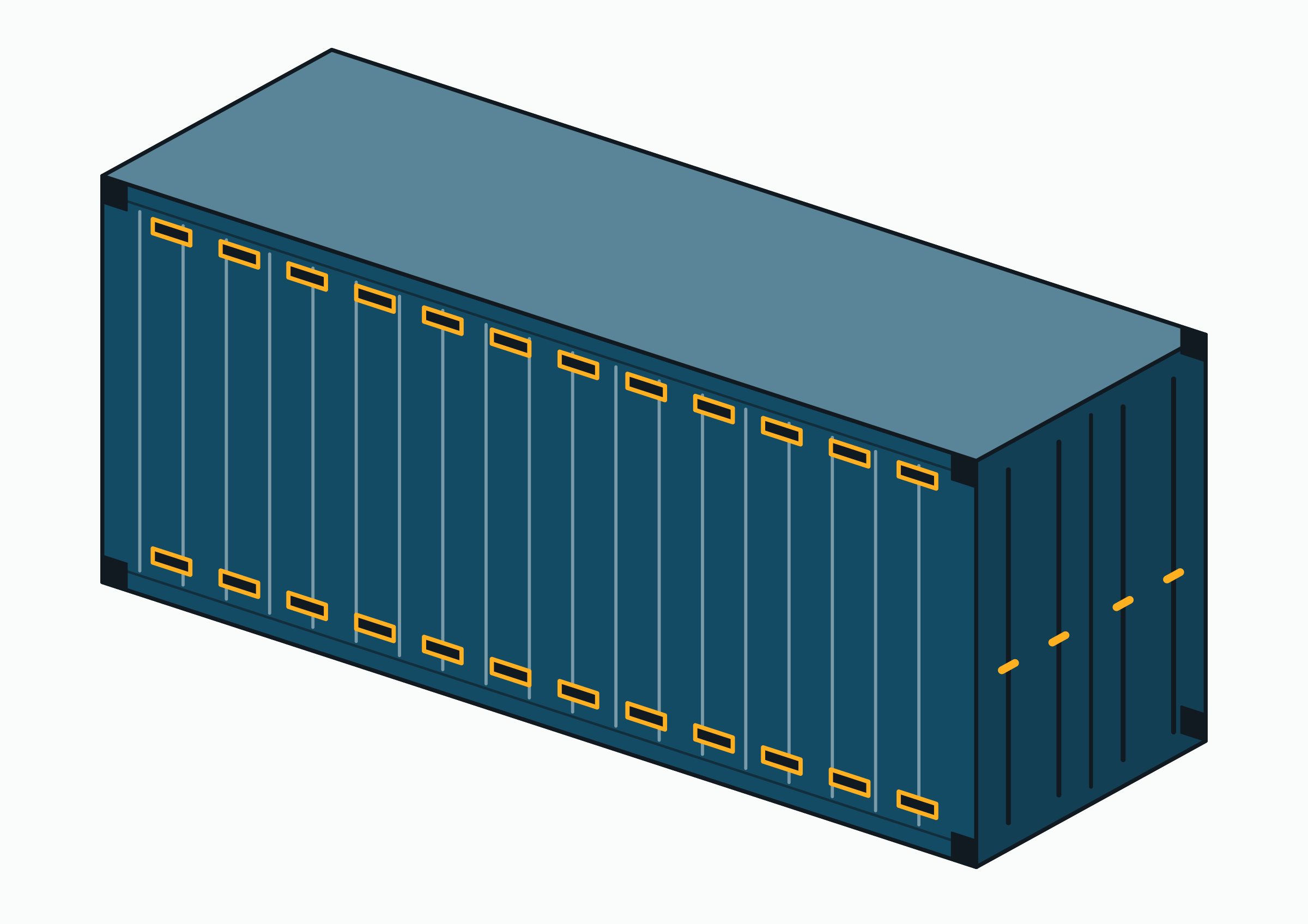
Cargo that was alive not long ago keeps breathing in the box: it gives off water vapour and heat. In a sealed container that moisture condenses on the steel roof as the ship moves from the tropics into cooler water, and drips back onto the cargo — the damage insurers call container sweat. A ventilated container lets the air move instead.
The vents are slots in the top and bottom side rails, shielded so that rain and spray cannot enter. Warm, damp air rises out through the top row and drier air comes in at the bottom: a passive chimney, with no fan and no power. This is why it is called the coffee container — green coffee beans are the cargo it was built for.
We found only one current carrier sheet for this type, Hapag-Lloyd’s: 5.888 × 2.325 × 2.392 m inside, 33.0 m³, 30,480 kg gross, 2,400 kg tare and 28,080 kg payload, code 22V0. The German marine insurers’ reference repeats those figures and says where they come from. We show them as Hapag-Lloyd’s rather than as a dataset row.
Ventilated boxes are few and run on the coffee and cocoa lanes. Elsewhere the same cargo travels in a dry box with absorbent kraft paper over the load and desiccant bags along the walls; why that works, and when it does not, is in the ventilation and condensation guide.
One page, every container
Stop looking these numbers up
All 16 containers on one printable page: internal dimensions, door openings, tare, payload, volume and pallet counts, in metric and imperial. The sheet that stays by the desk.
The file downloads straight away. We email when the data changes, at most once a month, after you confirm your address once; opens and clicks on those emails are measured, and every one has a one-click unsubscribe. See our privacy policy.
How the vents keep cargo dry
The danger is not the water in the cargo but the temperature difference between the cargo and the roof. When the steel cools faster than the beans — at night, or as the ship crosses into a colder current — the air under the roof reaches its dew point and condenses. Vents along the top rail let that air out before it does; vents along the bottom let drier air in to replace it.
Vents only help if air can reach them: leave a gap between the load and the side walls, do not cover the top of the load with plastic, and keep bags off the floor with dunnage or a layer of kraft paper. A ventilated box packed tight to the walls behaves like a sealed one.
Ventilated, insulated or reefer?
All three are about temperature and moisture, and they do different things. A ventilated box follows the outside temperature and gets rid of moisture; an insulated container slows the outside temperature down but traps moisture; a reefer holds a set temperature and controls humidity with power.
For green coffee and cocoa, which must breathe and do not need cooling, the ventilated box or a well-prepared dry box is right. For fruit and vegetables that must be kept cool, a reefer with its fresh-air vent open does both jobs. Every type is compared on the types of shipping containers page.
Frequently asked questions
What is a ventilated container?
A ventilated container is a 20 ft dry box with vents along its top and bottom side rails, so moist cargo like green coffee and cocoa breathes on the voyage instead of sweating. Hapag-Lloyd lists it at 33.0 m³ (1,165 ft³) and 28,080 kg (61,906 lb) of payload.
Why is a ventilated container called a coffee container?
Because green coffee is the cargo it was built for: the 2 rows of vents let the beans’ moisture escape instead of condensing under the roof and dripping back onto the sacks. Cocoa, onions, potatoes and timber use it for the same reason.
What are the dimensions of a ventilated container?
Hapag-Lloyd’s 20 ft ventilated container is 5.888 × 2.325 × 2.392 m inside (19′4″ × 7′8″ × 7′10″), 33.0 m³, with a 30,480 kg gross rating and about 2,400 kg tare. Outside it is a standard 20 ft, 6.058 × 2.438 × 2.591 m (20′ × 8′ × 8′6″).
Does a ventilated container have a fan?
No: a ventilated container has 0 fans and needs no power. Air moves by itself, rising out through the top vents as it warms and drawn in through the bottom ones. A reefer has fans and a fresh-air vent, which is the powered version of the same idea.
What is the ISO code for a ventilated container?
22V0 for a 20 ft, 8 ft 6 in high ventilated container with passive vents, in Hapag-Lloyd’s code table; the V group in ISO 6346 covers all ventilated containers. A standard dry box with small passive vents in its upper rail is 22G1, which is why most dry boxes are not ventilated containers.