Two clocks · free time · per diem
Demurrage vs Detention

Demurrage is charged while a full container stays in the terminal past its free time; detention is charged while the container is out of the terminal — with you — past its free time, until the empty is returned. Both run by the day on the line’s tariff, and in the US a carrier must invoice them within 30 days of the last charge.
An import container meets two clocks. The first starts when the box is discharged or made available and stops when it leaves the terminal full: that is demurrage, charged for occupying the terminal’s space. The second starts at that gate-out and stops when the empty is back at the depot: that is detention, charged for keeping the line’s equipment. Each clock begins with free time; after it, every day costs.
How many free days and how much each day costs are set by the line’s tariff and your contract, and they vary by line, port and customer — which is why this page states none, and the clock below takes yours.
The difference, side by side
Demurrage — the full container is inside the terminal. It starts at discharge (or when the box is available to collect) and stops at gate-out full. It is charged by the line, sometimes with storage charged by the terminal on top.
Detention — the container is outside, with the importer or the trucker. It starts at gate-out full and stops when the empty is returned. On exports the order flips: detention runs from empty pickup to gate-in full, demurrage while the full box waits in the terminal for the ship.

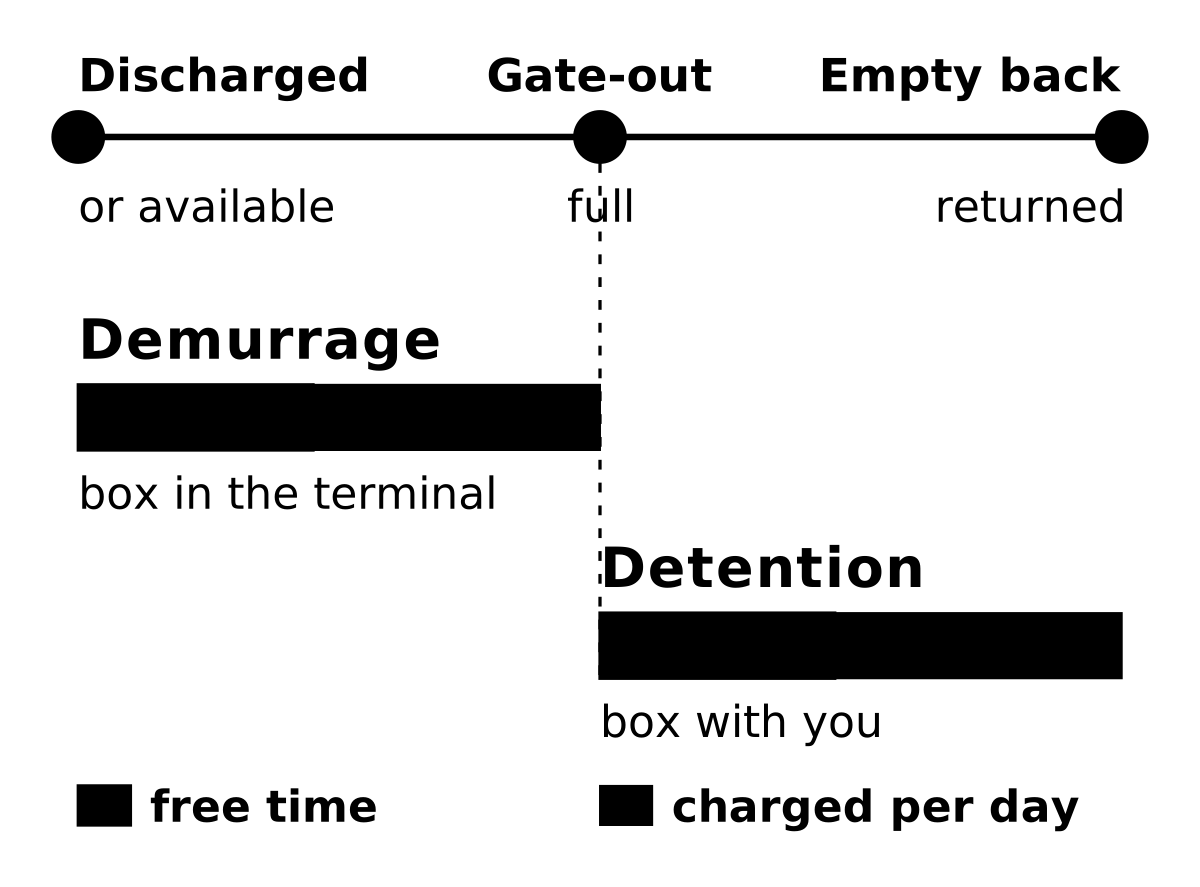
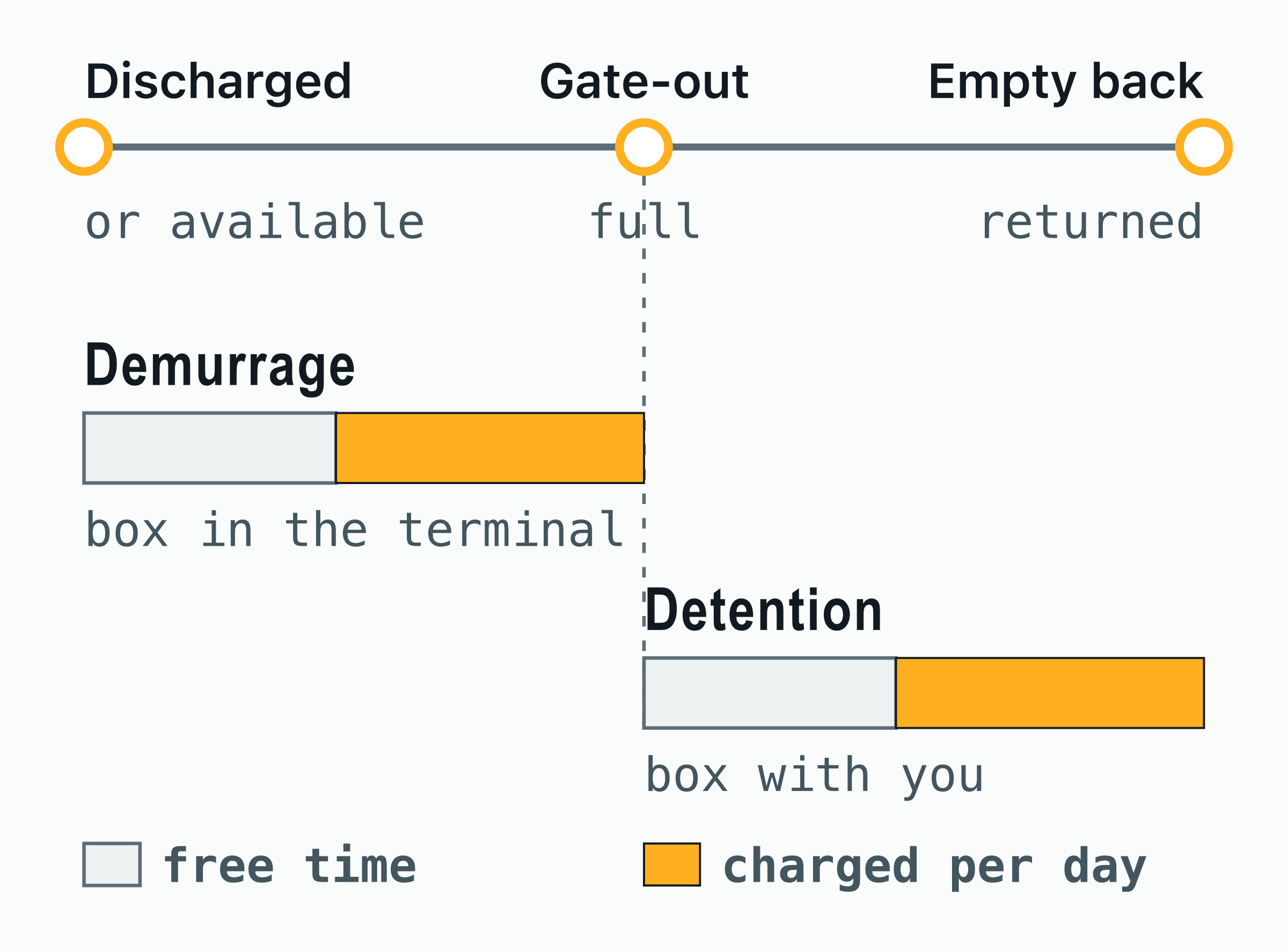
The numbers in this chart
| Clock | Where the box is | Starts | Stops |
|---|---|---|---|
| Demurrage | full, in the terminal | discharge or availability | gate-out full |
| Detention | out, with the importer | gate-out full | empty returned |
Per diem, combined free time and storage
Per diem is the US trucking word for detention: the daily charge for the line’s box (and sometimes chassis) while it is out. Combined free time, or merged D&D, is one allowance covering both clocks from discharge to empty return — read your contract to see which you have. Storage is the terminal’s own charge for space; it can run alongside demurrage and is billed by the terminal, not the line.
A day counted for free time may be a calendar day or a working day, and the first day may or may not count — tariffs differ. The clock below lets you set both.
Free-time clock
Enter your free days and the daily rates in up to three steps (many tariffs charge more from the sixth or eleventh day), then the dates. It shows the last free day of each clock, the date to collect or return by, and the cost so far. Nothing leaves your browser.
Enter the free days and daily rates from your own contract or the line’s tariff — they differ by line, port and customer, so nothing is filled in for you.
Enter the discharge or availability date to start the clock.
Worked out in your browser. Your tariff is kept in this browser for next time; the dates are not kept.
Who pays demurrage and detention
The line invoices the party it contracted with or the consignee named on the bill of lading; the sale contract then decides who bears the cost between buyer and seller. On most imports that is the importer, because the delay happens at destination.
In the US, the Federal Maritime Commission’s 2024 rule (FMC) requires carriers and terminal operators to send demurrage and detention invoices within 30 days of the last charge, with set information on them, and gives time limits for disputing a bill. The section on whom they may bill was set aside by a court in 2025 and removed; the rest stands (FMC, 2025).
How to avoid the charges
Have customs and the trucker ready before the box is discharged, so pickup is not waiting on paperwork. Ask for more free time when you book — lines grant it, especially on contract rates. Return empties to the depot the line names, and get the interchange receipt: the return date on it is what stops detention. Watch the tracker for “Available” and “Gate-out”, the two events that start the clocks — see container tracking.
Frequently asked questions
What is the difference between demurrage and detention?
Demurrage is charged while the full container stays inside the terminal past its free time; detention while the container is outside the terminal — with you — past its free time until the empty is returned. One is for the terminal’s space, the other for the line’s equipment.
Is detention the same as per diem?
Yes, in US trucking “per diem” usually means detention: the daily charge for keeping the line’s container (and sometimes its chassis) out of the terminal past free time.
What does “14 days free detention at destination” mean?
It means the importer may keep the container for 14 days after it leaves the destination terminal before detention is charged; from the 15th day each day costs until the empty is returned. Whether the 14 are calendar or working days, and whether the gate-out day counts, is in the tariff.
How many free days do you get before demurrage starts?
There is no standard number: free days are set by each line’s tariff and your contract, and differ by port and customer. Ask for the figure when you book — and for more, if your cargo usually needs time to clear.
What is the difference between storage and demurrage?
Storage is the terminal’s charge for the space a box occupies; demurrage is the line’s charge for its box staying in the terminal past free time. Both can run on the same days, billed by different parties.