Your rates · in your browser
LCL vs FCL Calculator

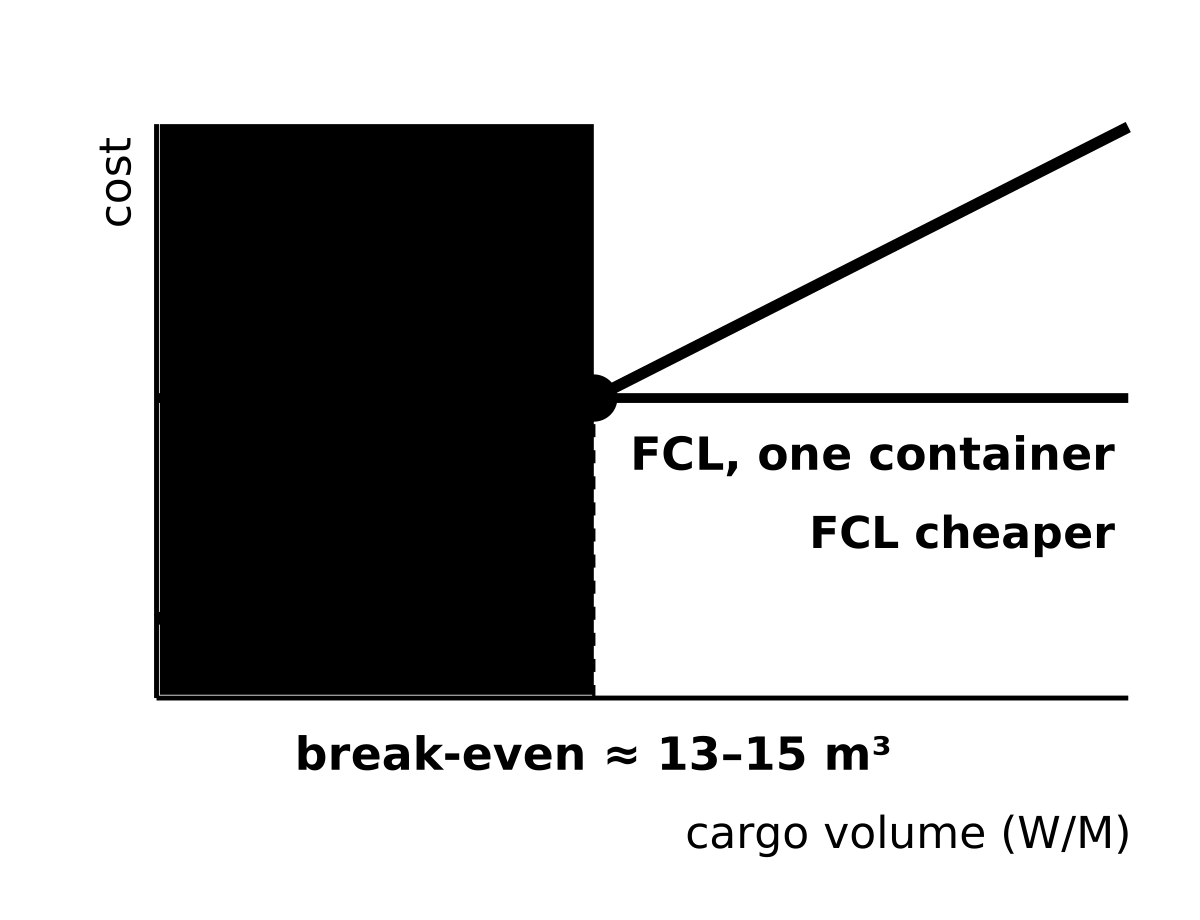
LCL is usually cheaper below roughly 13–15 m³ and a full container above it, but the crossing depends on your quotes: LCL is priced per revenue ton (the greater of m³ and tonnes), FCL per container however full. Enter both rates and the calculator gives the cost of each, the difference and the break-even.
Type the volume and weight of the cargo, then the rates you were quoted. The FCL side takes the boxes the cargo needs by usable volume and payload; for an exact count by carton, plan it in the 3D load planner, which shares these rates. Nothing leaves your browser.
Rates are kept in this browser only.
How LCL is charged: W/M and the minimum
An LCL quote is per revenue ton, written W/M (weight or measure): the cargo is charged on its cubic metres or its tonnes, whichever is greater, with a minimum — usually one. 4.2 m³ weighing 1,800 kg pays for 4.2; 2 m³ weighing 3,100 kg pays for 3.1. The consolidator then adds the costs of the shared warehouse (CFS) at each end and documents.
An FCL quote is per container: one price for the box from port to port, whatever is inside, plus terminal handling, documents and, once it lands, the clocks of demurrage and detention.
Why LCL costs more per cubic metre
A shared container is stuffed and unstuffed at a warehouse, waits until the consolidator has enough cargo for the box, and each shipper pays for the handling. That is why LCL per m³ is several times the per-m³ cost of a full box, and why it is cheaper only while the cargo is small. It also adds days: the box waits to be filled and the cargo waits to be sorted at the far end.
When FCL is the better choice below the break-even
Fragile, high-value or time-bound cargo often goes FCL early: a box of your own is sealed at your door and opened at the consignee’s, with no handling in between and no waiting for other cargo. Cargo that cannot be stacked or is awkwardly shaped also takes more of a shared box than its volume suggests, so the LCL quote may be on more cubic metres than you measured.

Frequently asked questions
Is LCL or FCL cheaper?
LCL is cheaper for small cargo and FCL for large: the crossing is usually somewhere around 13–15 m³, but it moves with your quotes, so compare the two rates you were given above.
Why is LCL so expensive per cubic metre?
Because each shipper pays for the shared handling: an LCL m³ carries the warehouse at both ends, consolidation and paperwork, which on a small shipment cost more per m³ than a whole container’s freight shared out.
What is W/M in an LCL quote?
W/M means weight or measure: the cargo is charged per revenue ton, the greater of its cubic metres and its tonnes, so 2 m³ weighing 3,100 kg is charged as 3.1.
How much does FCL cost?
There is no single figure: an FCL rate is per container and lane and changes weekly, so the price is the one quoted to you; enter it above with the LCL rate and the calculator says which is cheaper for your cargo.