ISO type group H · No refrigeration unit
Insulated Container

An insulated container is a box with insulated walls, roof, floor and doors but no refrigeration machine: it slows temperature change instead of holding a set point. Most in use today are former reefers with the unit removed, so they keep a reefer’s inside — 28.3 m³ in a 20 ft and 67.3 m³ in a 40 ft high cube — and need no power.


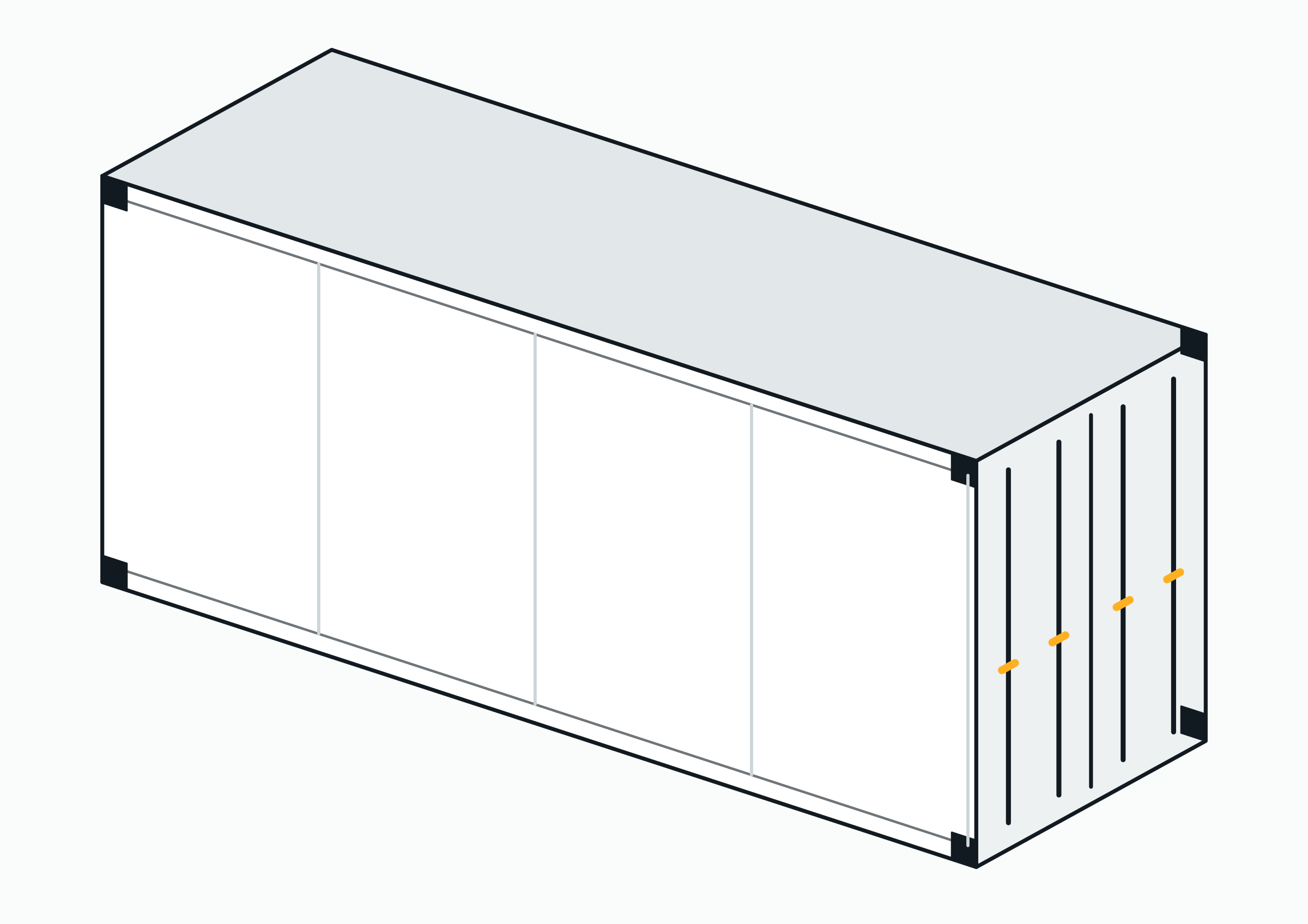
A container that carries temperature-sensitive cargo can do it in two ways. A reefer holds a set temperature with its own refrigeration unit, running on power from the ship, the terminal or a generator. An insulated container does only half of that: its insulated shell slows the flow of heat in and out, and the cargo’s own temperature does the rest.
That is enough for cargo that must avoid sudden swings and condensation more than it must stay at a number — wine, chocolate, pharmaceuticals in their own packaging, electronics, paint — and for storage on land where there is no power at all.
The ISO 6346 type code for a thermal container without a machine is the group H. The purpose-built ones that took cold air from the ship through two portholes in the front wall have left the fleet; what is offered as an insulated container today is almost always a reefer whose machine has failed or been removed and replaced with a sealed panel.
No carrier or maker we could find publishes a current specification sheet for a purpose-built insulated box, so this page quotes no weights of its own. An ex-reefer keeps the figures of the reefer it was: the reefer container page has both sizes.
One page, every container
Stop looking these numbers up
All 16 containers on one printable page: internal dimensions, door openings, tare, payload, volume and pallet counts, in metric and imperial. The sheet that stays by the desk.
The file downloads straight away. We email when the data changes, at most once a month, after you confirm your address once; opens and clicks on those emails are measured, and every one has a one-click unsubscribe. See our privacy policy.
Insulated or reefer?
Choose a reefer when the cargo has a set point — frozen at −18 °C, chilled fruit, vaccines with a narrow band — and the voyage is long enough for the outside to win against the walls. Choose an insulated box when the cargo only needs protection from swings and the voyage or the storage period is short, or when there is no power to plug a reefer into.
The insulation is the same in both: polyurethane foam between stainless or aluminium skins, which is why an ex-reefer is a good insulated box. It also loses the same room: a 20 ft reefer is 5.444 m long inside against 5.898 m in a dry box. How walls slow heat, and what a given thickness buys, is in the container insulation guide.
Insulated containers on land
Most insulated boxes now work as stores rather than at sea: a farm’s cold-ish room, a pharmacy’s back store, a site cabin that stays cool in summer and needs little heating in winter. A smooth white inside lining is easy to wash, which is why food businesses use them for dry stock.
Buying one, check that the panel where the machine was is sealed and insulated, that the door gaskets close evenly all round and that the floor drains are plugged — each of these is where an ex-reefer lets heat and water in.
Frequently asked questions
What is an insulated shipping container?
An insulated container is a box with insulated walls, roof, floor and doors and no refrigeration unit, so it slows temperature change rather than holding a set temperature. Most in use are former reefers: inside a 20 ft one is about 28.3 m³ (999 ft³), a 40 ft high cube about 67.3 m³ (2,377 ft³).
What is the difference between an insulated container and a reefer?
A reefer has its own refrigeration unit and holds a set temperature, typically from −30 to +30 °C, as long as it has power; an insulated container has the same kind of insulated shell but no machine. It needs no power, costs less, and only slows the change of temperature.
How long does an insulated container keep cargo cool?
Hours to a few days, not a voyage: there is no machine, so the inside drifts toward the outside temperature at a rate set by the insulation, the cargo’s mass and the sun on the roof. For anything that must stay at a set temperature across an ocean, use a reefer.
What is the ISO code for an insulated container?
Thermal containers without a machine carry the ISO 6346 type group H in the last two characters of the size/type code; a working reefer is R, as in 22R1 or 45R1. An ex-reefer often still carries its R code on the door.
Can I use an old reefer as an insulated container?
Yes, and that is what most insulated containers are: a 20 ft or 40 ft high cube reefer, 28.3 or 67.3 m³ inside, with a failed or removed unit. Check that the machine opening is sealed and insulated, the door gaskets close all round and the drains are plugged.