PCIU · PILU
PIL Container Tracking
 Yuri Kan Trackers opened and tested Updated
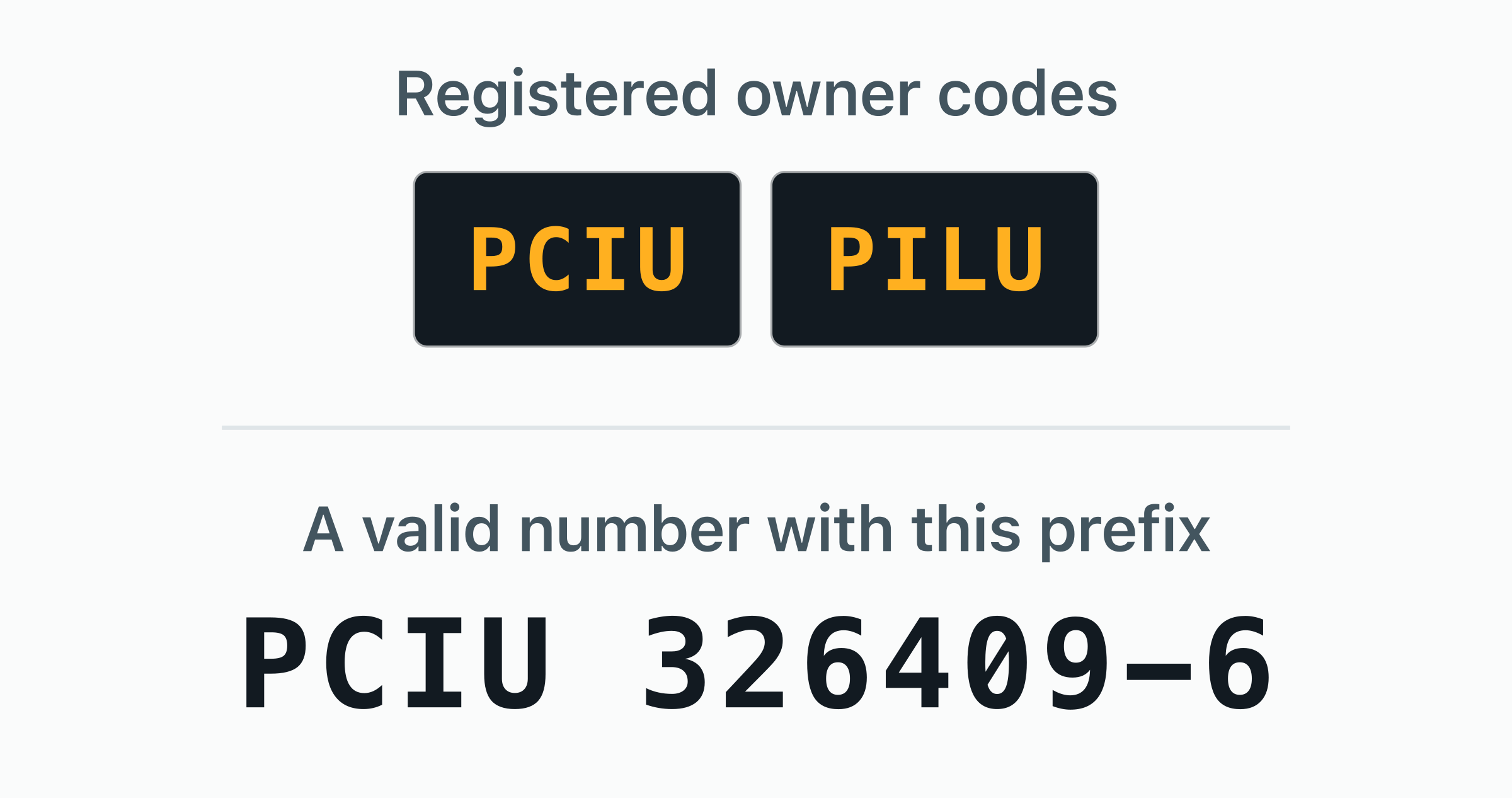
PIL belongs to the small club of carriers whose tracker opens a result from a link: pass the number into the pilship.com digital-solutions URL and the search runs on page load — the checker here builds that link once your number validates. Pacific International Lines, based in Singapore, ranks 12th worldwide and growing again with LNG dual-fuel newbuilds. Its boxes carry two registered prefixes, PCIU and PILU, and the search takes container or bill-of-lading numbers. One warning: PCIU is a container prefix, not a SCAC — PIL files US customs paperwork under PABV.
Track a PIL (Pacific International Lines) container by number
4 letters + 7 digits, printed on the doors. It is on your bill of lading too.
The answer appears as you type. Nothing is sent anywhere.
Singapore’s flagship container line rewards anyone who tracks it often: because the number travels in the URL, a saved link reopens live status without retyping — a convenience Maersk and ONE customers know and most others envy.
Run the digit check first anyway. A mistyped PCIU serial fails silently at pilship.com, and the validator catches it in a second.
PIL containers carry the prefixes PCIU and PILU; each is worked through, with its check digit and where the code came from, on the prefix page of PIL.
PCIU and PILU — and the SCAC mix-up
Two owner codes sit under Pacific International Lines in the BIC register: PCIU on most of the fleet and PILU on the rest. Both behave identically in the tracker.
Several aggregator sites list “PCIU” as PIL’s SCAC — that is a mislabel. The Standard Carrier Alpha Code PIL uses for US filings is PABV; PCIU only ever appears stenciled on the box itself. If a customs document asks for a carrier code, PABV is the answer.
| Prefix | What it is |
|---|---|
PCIU | A house code of PIL (Pacific International Lines), registered to it directly. |
PILU | A house code of PIL (Pacific International Lines), registered to it directly. |
Data: BIC Container Prefix Register · ISO 6346 (1995 text, read in IS 6928:2001)

PIL bill of lading numbers
The pilship.com search accepts a B/L reference in the same field as a container number, which is the better choice when a shipment spans multiple boxes — the document-level view rolls every unit into one timeline. Type it exactly as printed; the deep-link trick works for B/L references too.
Using the pilship.com tracker
The track-and-trace tool lives inside PIL’s digital-solutions hub, and we confirmed in a live browser that a URL carrying refNo auto-executes the search — no paste step at all. For repeat use, PIL offers a mobile app plus the PocketPIL/POP! platform, where quotes, bookings and tracking sit behind one login.
| Container number | ✓ yes |
|---|---|
| Bill of lading (B/L) | ✓ yes |
| Booking reference | — no |
| Mobile app | ✓ yes |
| Pre-filled link | ✓ opened with a live number and it worked |
| Its bill of lading starts with | no published prefix |
Browser-verified 2026-08-03
Can you see where the ship is?
Not from the container. A standard dry box has no power, no radio and no satellite receiver — it is a steel case with a number painted on it, and it reports nothing about itself. Every position you see against a PIL (Pacific International Lines) shipment was reported by something else: a terminal crane, a gate reader, or the ship.
A live map on a carrier’s tracking page is almost always plotting AIS, the transponder every large vessel broadcasts with its position, course and speed. That is genuinely useful at sea: it is a real position rather than a schedule, and an ETA recalculated from actual movement. It is also the ship’s position, not your box’s, and the two part company the moment the container is discharged.
On land the map goes quiet. Between the gate-out and the delivery there is no vessel to follow, and the road leg appears only as whatever events the terminal and the trucker report. A container sitting on a chassis in a yard shows the last position of a ship it left days ago. Only specialised IoT equipment reports its own location, and wherever that exists it is a paid product sold to the shipper, not something a tracking page gives away.
PIL has three codes that look like one another, and only one is the SCAC
PIL manages to carry three different four-letter codes, and they are routinely confused. PCIU and PILU are the container owner codes, stencilled on the steel. PABV is the Standard Carrier Alpha Code used for US customs filings. Several aggregator sites list PCIU as the SCAC, which is simply wrong — if a filing asks for a carrier code, PABV is the answer and PCIU will be rejected.
PIL is also one of the two carriers in this set with no published bill-of-lading prefix. The tracker takes a B/L reference in the same field as a container number, and the document-level view is the better one when a booking covers several boxes, but you cannot identify PIL from the first four characters of a document the way you can with most lines.
When the PIL tracker returns nothing
The link should have worked. PIL is one of only three of the eighteen trackers we opened with a live number in the URL and found to run the search by itself. If you arrived through a link and still see an empty form, something upstream dropped the parameter — paste the number instead.
Check the prefix against the register. PCIU and PILU both resolve to PIL; a third code that merely looks similar does not. The checker here names the registered owner rather than guessing from the letters.
Try the document. A B/L reference goes in the same field and rolls every container on the booking into one timeline, which separates "this box has no events" from "this shipment does not exist yet".
Too new, or archived. Events start at gate-in or loading, not at booking, and completed shipments drop out after some weeks.
Carrier profile
PIL (Pacific International Lines) at a glance
- World fleet rank
- #12by capacity · Alphaliner, read 18 October 2026
- Founded
- 196759 years in business
- Container prefixes
- 2verified against the BIC register
- Alliance
- Independentnot a member of Gemini, Ocean or Premier
The company
- Headquarters
- Singapore
- Mobile app
- Yes, published by the line
On your paperwork
- Bill of lading numbers start with
- no published prefix
- Official tracking site
- pilship.comFree, no account needed.
Founded on 16 March 1967 by Chang Yun Chung — who remained active in the business past his hundredth birthday — PIL stayed family-linked and independent while rivals merged around it, and is now renewing the fleet with LNG dual-fuel tonnage.
Data: Alphaliner Top 100 · BIC Container Prefix Register
Checked 2026-08-03
Frequently asked questions
Is PCIU PIL’s SCAC code?
No — that is a common aggregator error. PCIU is a BIC container prefix; PIL’s SCAC for US customs and AMS filings is PABV. Use PABV on documentation and PCIU only when reading numbers off the box.
What is PocketPIL (POP!)?
PIL’s self-service digital platform for quotes, bookings, documentation and shipment visibility. Public tracking needs no account; POP! adds the logged-in features on top.
How big is PIL really?
Twelfth in the world by capacity on Alphaliner’s list as read on 18 October 2026, and based in Singapore. It sold its container-manufacturing arm and weathered a restructuring in 2020–21, then returned to growth with LNG dual-fuel newbuild orders.
Does PIL tracking cover PILU boxes the same as PCIU?
Identically — both prefixes resolve to Pacific International Lines in the BIC register, and the tracker looks numbers up by full ID regardless of which of the two codes starts it.
One page, every owner code
Know whose box it is before you search
All 85 owner prefixes mapped to their line or leasing company, with the leased ones marked — so you can tell at a glance when to track with the line instead. It comes in the container pack, with every container’s dimensions.
The bot check did not finish, so nothing was sent. Send the form again; if it stops again, allow challenges.cloudflare.com in your blocker or write to info@contsize.com from the address the file should go to.
Nothing was sent: the address could not be read, or a required box was not ticked. Check them and send the form again.