SITU
SITC Container Tracking
 Yuri Kan Trackers opened and tested Updated
SITC containers carry a single registered prefix — SITU — and track at the SITC Container Lines site (the cargo-track page runs on the sitcline.com domain, so don’t be surprised when the address looks technical). SITC is a Chinese carrier dedicated to intra-Asia trades: frequent loops between ports in China, Japan, Korea and Southeast Asia. Short voyages mean short event chains — gate-in, loading and discharge can follow each other closely, so check the timeline dates closely rather than expecting a long ocean gap.
Track a SITC Container Lines container by number
4 letters + 7 digits, printed on the doors. It is on your bill of lading too.
The answer appears as you type. Nothing is sent anywhere.
Tracking an intra-Asia carrier feels different from tracking a Maersk or MSC box: transit takes days, not weeks, transshipment is rare, and the whole event chain often fits one screen. SITC is one of these specialists, and its single-prefix fleet makes validation simple.
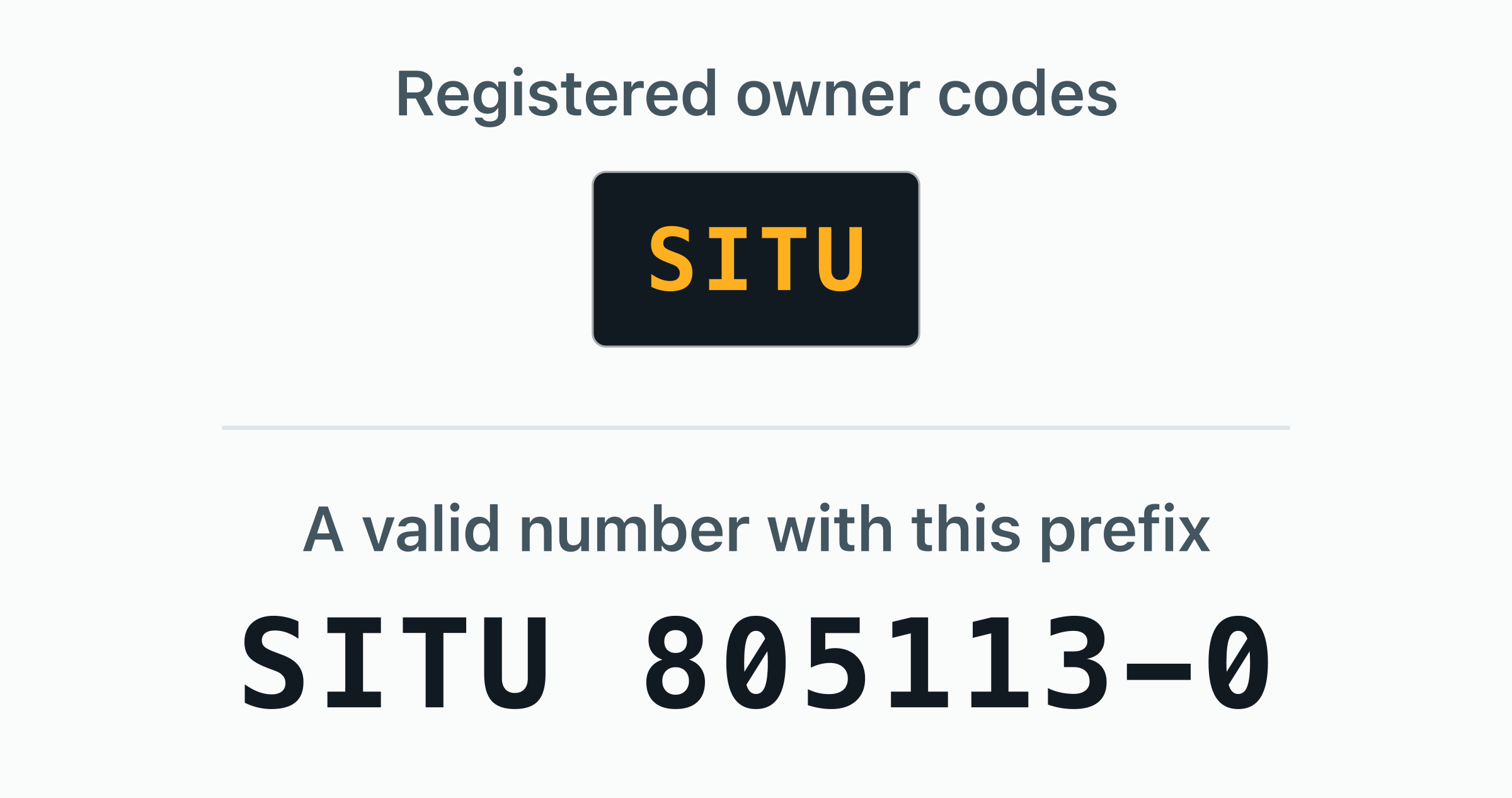
Paste the number into the checker here first — SITU plus six digits and a check digit — and the tool will confirm it before you head to the tracker.
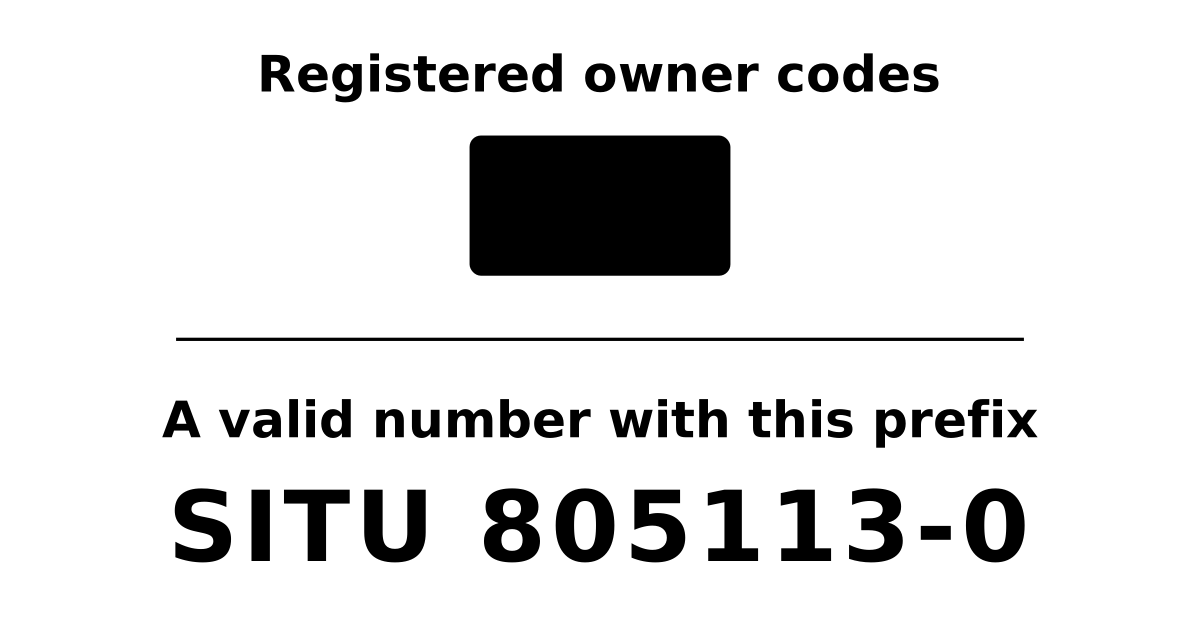
SITC containers carry the prefix SITU; its check digit worked through and the code’s history are on the prefix page of SITC.
The SITU prefix — one code, one owner
Unlike the merger-heavy majors, SITC registers exactly one owner code: SITU. That makes misattribution rare — if the check digit passes and the prefix reads SITU, it is an SITC box. The flip side: SITC also operates plenty of leased tonnage, so cargo booked with SITC may ride in a TRLU or CAIU box that tracks by number on SITC’s site regardless of the paint.
| Prefix | What it is |
|---|---|
SITU | A house code of SITC Container Lines, registered to it directly. |
Data: BIC Container Prefix Register · ISO 6346 (1995 text, read in IS 6928:2001)

SITC B/L and booking references
SITC’s US-filing carrier code is 12PD — a number-letter SCAC that surprises people expecting four letters, and one reason aggregator sites mislabel SITC paperwork. On the tracker itself you search by container number or B/L number as printed on your document; if one identifier returns nothing, try the other before assuming the shipment is missing.
Using the SITC tracker
The cargo-track tool lives on the sitcline.com domain rather than a marketing site — bookmark it once and it loads fast, with none of the bot-protection walls the transpacific giants deploy. SITC also ships a SITCLINE mobile app for schedules and tracking. No pre-filled links: copy the validated number from above and paste it.
| Container number | ✓ yes |
|---|---|
| Bill of lading (B/L) | ✓ yes |
| Booking reference | — no |
| Mobile app | ✓ yes |
| Pre-filled link | not tried yet |
| Its bill of lading starts with | no published prefix |
Browser-verified 2026-08-03
Can you see where the ship is?
Not from the container. A standard dry box has no power, no radio and no satellite receiver — it is a steel case with a number painted on it, and it reports nothing about itself. Every position you see against a SITC Container Lines shipment was reported by something else: a terminal crane, a gate reader, or the ship.
A live map on a carrier’s tracking page is almost always plotting AIS, the transponder every large vessel broadcasts with its position, course and speed. That is genuinely useful at sea: it is a real position rather than a schedule, and an ETA recalculated from actual movement. It is also the ship’s position, not your box’s, and the two part company the moment the container is discharged.
On land the map goes quiet. Between the gate-out and the delivery there is no vessel to follow, and the road leg appears only as whatever events the terminal and the trucker report. A container sitting on a chassis in a yard shows the last position of a ship it left days ago. Only specialised IoT equipment reports its own location, and wherever that exists it is a paid product sold to the shipper, not something a tracking page gives away.
SITC files under 12PD, which is why lookup tools mislabel it
Almost every carrier’s US filing code is four letters — MAEU, COSU, HLCU. SITC’s is 12PD: two digits and two letters. Software that assumes four letters, and there is a lot of it, either rejects the code outright or files SITC’s paperwork under something else. It is a small thing that produces a surprising amount of confusion in third-party prefix lists.
It also means SITC has no bill-of-lading prefix in the sense the majors do. You cannot read the line off the first four characters of an SITC document the way you can with an HLCU or an EGLV number — so if you are holding paperwork and trying to work out whose it is, SITC is one of the cases where the document itself will not tell you and the booking confirmation has to.
When the SITC tracker returns nothing
Try the other identifier. The search takes a container number or a B/L number in the same field, and on a fresh booking the document is usually in the system before the box is. If one comes back empty, the other often does not.
SITU is the only prefix. SITC registers exactly one owner code, so a box on an SITC sailing with any other prefix is leased — and it still tracks here, because events follow the operator rather than the owner.
Check the digit. One wrong character is the most common cause of an empty result at every line, and the checker here recomputes it.
Short trades end quickly. SITC runs intra-Asia services where a voyage can be a matter of days, so the window between the last event and the shipment leaving the live system is shorter than on a transpacific run.
Carrier profile
SITC Container Lines at a glance
- World fleet rank
- #14by capacity · Alphaliner, read 18 October 2026
- Container prefixes
- 1verified against the BIC register
- Alliance
- Independentnot a member of Gemini, Ocean or Premier
The company
- Headquarters
- Hong Kong
- Mobile app
- Yes, published by the line
On your paperwork
- Owner codes on the container door
- SITUThe first four letters of the container number.
- Bill of lading numbers start with
- no published prefix
- Official tracking site
- api.sitcline.comFree, no account needed.
Hong Kong-listed since 2010, SITC, 14th on Alphaliner’s list as read on 18 October 2026, runs dense short-sea loops — the intra-Asia network that keeps regional supply chains moving while the headlines follow the transpacific giants.
Data: Alphaliner Top 100 · BIC Container Prefix Register
Checked 2026-08-03
Frequently asked questions
Why does SITC tracking open a page on sitcline.com?
That domain is SITC Container Lines’ own e-business platform — the equivalent of Evergreen’s shipmentlink.com. It is official, not a third-party reseller.
Is 12PD really SITC’s carrier code?
Yes — SITC’s SCAC for US customs filings is 12PD, one of the rare number-letter codes. SITU is the container prefix; the two identify the same carrier in different systems.
Does SITC sail outside Asia?
The network is deliberately intra-Asian: China, Japan, Korea, Vietnam, Thailand, the Philippines, Indonesia and neighbors. For an Asia–Europe or transpacific leg, your cargo transfers to a deep-sea line — and tracking moves with it.
Why is my SITC event chain so short?
Because intra-Asia voyages are short and usually direct, so gate-in, load, discharge and gate-out follow each other closely — a compressed timeline is normal, not missing data.
My SITC booking shows nothing on the tracker — what now?
A new booking may show nothing until its first event, the gate-in at the terminal or the loading. If the sailing date has passed with no events, contact the booking office or your forwarder — regional feeds occasionally lag a port call behind.
One page, every owner code
Know whose box it is before you search
All 85 owner prefixes mapped to their line or leasing company, with the leased ones marked — so you can tell at a glance when to track with the line instead. It comes in the container pack, with every container’s dimensions.
The bot check did not finish, so nothing was sent. Send the form again; if it stops again, allow challenges.cloudflare.com in your blocker or write to info@contsize.com from the address the file should go to.
Nothing was sent: the address could not be read, or a required box was not ticked. Check them and send the form again.